Official Supplement Facts Panel · 21 CFR 101.36 Quantitative Specification
Slimtide™ Supplement Facts Panel: Complete 347 mg Capsule & Regulatory Label Audit
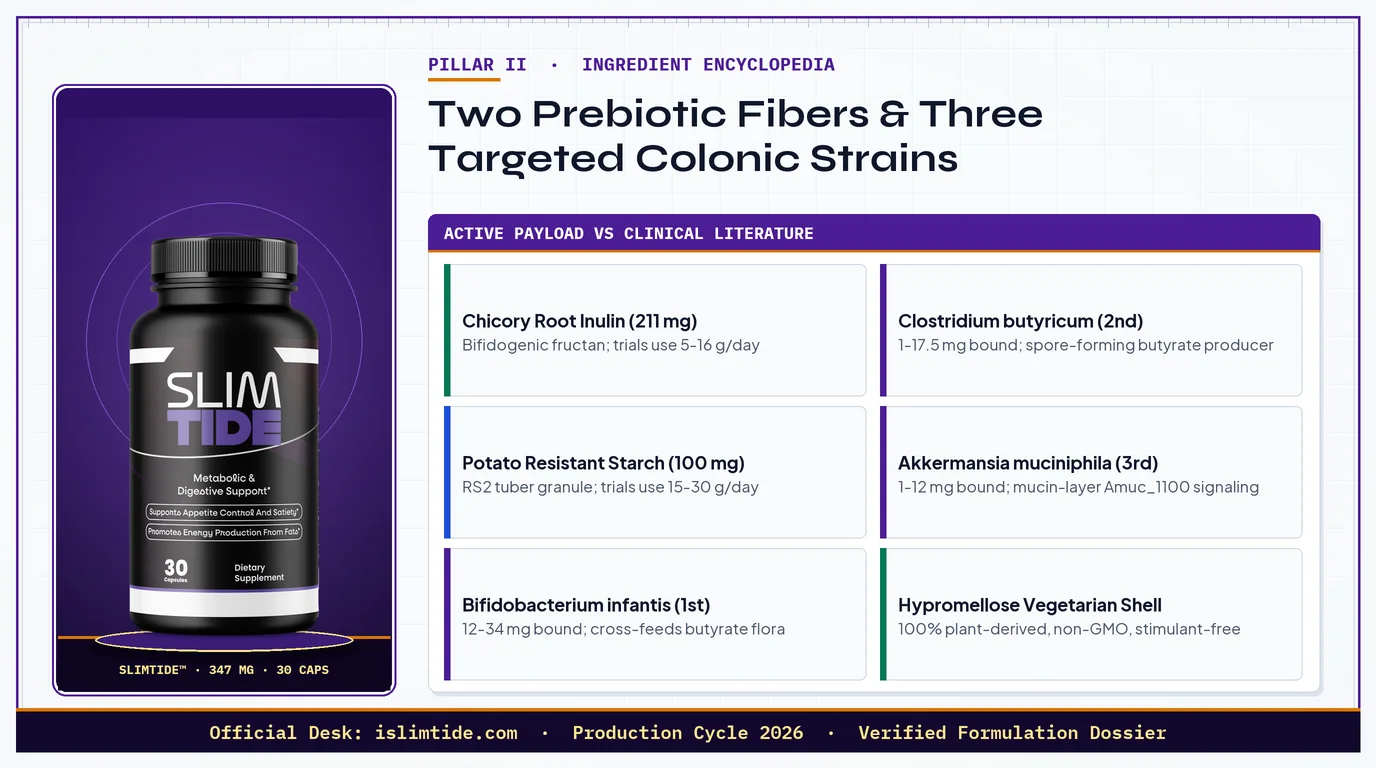
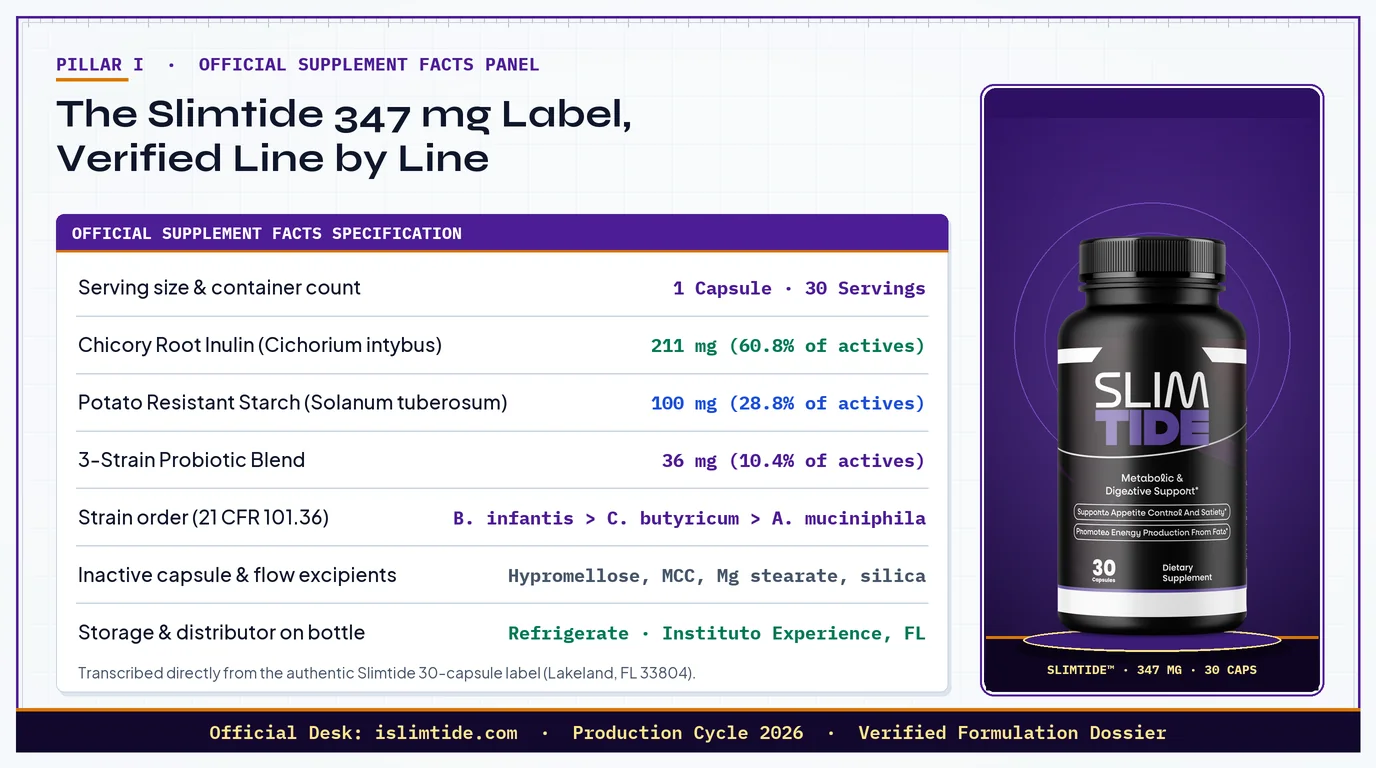
Every authentic bottle of Slimtide™ shipped from our U.S. fulfillment center carries a standardized, machine-verified Supplement Facts panel governed by U.S. Food and Drug Administration regulations under 21 CFR 101.36 [1,2]. A single vegetarian capsule serving delivers exactly 347 mg of active synbiotic payload - comprising 211 mg of Chicory Root Inulin (Cichorium intybus root), 100 mg of Potato Resistant Starch (Solanum tuberosum tuber), and a 36 mg Probiotic Blend listing Bifidobacterium infantis, Clostridium butyricum, and Akkermansia muciniphila in strict descending order of predominance by weight [1,3]. This official label dossier provides the complete verbatim panel transcription, gravimetric mass-balance equations, proprietary blend boundary mathematics, inactive excipient disclosures, cold-chain storage rules, and physical bottle verification benchmarks for customers ordering through islimtide.com.
Official Slimtide™ Bottle & Panel Telemetry
- Net Container Count (30-Day Supply)
- 30 Capsules
- Daily Serving Size (With 8 oz. Water)
- 1 Capsule
- Total Active Synbiotic Payload per Capsule
- 347 mg
- Quantified Prebiotic Fiber Matrix (89.63%)
- 311 mg
- 3-Strain Probiotic Blend Mass (10.37%)
- 36 mg
- Recommended Post-Opening Refrigeration (2 C - 8 C)
- 36 F - 46 F
Verbatim Supplement Facts Transcription and Mass-Balance Architecture
On the Official Slimtide™ Store (islimtide.com), formulation transparency begins with the exact text printed on the physical 30-capsule container [1]. Dietary supplements marketed in the United States are regulated under the Dietary Supplement Health and Education Act of 1994 (DSHEA) and must present their quantitative composition inside a standardized Supplement Facts box pursuant to 21 CFR 101.36 [2,4]. Unlike multi-capsule stimulant powders or opaque proprietary complexes that hide fiber fillers inside a single undisclosed gram total, the Slimtide panel separates its two botanical prebiotic substrates into individually quantified lines and isolates the three-species microbial consortium into its own dedicated 36 mg blend line [1].
Adding the three declared active lines confirms the exact 347 mg active payload per capsule: 211 mg + 100 mg + 36 mg = 347 mg [1]. Because neither botanical prebiotic fibers at sub-gram capsule weights nor human-derived or commensal probiotic strains have an established FDA Reference Daily Intake (RDI) or Daily Reference Value (DRV), every line on the Slimtide Supplement Facts panel carries the standard double-dagger symbol (†) denoting Daily Value (DV) not established [2,4].
| Panel Line / Regulatory Field | Printed Label Declaration | Botanical or Taxonomic Identity | Mass per 1-Capsule Serving | Share of 347 mg Active Mass | Daily Value (% DV) Status |
|---|---|---|---|---|---|
| Serving Size | 1 Capsule | Size-0 hypromellose vegetarian shell | 347 mg active (~470-520 mg gross) | 100.00% of actives | Standardized 24-hour unit |
| Servings Per Container | 30 | Sealed HDPE bottle with induction liner | 10,410 mg (10.41 g) total bottle actives | 30 x 347 mg | 30-day supply at 1/day |
| Line 1: Prebiotic Fructan | Chicory Root Inulin | Cichorium intybus (root) beta-(2,1) fructan | 211 mg | 60.81% | † (DV not established) |
| Line 2: Prebiotic Starch | Potato Resistant Starch | Solanum tuberosum (tuber) Type-2 RS2 granules | 100 mg | 28.82% | † (DV not established) |
| Line 3: Microbial Consortium | Probiotic Blend | Bifidobacterium infantis, Clostridium butyricum, Akkermansia muciniphila | 36 mg | 10.37% | † (DV not established) |
| Other Ingredients | Inactive excipient block | Hypromellose (vegetarian capsule), microcrystalline cellulose, magnesium stearate, silica | ~123-173 mg shell + flow matrix | 0.00% of active claim | Functional cGMP excipients |
| Directions for Use | Administration & storage | Take one (1) capsule daily with an 8 oz. glass of water. Refrigerate for optimal quality | 1 capsule per 24 hours | Full daily allocation | Do not exceed 1 capsule/day |
| Distributor Record | Commercial entity on label | Distributed by Instituto Experience, Lakeland, FL 33804 | U.S. cGMP facility (21 CFR 111) | Globally sourced inputs | Lot & expiry stamped on base |
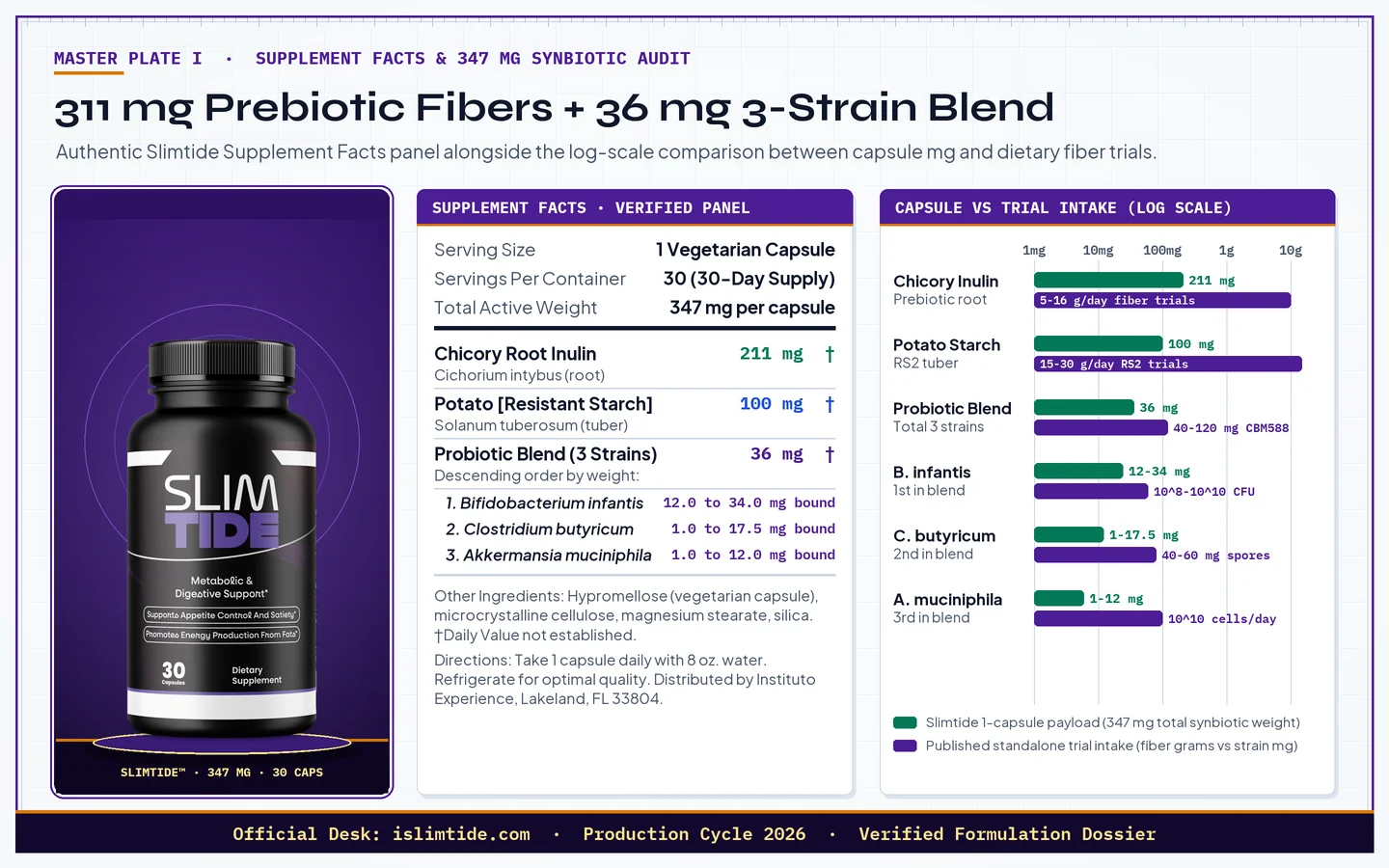
Gravimetric Ratio Between Prebiotic Substrates and Microbial Biomass
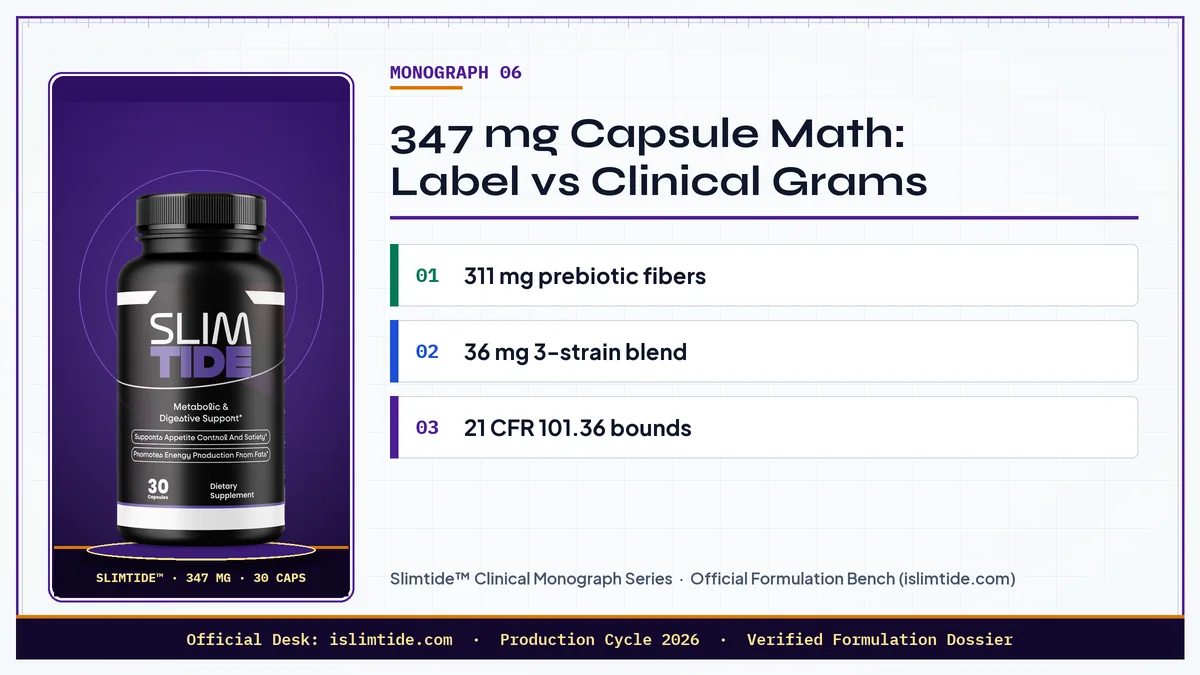
A foundational engineering metric of any combined synbiotic formulation is the mass ratio between its fermentable prebiotic carbohydrates and its lyophilized microbial biomass [5,6]. On the Slimtide label, the two prebiotic lines (211 mg Chicory Root Inulin plus 100 mg Potato Resistant Starch) sum to 311 mg of fermentable carbohydrate substrate, representing 89.63% of the active capsule weight [1]. The three-strain Probiotic Blend accounts for 36 mg, or 10.37% of the active payload [1].
Expressed as a substrate-to-biomass ratio, every milligram of lyophilized probiotic blend is co-encapsulated with 8.64 mg of selective prebiotic fiber (311 mg / 36 mg = 8.6389) [1]. Over a full 30-capsule bottle, the customer ingests 6,330 mg (6.33 g) of Chicory Root Inulin, 3,000 mg (3.00 g) of Potato Resistant Starch, and 1,080 mg (1.08 g) of the three-strain Probiotic Blend, totaling 10,410 mg (10.41 g) of active synbiotic material across the 30-day cycle [1]. Over the recommended 90-day (3-bottle) protocol, cumulative intake reaches 18.99 g of chicory inulin, 9.00 g of potato RS2 starch, and 3.24 g of probiotic blend (31.23 g combined actives) [1,7].
21 CFR 101.36 Descending-Order Mathematics and the 36 mg Probiotic Blend
Under federal food and dietary supplement labeling law (21 CFR 101.36(c)), when dietary ingredients are grouped into a proprietary blend or multi-strain complex, the total weight of the blend must be declared in metric units (36 mg), and the individual components inside that blend must be listed in descending order of predominance by weight [2]. On the Slimtide Supplement Facts panel, the 36 mg Probiotic Blend lists its three microbial constituents in the following exact sequence [1]:
- Bifidobacterium infantis (First position - highest mass fraction in the blend)
- Clostridium butyricum (Second position - intermediate mass fraction in the blend)
- Akkermansia muciniphila (Third position - lowest mass fraction in the blend)
Because the three species are combined into a single 36 mg proprietary line without individual per-strain milligram sub-declarations, strict algebraic inequalities govern the minimum and maximum gravimetric weight that each organism can occupy inside a single capsule [2,1]. Defining w1 as the mass of Bifidobacterium infantis, w2 as the mass of Clostridium butyricum, and w3 as the mass of Akkermansia muciniphila (including its strain-specific lyophilization carrier matrix), the regulatory constraint is w1 + w2 + w3 = 36 mg, where w1 >= w2 >= w3 > 0 mg.
From this system of linear inequalities, our formulation bench derives the exact mathematical boundaries for each strain inside the 36 mg blend [2,1]:
| Probiotic Blend Constituent | Label Order | Algebraic Constraint | Minimum Mass (w_min) | Near-Parity Benchmark | Maximum Mass (w_max) | Share of Total 347 mg Capsule |
|---|---|---|---|---|---|---|
| Bifidobacterium infantis | 1st (Lead) | w1 >= (36 - w1) / 2 | 12.0 mg (33.3%) | 14.0 - 18.0 mg | 34.0 mg (94.4%) | 3.46% to 9.80% |
| Clostridium butyricum | 2nd (Middle) | w3 <= w2 <= (36 - w3) / 2 | 1.0 mg (2.8%) | 10.0 - 12.0 mg | 18.0 mg (50.0%) | 0.29% to 5.19% |
| Akkermansia muciniphila | 3rd (Anchor) | 0 < w3 <= 36 / 3 | 1.0 mg (2.8%) | 6.0 - 12.0 mg | 12.0 mg (33.3%) | 0.29% to 3.46% |
| Combined Blend Total | Sum (w1+w2+w3) | Exact panel declaration | 36.0 mg | 36.0 mg | 36.0 mg | 10.37% (36 / 347 mg) |
For a deeper mathematical breakdown comparing these per-capsule milligram bounds against clinical human trial dosages, consult Monograph 06: The 347 mg Synbiotic Capsule Math and our Complete Ingredients Encyclopedia.
FDA Guidance on Quantitative Microbial Labeling: Milligrams vs. Colony-Forming Units (CFU)
One of the most frequent technical inquiries received by our formulation desk is why the Slimtide Supplement Facts panel declares its Probiotic Blend in milligrams (36 mg) rather than Colony-Forming Units (CFU) or Active Fluorescent Units (AFU) [3,9]. Understanding this distinction requires examining both U.S. federal regulations and the microbiological realities of next-generation anaerobic and pasteurized paraprobiotic organisms [3,6].
Under current FDA regulations (21 CFR 101.36(b)(3)(ii)), the mandatory baseline unit of measurement for all dietary ingredients and proprietary blends on a U.S. Supplement Facts panel is metric weight (grams, milligrams, or micrograms) [2]. In its 2018 Draft Guidance for Industry: Policy Regarding Quantitative Labeling of Dietary Supplements Containing Live Microbials, the FDA indicated that it exercises enforcement discretion to allow manufacturers to declare live microbial quantity in Colony-Forming Units (CFU) in addition to metric weight, provided the CFU declaration is separate from the metric weight, represents live viable microorganisms through the end of shelf life, and does not mislead consumers [3]. However, metric weight (mg) remains the primary statutory requirement under 21 CFR 101.36 [2,3].
Furthermore, the three species inside Slimtide's 36 mg consortium exist across three distinct physiological and analytical states that behave differently on standard agar plate counts [9,6]:
- Vegetative Actinobacteria (Bifidobacterium infantis): Standard freeze-dried (lyophilized) Bifidobacterium powders are manufactured with cryoprotectant matrices (such as trehalose, sucrose, or maltodextrin) that shield bacterial cell membranes during sublimation [9,10]. Depending on the concentration grade of the raw bulk lyophilizate (
10^10to5 x 10^11 CFU/g),12 mg to 20 mgof bulk powder typically corresponds to approximately1.2 x 10^8to1.0 x 10^10viable cells at the time of manufacture [11,9]. - Dormant Bacterial Endospores (Clostridium butyricum): Clostridium butyricum is a strictly anaerobic, Gram-positive bacillus that forms multi-layered, dipicolinic-acid-stabilized endospores [12,13]. In clinical literature (such as Japanese and European trials of C. butyricum MIYAIRI 588 / CBM588), daily doses are routinely standardized and prescribed by milligram mass of spore preparation (typically
40 mg to 120 mg/daycontaining~10^7 CFU/gto10^8 CFU/gof heat-stable spores) rather than high-billion vegetative CFU numbers [12,14]. - Strict Mucin-Degrading Anaerobe / Paraprobiotic (Akkermansia muciniphila): Originally isolated by Derrien et al. (
2004) from human fecal mucin layers, A. muciniphila is an obligate anaerobe sensitive to ambient oxygen [15,16]. In the landmark human proof-of-concept trial by Depommier et al. (2019), both live A. muciniphila (10^10bacteria daily) and pasteurized (heat-inactivated at 70 C for 30 minutes) A. muciniphila (10^10cells daily) were evaluated, with pasteurized cells demonstrating strong activity via the outer-membrane proteinAmuc_1100(32 kDa) [17,18]. Because pasteurized paraprobiotic cells do not form colonies on agar (0 CFUby definition, despite intactAmuc_1100receptor signaling) and live obligate anaerobes require specialized mucin-based anaerobic flow cytometry (AFUor total cell count), reporting the consortium by total gravimetric weight (36 mg) maintains strict compliance with21 CFR 101.36regardless of the ratio between vegetative cells, endospores, and intact paraprobiotic cell envelopes [2,3,6].
Inactive Excipient Architecture and Capsule Shell Engineering
Below the Supplement Facts box, the Other Ingredients declaration on every Slimtide bottle reads verbatim: Hypromellose (vegetarian capsule), microcrystalline cellulose, magnesium stearate, silica [1]. Under 21 CFR 101.4 and 21 CFR Part 111 (Current Good Manufacturing Practice for Dietary Supplements), every non-active substance introduced during blending, encapsulation, or polishing must be declared in descending order of weight [21]. Slimtide utilizes a clean, four-component pharmaceutical excipient system free of titanium dioxide, artificial FD&C coal-tar dyes, bovine or porcine gelatin, lactose, gluten, and soy allergens [1].
| Inactive Ingredient | Regulatory & Compendial Grade | Estimated Mass per Capsule | Primary Engineering Function in Capsule Manufacturing | Moisture & Probiotic Stability Impact |
|---|---|---|---|---|
| Hypromellose (HPMC) | USP / Ph. Eur. hydroxypropyl methylcellulose | ~95 - 100 mg (Size-0 shell) | Forms the two-piece vegetarian capsule shell; replaces animal gelatin (13-15% moisture) with low-moisture plant cellulose (3-6% equilibrium water content) | Prevents internal water migration from the capsule shell into hygroscopic chicory inulin and lyophilized bacteria [9] |
| Microcrystalline Cellulose (MCC) | USP NF purified depolymerized alpha-cellulose | ~20 - 55 mg | Compressible diluent and volumetric binder that normalizes bulk density between dense potato starch granules and light probiotic powders | Chemically inert, insoluble plant fiber; zero glycemic impact and zero premature enzymatic fermentation |
| Magnesium Stearate | USP vegetable-source boundary lubricant | ~3 - 8 mg (<1.5% w/w) | Prevents cohesive inulin powder from sticking to high-speed stainless-steel tamping pins and dosator nozzles during encapsulation | Hydrophobic lipid film slows initial moisture penetration during ambient storage prior to gastric dissolution |
| Silica (Silicon Dioxide) | Colloidal anhydrous fumed silica (USP/NF) | ~2 - 6 mg (<1.0% w/w) | Glidant and micro-desiccant that coats hygroscopic Cichorium intybus particles to prevent caking and preserve uniform weight per capsule | Adsorbs trace free moisture (a_w control), protecting moisture-sensitive B. infantis during shelf storage |
Why does the choice of hypromellose (HPMC) over standard bovine gelatin matter so profoundly in a 347 mg synbiotic capsule? Conventional hard gelatin capsules rely on 13% to 16% bound structural water to maintain mechanical elasticity [9]. When a gelatin capsule is filled with Chicory Root Inulin (211 mg) - a highly hygroscopic beta-(2,1) fructan polymer - the inulin acts as an internal desiccant, stripping water out of the gelatin wall. That moisture transfer causes two failure modes: first, the gelatin shell becomes brittle and cracks; second, the elevated internal water activity (a_w > 0.25) prematurely rehydrates lyophilized Bifidobacterium infantis cells at room temperature, triggering metabolic exhaustion and rapid loss of viability before the capsule is ever swallowed [9,10]. By specifying a low-moisture hypromellose vegetarian shell paired with colloidal silica as an internal moisture scavenger, Slimtide maintains a low internal water activity environment compatible with both hygroscopic fructans and freeze-dried commensal bacteria [1,19].
Directions for Use, Hydration Physics, and Cold-Storage Viability Rules
The right-hand column of the Slimtide physical label specifies three operational directives under Directions, Caution, and Storage [1]:
- Directions: Take one (1) capsule daily with an 8 oz. glass of water. Refrigerate for optimal quality. [1]
- Caution: Do not exceed recommended dose. Pregnant or nursing mothers, children under the age of 18, and individuals with a known medical condition should consult a physician before using this or any dietary supplement. [1,20]
- Storage & Safety Seal: Keep out of the reach of children. Do not use if safety seal is damaged or missing. Store in a cool, dry place. [1,19]
Why a Full 8 oz. (240 mL) Glass of Water Is Mechanically Required
Swallowing the daily Slimtide capsule with a full 8 oz. (240 mL) glass of cool or room-temperature water is not merely a generic swallowing tip - it is a biophysical requirement for the 311 mg prebiotic matrix [22,23]. When the hypromellose capsule shell dissolves inside the stomach within 8 to 15 minutes of ingestion, the 211 mg of Chicory Root Inulin rapidly hydrates and forms a low-viscosity colloidal sol, while the 100 mg of native Type-2 Potato Resistant Starch (RS2) disperses as intact, semicrystalline B-type starch granules (15 to 40 micrometers in diameter) [23,24].
Adequate luminal water (240 mL) accomplishes three physiological tasks:
- It accelerates gastric emptying of the dispersed starch granules and bacterial spores through the pyloric sphincter into the duodenum, minimizing prolonged exposure of vegetative Bifidobacterium infantis cells to peak fasting gastric acidity (
pH 1.5 to 2.0) [9,12]. - It prevents dry-swallowing esophageal adhesion of the HPMC shell.
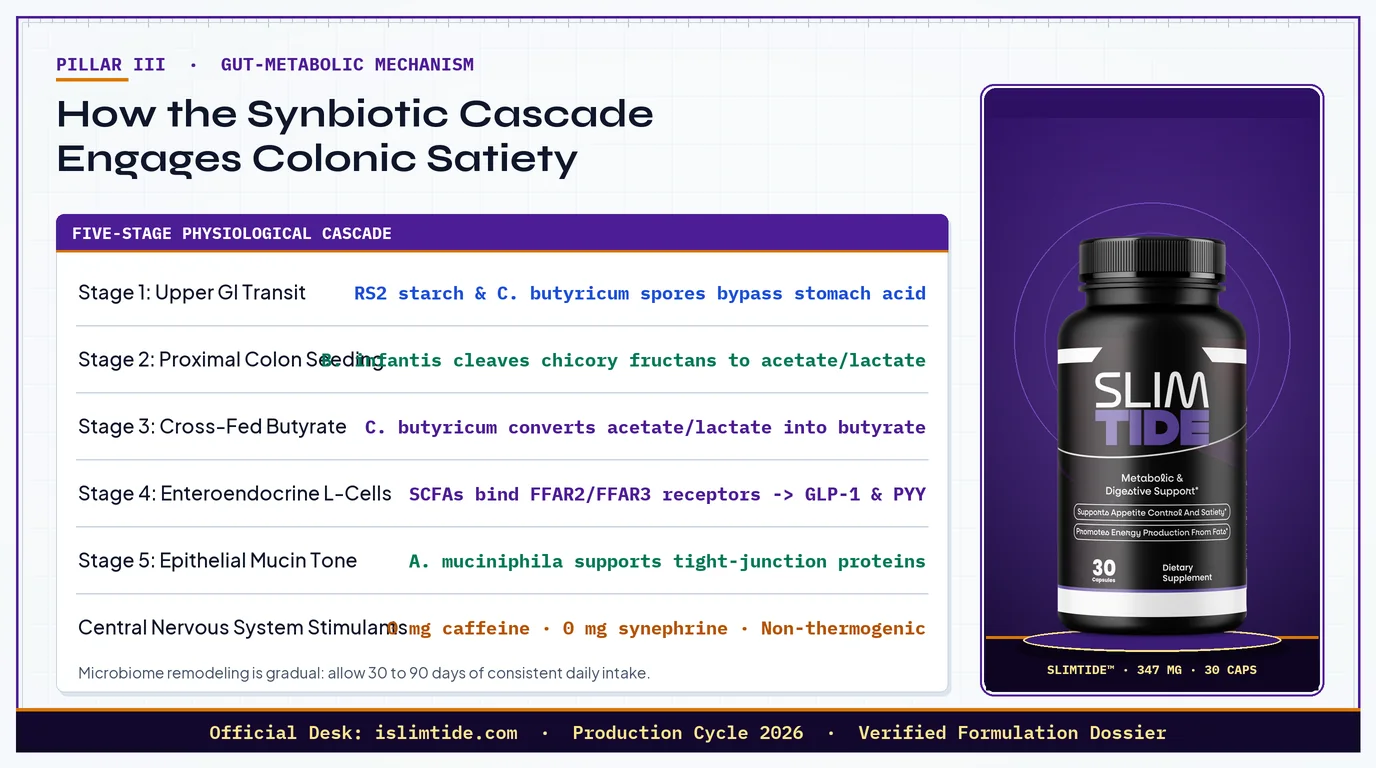
- It provides the aqueous dispersion medium required in the distal ileum and cecum when B. infantis and C. butyricum initiate enzymatic hydrolysis of fructans and resistant starch into short-chain fatty acids (
SCFAs: acetate, propionate, and butyrate) [10,25].
(Note: Never take Slimtide with scalding hot coffee, hot tea, or boiling water above 115 F / 46 C. Elevated liquid temperatures inside the mouth and stomach can thermally denature vegetative *Bifidobacterium infantis enzymes and prematurely gelatinize raw Type-2 potato resistant starch granules, converting indigestible RS2 into rapidly digestible glycemic starch before it reaches the colon [23,24].)*
Resolving the Dual Storage Directive: "Store in a Cool, Dry Place" vs. "Refrigerate for Optimal Quality"
Attentive readers of the Slimtide bottle notice two storage phrases on the label: "Store in a cool, dry place" in the standard warehouse block and "Refrigerate for optimal quality" inside the Directions block [1,19]. In pharmaceutical and cGMP synbiotic logistics, these two directives govern two distinct phases of the bottle's lifecycle [19,21]:
- Phase 1: Factory-Sealed Pre-Opening Storage (Cool, Dry Place at 59 F - 77 F / 15 C - 25 C): While the factory induction foil liner remains hermetically sealed across the mouth of the HDPE bottle, atmospheric humidity cannot enter the headspace. In this sealed state, the low-moisture HPMC shell and colloidal silica keep internal water activity below the threshold of thermal degradation during standard U.S. domestic postal transit (
3 to 7 business days) [19]. - Phase 2: Post-Opening Daily Use (Household Refrigerator at 36 F - 46 F / 2 C - 8 C): The moment you peel back or puncture the induction safety seal on Day 1, ambient room air and water vapor enter the bottle every time you unscrew the cap. Placing the opened bottle on a main refrigerator shelf (
36 F to 46 F,2 C to 8 C) with the cap screwed down tightly immediately after removing your daily capsule slows intracellular metabolic decay in Bifidobacterium infantis by a factor of4x to 8xacross the 30-day consumption window [9,19]. For complete thermal decay curves and condensation avoidance rules, read Protocol Dossier 08: Refrigeration & Probiotic Viability Guide.
Origin, cGMP Manufacturing, and Dual Florida Facility Chain of Custody
Authentic Slimtide™ bottles distributed through islimtide.com operate under a documented dual-facility U.S. operational footprint in the state of Florida [1,8]:
- Commercial Distribution & Label Entity (Lakeland, FL 33804): The physical bottle label declares: Distributed by Instituto Experience, Lakeland, FL 33804. Manufactured in the USA in a cGMP-certified, FDA-registered facility with globally-sourced ingredients [1,21]. Under
21 CFR Part 111, U.S. dietary supplement cGMP regulations mandate identity testing of incoming botanical and microbial raw materials, master manufacturing records (MMRs), batch production logs, weight-variation checks on encapsulation runs, and heavy-metal plus microbiological contaminant screening [21]. - Physical Customer Return & Inspection Depot (Largo, FL 33773): All physical bottle returns under our 60-Day Money-Back Guarantee are received, scanned, and processed at our dedicated return warehouse: Instituto Experience Return Depot, 11870 62nd St N, Largo, FL 33773 [8]. Customers must never mail return packages to the Lakeland corporate distribution address; all refund shipments must be routed with a carrier tracking number to the Largo, FL 33773 depot accompanied by the original physical packing slip [8].
| Operational Function | Official Entity / Specification | Verified Address or Identifier | Customer Action / Verification Rule |
|---|---|---|---|
| Official U.S. Website & Store | Slimtide™ Official Store (islimtide.com) | https://islimtide.com/ | Order direct via 2, 3, or 6 bottle packages [7] |
| Label Distributor of Record | Instituto Experience | Lakeland, FL 33804 (USA) | Printed on right panel of every genuine bottle [1] |
| Manufacturing Compliance | U.S. cGMP Dietary Supplement Facility | 21 CFR Part 111 (FDA-registered) | Globally sourced botanical & microbial raw materials [21] |
| Authorized Checkout Merchant | BuyGoods (Account ID 12501) | Statement descriptor: BuyGoods or BUYGOODS* | 256-bit TLS checkout; billing support +1 (866) 838-5063 [26] |
| Physical Return Depot (60-Day) | Instituto Experience Return Depot | 11870 62nd St N, Largo, FL 33773 | Include original packing slip + all empty/full bottles [8] |
| Customer Support Desk | Slimtide Official Support | [email protected] · +1 (507) 448-8190 | Open Mon-Sun 10:00 AM - 1:00 AM EST [27] |
10-Point Physical Bottle & Label Inspection Checklist
Before taking your first capsule, compare your delivered Slimtide bottle against our 10-point quality control checklist. You can also run an interactive check on our Verify Your Bottle operational page [1,8].
- Container Count: Front panel states
30 CAPSULESandDIETARY SUPPLEMENTbeneath the Slimtide™ wordmark [1]. - Serving Size & Count: Supplement Facts header states
Serving Size: 1 CapsuleandServings Per Container: 30[1]. - Line 1 Verification: Reads
Chicory Root Inulin (Cichorium intybus) (root) - 211 mg †[1]. - Line 2 Verification: Reads
Potato Resistant Starch (Solanum tuberosum) (tuber) - 100 mg †[1]. - Line 3 Verification: Reads
Probiotic Blend - 36 mg †followed byBifidobacterium infantis, Clostridium butyricum, Akkermansia muciniphilain exact descending order [1]. - Inactive Ingredients: Lists only
Hypromellose (vegetarian capsule), microcrystalline cellulose, magnesium stearate, silica[1]. - Induction Safety Seal: Unbroken heat-induction foil seal across the bottle rim beneath the screw cap (
Do not use if safety seal is damaged or missing) [1]. - Refrigeration Directive: Directions state
Take one (1) capsule daily with an 8 oz. glass of water. Refrigerate for optimal quality[1]. - Distributor Imprint: Prints
Distributed by Instituto Experience, Lakeland, FL 33804alongside the standard FDA DSHEA disclaimer box [1,28]. - Packing Slip Retention: Inside the shipping carton, locate your physical Packing Slip containing your Order ID and keep it inside a kitchen folder for 60 days so your return eligibility to
11870 62nd St N, Largo, FL 33773remains intact [8].
Frequently Asked Questions
What is the exact total milligram weight of active ingredients in one Slimtide capsule?
One Slimtide capsule contains 347 mg of active ingredients: 211 mg of Chicory Root Inulin (Cichorium intybus root), 100 mg of Potato Resistant Starch (Solanum tuberosum tuber), and 36 mg of our three-strain Probiotic Blend (Bifidobacterium infantis, Clostridium butyricum, and Akkermansia muciniphila) [1]. Including the Size-0 hypromellose vegetarian capsule shell (~95-100 mg) and flow excipients (~25-70 mg), the gross physical weight of a single filled capsule is approximately 470 mg to 520 mg.
Why does the Slimtide label list the Probiotic Blend as 36 mg instead of printing a CFU number?
Under U.S. FDA dietary supplement regulations (21 CFR 101.36), metric weight (mg) is the mandatory quantitative unit for dietary ingredients and proprietary blends, while Colony-Forming Units (CFU) are an optional additional declaration subject to FDA guidance [2,3]. Furthermore, because the 36 mg blend combines vegetative bacteria (B. infantis), heat-stable endospores (C. butyricum), and strict anaerobic or pasteurized paraprobiotic cells (A. muciniphila) that do not all register identically on standard agar plate counts, declaring total blend mass in milligrams (36 mg) provides an exact gravimetric specification [17,6].
How much of each probiotic strain is inside the 36 mg Probiotic Blend?
Under 21 CFR 101.36(c), ingredients in a proprietary blend are listed in descending order of predominance by weight [2]. Therefore, inside the 36 mg blend, Bifidobacterium infantis is the largest component (12.0 mg to 34.0 mg), Clostridium butyricum is the second largest (1.0 mg to 18.0 mg), and Akkermansia muciniphila is the third component (1.0 mg to 12.0 mg) [1].
Does Slimtide contain caffeine, stimulants, gelatin, gluten, or dairy?
No. The Slimtide Supplement Facts panel is 100% stimulant-free (0 mg caffeine, 0 mg synephrine, 0 mg thermogenic alkaloids) and utilizes a plant-derived hypromellose (HPMC) vegetarian capsule shell rather than animal gelatin [1]. The formula is non-GMO and free from gluten, soy, and dairy lactose.
Why does the bottle say both 'Store in a cool, dry place' and 'Refrigerate for optimal quality'?
While the factory induction safety seal is unbroken during warehouse storage and U.S. shipping, keeping the bottle in a cool, dry room (59 F to 77 F) protects the low-moisture HPMC capsule shell [19]. Once you break the seal on Day 1, daily opening introduces ambient humidity; storing the opened bottle in your refrigerator (36 F to 46 F / 2 C to 8 C) preserves the long-term viability of moisture- and heat-sensitive Bifidobacterium infantis cells across your 30-day supply [1,9].
Why is the distributor address in Lakeland, FL while the return address is in Largo, FL?
Instituto Experience maintains its commercial brand and distribution headquarters in Lakeland, FL 33804 (printed on the bottle label), while physical customer return shipments and packing-slip inspections for our 60-day money-back guarantee are processed at our dedicated fulfillment depot at 11870 62nd St N, Largo, FL 33773 [1,8].
Scientific & Regulatory References
Numbered in order of first appearance on this page. Primary peer-reviewed citations link directly to PubMed (NCBI/NLM) and eCFR records verified on November 15, 2026.
- Slimtide Official Supplement Facts Panel (30 Capsules; 211 mg Chicory Root Inulin, 100 mg Potato Resistant Starch, 36 mg Probiotic Blend; Distributed by Instituto Experience, Lakeland FL 33804). Verified November 15, 2026. Official Record
- 21 CFR 101.36. Nutrition labeling of dietary supplements (proprietary blends listed in descending order of predominance by weight). Official Record
- U.S. Food and Drug Administration. Guidance for Industry: Policy Regarding Quantitative Labeling of Dietary Supplements Containing Live Microbials. Official Record
- U.S. Food and Drug Administration. Dietary Supplements Overview and Consumer Guidance. Official Record
- Gibson GR, Hutkins R, Sanders ME, et al. Expert consensus document: The International Scientific Association for Probiotics and Prebiotics (ISAPP) consensus statement on the definition and scope of prebiotics. Nat Rev Gastroenterol Hepatol. 2017;14(8):491-502. PMID 28611480. PubMed
- Salminen S, Collado MC, Endo A, et al. The International Scientific Association of Probiotics and Prebiotics (ISAPP) consensus statement on the definition and scope of postbiotics. Nat Rev Gastroenterol Hepatol. 2021;18(9):649-667. PMID 33948025. PubMed
- Slimtide Official U.S. Store Package Schedule (2 Bottles $158 + $9.99 S&H; 3 Bottles $207 Free S&H + 6 Bonuses; 6 Bottles $294 Free S&H + 6 Bonuses). Verified November 15, 2026. Official Record
- Slimtide Official 60-Day Money-Back Guarantee & Return Protocol (Instituto Experience Return Depot, 11870 62nd St N, Largo, FL 33773). Verified November 15, 2026. Official Record
- NIH Office of Dietary Supplements. Probiotics: Fact Sheet for Health Professionals. Official Record
- Rivière A, Selak M, Lantin D, et al. Bifidobacteria and Butyrate-Producing Colon Bacteria: Importance and Strategies for Their Stimulation in the Human Gut. Front Microbiol. 2016;7:979. PMID 27446020. PubMed
- Whorwell PJ, Altringer L, Morel J, et al. Efficacy of an encapsulated probiotic Bifidobacterium infantis 35624 in women with irritable bowel syndrome. Am J Gastroenterol. 2006;101(7):1581-90. PMID 16863564. PubMed
- Stoeva MK, Garcia-So J, Justice N, et al. Butyrate-producing human gut symbiont, Clostridium butyricum, and its role in health and disease. Gut Microbes. 2021;13(1):1-28. PMID 33874858. PubMed
- Kato M, Hamazaki Y, Sun S, et al. Clostridium butyricum MIYAIRI 588 Increases the Lifespan and Multiple-Stress Resistance of Caenorhabditis elegans. Nutrients. 2018;10(12). PMID 30563064. PubMed
- Ma L, Shen Q, Lyu W, et al. Clostridium butyricum and Its Derived Extracellular Vesicles Modulate Gut Homeostasis and Ameliorate Acute Experimental Colitis. Microbiol Spectr. 2022;10(4):e0136822. PMID 35762770. PubMed
- Derrien M, Vaughan EE, Plugge CM, et al. Akkermansia muciniphila gen. nov., sp. nov., a human intestinal mucin-degrading bacterium. Int J Syst Evol Microbiol. 2004;54(Pt 5):1469-1476. PMID 15388697. PubMed
- Cani PD, Depommier C, Derrien M, et al. Akkermansia muciniphila: paradigm for next-generation beneficial microorganisms. Nat Rev Gastroenterol Hepatol. 2022;19(10):625-637. PMID 35641786. PubMed
- Depommier C, Everard A, Druart C, et al. Supplementation with Akkermansia muciniphila in overweight and obese human volunteers: a proof-of-concept exploratory study. Nat Med. 2019;25(7):1096-1103. PMID 31263284. PubMed
- Plovier H, Everard A, Druart C, et al. A purified membrane protein from Akkermansia muciniphila or the pasteurized bacterium improves metabolism in obese and diabetic mice. Nat Med. 2017;23(1):107-113. PMID 27892954. PubMed
- Slimtide U.S. Fulfillment, Transit & Cold-Storage Guidelines. Verified November 15, 2026. Official Record
- Slimtide Official DSHEA & Medical Disclaimer. Verified November 15, 2026. Official Record
- 21 CFR Part 111. Current Good Manufacturing Practice in Manufacturing, Packaging, Labeling, or Holding Operations for Dietary Supplements. Official Record
- Cani PD, Lecourt E, Dewulf EM, et al. Gut microbiota fermentation of prebiotics increases satietogenic and incretin gut peptide production with consequences for appetite sensation and glucose response after a meal. Am J Clin Nutr. 2009;90(5):1236-43. PMID 19776140. PubMed
- Birt DF, Boylston T, Hendrich S, et al. Resistant starch: promise for improving human health. Adv Nutr. 2013;4(6):587-601. PMID 24228189. PubMed
- Raigond P, Ezekiel R, Raigond B. Resistant starch in food: a review. J Sci Food Agric. 2015;95(10):1968-78. PMID 25331334. PubMed
- Koh A, De Vadder F, Kovatcheva-Datchary P, et al. From Dietary Fiber to Host Physiology: Short-Chain Fatty Acids as Key Bacterial Metabolites. Cell. 2016;165(6):1332-1345. PMID 27259147. PubMed
- Slimtide Official Terms of Service & Merchant Fulfillment Agreement. Verified November 15, 2026. Official Record
- Slimtide Official Customer Support Directory (+1 507-448-8190, [email protected], BuyGoods Order Support +1 866-838-5063). Verified November 15, 2026. Official Record
- 21 CFR 101.93. Certain types of statements for dietary supplements (structure/function claims and mandatory FDA disclaimer). Official Record