Clinical Monograph 03 · Next-Generation Mucin Symbiont · 3rd in 36 mg Probiotic Blend
Akkermansia muciniphila Monograph: Mucin-Layer Symbiosis, Amuc_1100 TLR2 Signaling & Human Trials
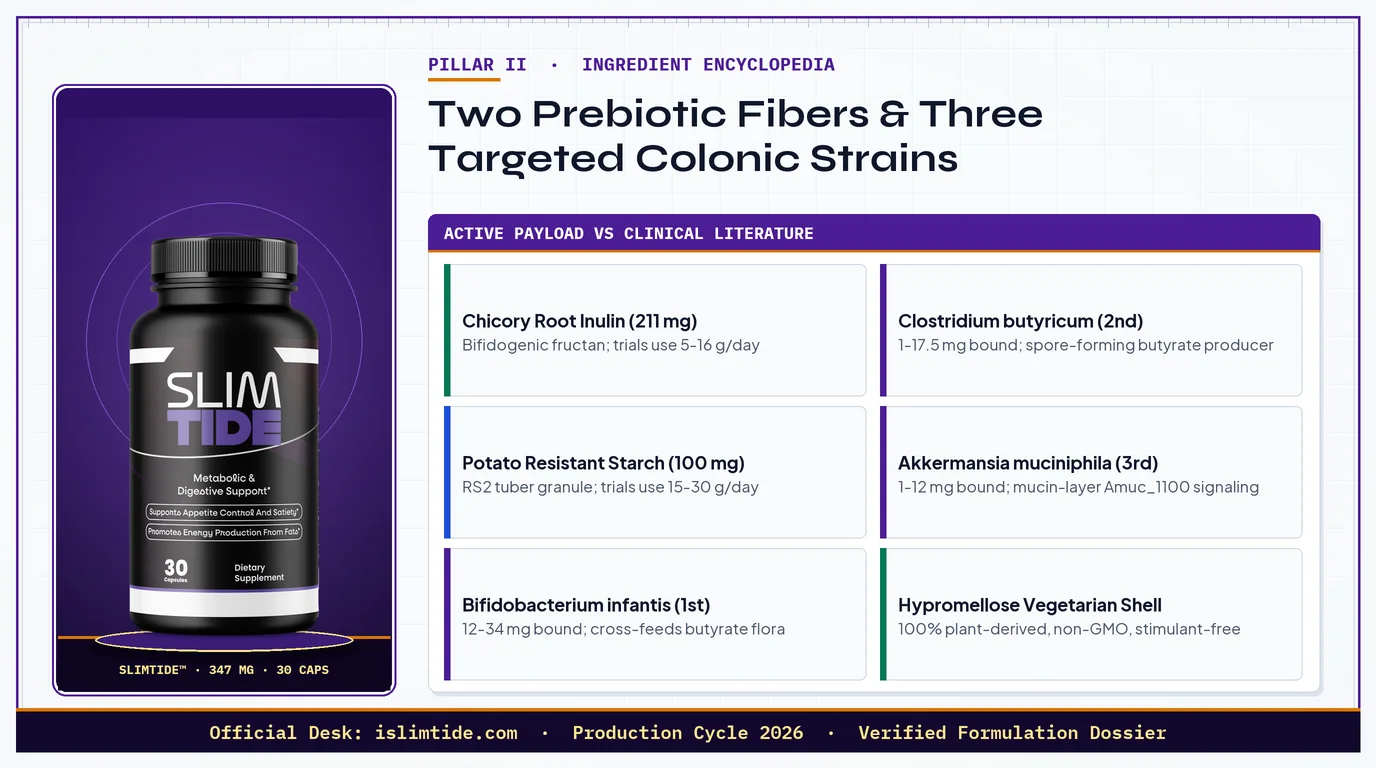
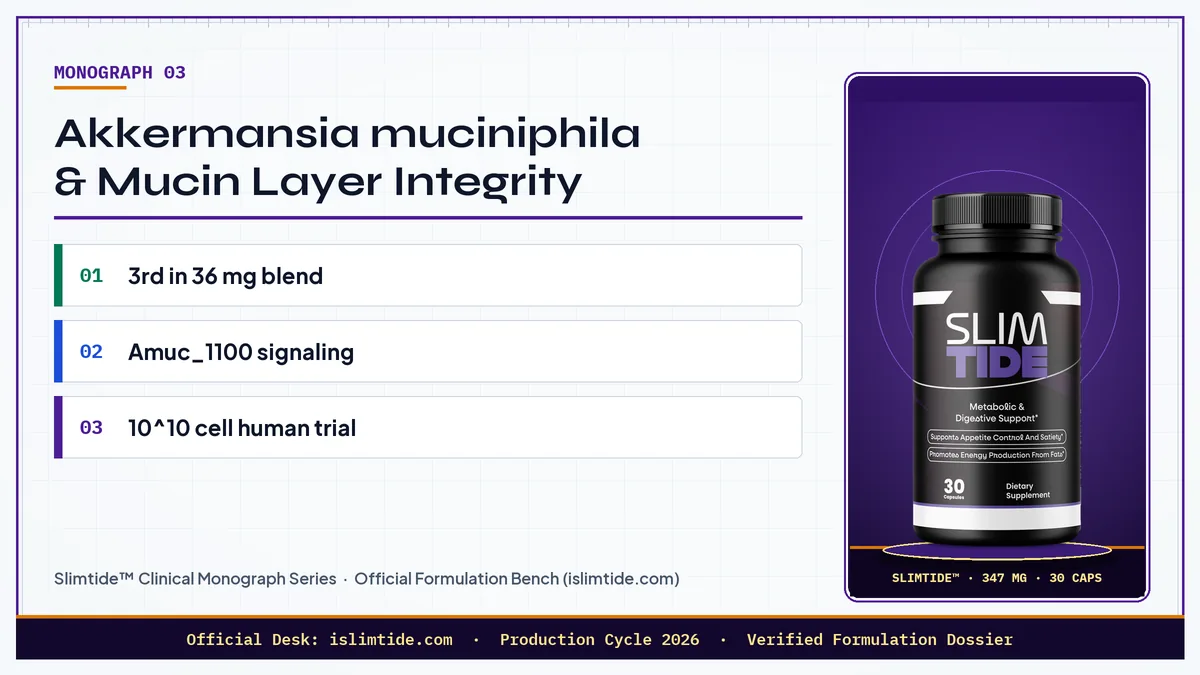
Akkermansia muciniphila is listed third in descending weight order inside the Slimtide 36 mg Probiotic Blend, following Bifidobacterium infantis and Clostridium butyricum [1,2]. First isolated from the human intestinal tract at Wageningen University in 2004, this Gram-negative, strictly anaerobic Verrucomicrobia species resides directly within the outer colonic mucus layer, where it regulates goblet-cell mucin turnover, strengthens epithelial tight junctions via outer-membrane protein Amuc_1100, and correlates inversely with metabolic endotoxemia and visceral adiposity [3,4,5].
Taxonomic Discovery & Ecological Niche in the Colonic Mucus Layer
In 2004, Muriel Derrien, Willem de Vos, and colleagues at Wageningen University isolated a novel, non-motile, oval-shaped, strictly anaerobic bacterium from a human fecal sample using purified gastric mucin as the sole carbon and nitrogen source, naming it Akkermansia muciniphila (literally "mucin-loving" in tribute to Dutch microbiologist Antoon Akkermans) [3]. As the sole intestinal representative of the phylum Verrucomicrobiota in humans, Akkermansia muciniphila accounts for approximately 1% to 4% of the total fecal microbiota in healthy, normoweight adults [3,5].
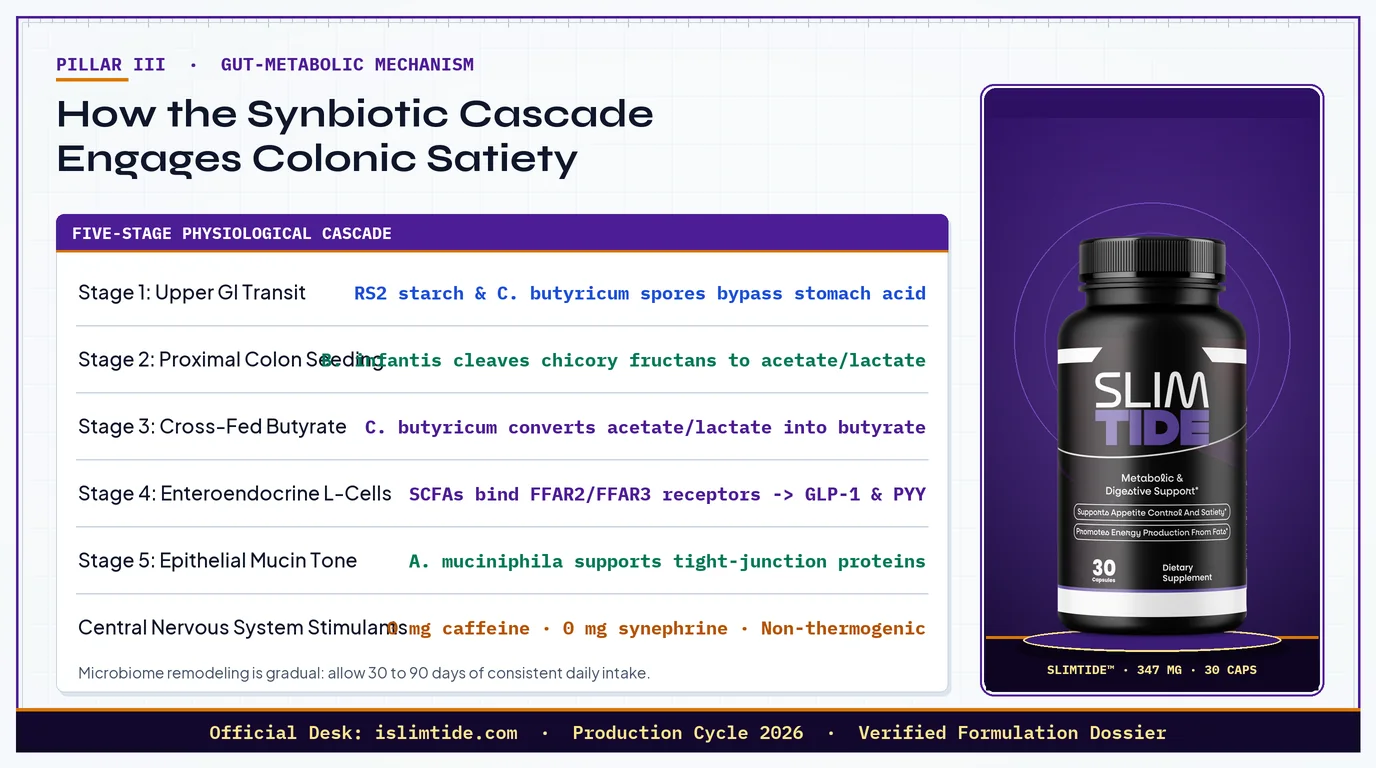
Unlike luminal fiber-degrading bacteria that float in the central fecal stream, Akkermansia muciniphila colonizes the outer loose mucus layer coating the intestinal epithelium [6,5]. Goblet cells continuously secrete heavily glycosylated MUC2 mucin proteins containing O-linked oligosaccharide side chains capped with sialic acid, fucose, and sulfate groups. Akkermansia muciniphila expresses an arsenal of more than 60 specialized mucin-degrading enzymes (including sialidases, alpha-L-fucosidases, beta-galactosidases, N-acetyl-beta-hexosaminidases, and sulfatases) that cleave these terminal sugars and convert them into acetate and propionate right at the apical surface of the host enterocytes [3,7].
Akkermansia muciniphila Position in the Slimtide 36 mg Blend
- Descending Weight Order in the 36 mg Probiotic Blend
- 3rd of 3
- Mathematical Weight Bound per Capsule (21 CFR 101.36)
- 0.5-11.9 mg
- 32-kDa Outer-Membrane Protein Engaging Host TLR2
- Amuc_1100
- Typical Relative Abundance in Healthy Human Gut Microbiota
- 1% to 4%
Crucially, Akkermansia muciniphila does not erode the protective inner mucus barrier. Instead, by degrading aged mucin glycoproteins in the outer layer and releasing short-chain fatty acids immediately adjacent to goblet cells, it stimulates compensatory goblet-cell differentiation and fresh MUC2 biosynthesis [6,8]. In seminal preclinical work by Everard et al. (2013), high-fat-diet feeding reduced colonic mucus thickness by 46% and depleted Akkermansia muciniphila 100-fold; oral administration of Akkermansia muciniphila completely restored the thickness of the inner mucus layer, normalized metabolic endotoxemia (fasting plasma lipopolysaccharide), and reduced fat-mass gain without altering food intake [6].
Amuc_1100 Outer-Membrane Protein, TLR2 Signaling & Metabolic Endotoxemia
One of the most important mechanistic discoveries in microbiome science over the past decade is that the barrier-restoring activity of Akkermansia muciniphila does not depend solely on live mucin fermentation. In 2017, Plovier et al. discovered that Amuc_1100, an abundant 32-kilodalton outer-membrane pilus-associated protein expressed on the surface of Akkermansia muciniphila, remains structurally thermostable up to 70°C and directly binds Toll-like receptor 2 (TLR2) on human intestinal epithelial cells [9,5].
When Amuc_1100 engages epithelial TLR2, it initiates an intracellular signaling cascade that [9,10]:
- Upregulates Tight-Junction Proteins: Increases transcription and membrane localization of claudin-3, occludin, and zonula occludens-1 (ZO-1), tightening the paracellular seal between adjacent enterocytes [9,6].
- Blocks Lipopolysaccharide (LPS) Translocation: Prevents proinflammatory Gram-negative bacterial endotoxins (LPS) from leaking across the gut wall into the portal vein and systemic circulation, thereby blunting TLR4-driven adipose and hepatic inflammation [6,4].
- Stimulates Endocannabinoid & GLP-1 Secretion: Increases intestinal levels of 2-acylglycerols (2-oleoylglycerol, 2-arachidonoylglycerol, and 2-palmitoylglycerol) and newly identified secreted proteins (such as protein P9), which stimulate L-cell GLP-1 secretion and brown adipose thermogenesis [6,5,11].
Subsequent human clinical trials and systematic reviews between 2022 and 2025 (including Cani et al., 2022; Zhao et al., 2024; Ioannou et al., 2025; and Zhang et al., 2025) have confirmed that higher baseline or supplemented levels of Akkermansia muciniphila correlate with improved glycemic control, stronger gut barrier integrity, and enhanced cardiometabolic tone across overweight and type 2 diabetic populations [5,12,13,14].
Quantitative Weight Bounds in the Slimtide 36 mg Probiotic Blend
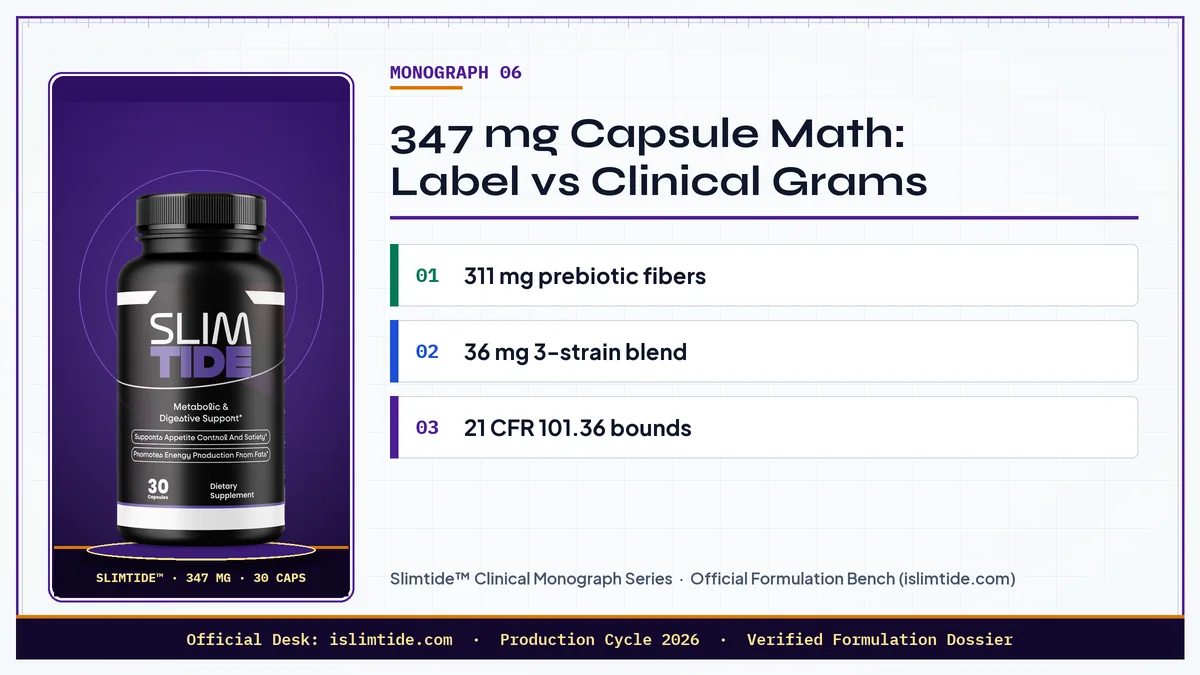
On the Official Slimtide Supplement Facts panel, Akkermansia muciniphila is part of a 36 mg proprietary Probiotic Blend listed in the following order: Bifidobacterium infantis, Clostridium butyricum, and Akkermansia muciniphila [1]. Under U.S. Food and Drug Administration regulations (21 CFR 101.36(c)), dietary ingredients grouped inside a proprietary blend must be declared in descending order of predominance by weight [2].
Let w1, w2, and w3 denote the mass in milligrams of Bifidobacterium infantis, Clostridium butyricum, and Akkermansia muciniphila, respectively, where w1 + w2 + w3 = 36.0 mg and w1 >= w2 >= w3 > 0:
How does a lyophilized powder allocation of 0.5 mg to 11.9 mg compare to the 10^10 cells/day (10 billion cells/day) evaluated in Depommier et al. (2019)? Pure freeze-dried bacterial biomass typically weighs approximately 0.2 mg to 1.0 mg per 10^9 cells before cryoprotectant carrier dilution, meaning 10^10 cells in commercial lyophilisate form (standardized at 10^10 to 10^11 CFU or TFU/g) usually requires 100 mg to 1,000 mg of commercial bulk blend, or 5 mg to 20 mg of ultra-concentrated cell cake [4,15]. Because the Slimtide label prints the total blend mass in milligrams (36 mg) rather than individual strain CFU or pasteurized TFU counts, our formulation bench presents both the exact regulatory weight bounds and the clinical trial benchmark side by side [1,15].
| Parameter | Depommier et al. (2019) RCT [4] | Zhao et al. (2024) / Zhang et al. (2025) [12,14] | Slimtide Official Capsule [1] |
|---|---|---|---|
| Strain Position / Format | Standalone live or pasteurized A. muciniphila | Standalone or multi-strain metabolic trials | 3rd strain in 36 mg 3-strain Probiotic Blend |
| Daily Quantitative Dose | 10^10 bacterial cells/day | 10^9 to 10^10 cells/day | 0.5 mg to 11.9 mg within 36 mg blend (CFU unprinted) |
| Co-Delivered Substrates | None (sachet in water) | Variable | 211 mg chicory root inulin + 100 mg potato RS2 |
| Cross-Feeding Partners | None | Variable | Bifidobacterium infantis + Clostridium butyricum |
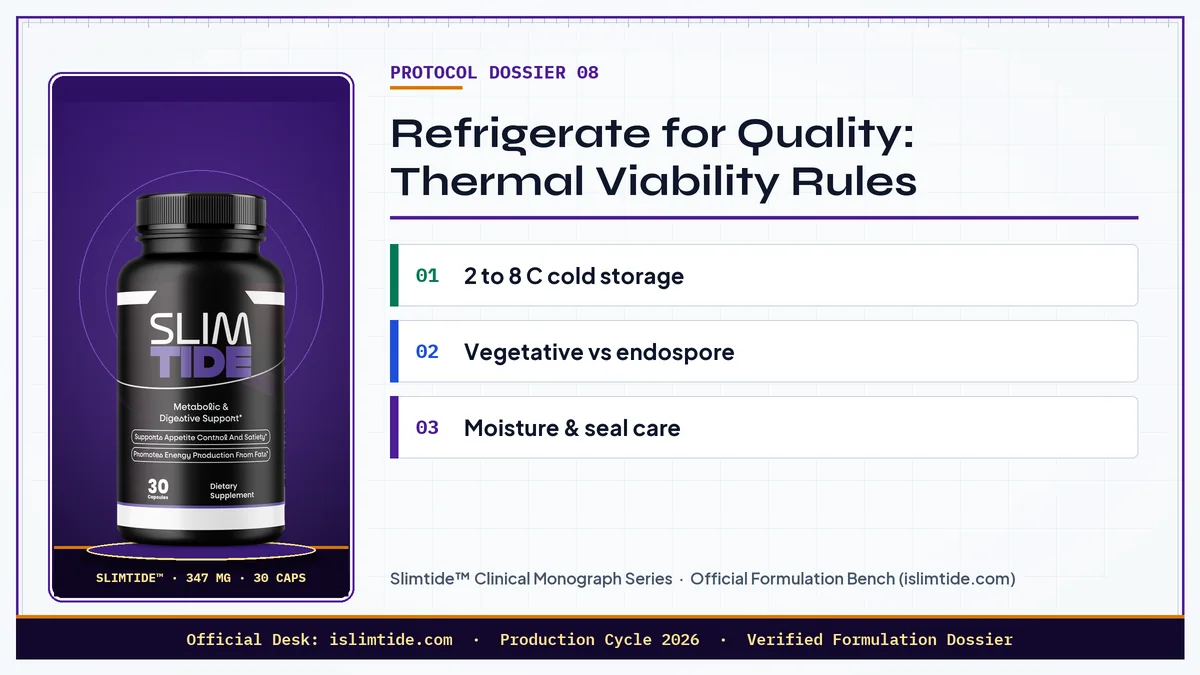
| Storage Protocol | Cold-chain / temperature controlled | Strain-dependent | Refrigerate after opening (2°C to 8°C) |
Ecological Synergy With Bifidobacterium infantis & Clostridium butyricum
Why pair Akkermansia muciniphila with Bifidobacterium infantis and Clostridium butyricum rather than delivering it alone? In the human colon, Akkermansia muciniphila and butyrate-producing Firmicutes engage in mutualistic syntrophy [5,7]:
- Mucin-Derived Sugars Feed Butyrate Producers: As Akkermansia muciniphila cleaves fucose, galactose, and N-acetylglucosamine from MUC2 mucin chains and secretes acetate and 1,2-propanediol, adjacent butyrate producers like Clostridium butyricum utilize that acetate to synthesize butyrate via the butyryl-CoA:acetate CoA-transferase pathway [16,17].
- Butyrate Maintains the Anaerobic Niche: In return, the butyrate produced by Clostridium butyricum fuels colonocyte mitochondrial beta-oxidation, consuming luminal oxygen so that the strictly anaerobic Akkermansia muciniphila is shielded from oxidative stress [18,5]. Meanwhile, even if a fraction of Akkermansia muciniphila cells lose vegetative culturability during transit, their heat-stable outer-membrane protein Amuc_1100 retains full TLR2-binding bioactivity [9,4].
Explore the complete Slimtide Ingredients Encyclopedia or select your direct 3-bottle or 6-bottle supply package with free U.S. shipping and our 60-day money-back guarantee [20,21].
Frequently Asked Questions
How much Akkermansia muciniphila is in each Slimtide capsule?
Akkermansia muciniphila is the third ingredient listed in Slimtide's 36 mg Probiotic Blend, following Bifidobacterium infantis and Clostridium butyricum [1]. Under 21 CFR 101.36 descending weight rules, its mathematical mass per capsule cannot exceed 12.0 mg (36 mg ÷ 3) and falls between 0.5 mg and 11.9 mg assuming a 0.5 mg minimum practical inclusion [2]. Individual strain CFU counts are not printed on the label.
Does Akkermansia muciniphila still work if some cells are inactivated by stomach acid?
Yes. Landmark research by Plovier et al. (2017) and the human randomized controlled trial by Depommier et al. (2019) proved that non-replicating (pasteurized) Akkermansia muciniphila cells retain their outer-membrane protein Amuc_1100, which binds intestinal TLR2 receptors to tighten epithelial junctions and improve insulin sensitivity [9,4].
Does Chicory Root Inulin help boost endogenous Akkermansia muciniphila?
Why should I refrigerate Slimtide if Amuc_1100 is heat-stable?
Scientific & Regulatory References
Numbered in order of first appearance on this page. Primary peer-reviewed citations link directly to PubMed (NCBI/NLM) and eCFR records verified on November 15, 2026.
- Slimtide Official Supplement Facts Panel (30 Capsules; 211 mg Chicory Root Inulin, 100 mg Potato Resistant Starch, 36 mg Probiotic Blend; Distributed by Instituto Experience, Lakeland FL 33804). Verified November 15, 2026. Official Record
- 21 CFR 101.36. Nutrition labeling of dietary supplements (proprietary blends listed in descending order of predominance by weight). Official Record
- Derrien M, Vaughan EE, Plugge CM, et al. Akkermansia muciniphila gen. nov., sp. nov., a human intestinal mucin-degrading bacterium. Int J Syst Evol Microbiol. 2004;54(Pt 5):1469-1476. PMID 15388697. PubMed
- Depommier C, Everard A, Druart C, et al. Supplementation with Akkermansia muciniphila in overweight and obese human volunteers: a proof-of-concept exploratory study. Nat Med. 2019;25(7):1096-1103. PMID 31263284. PubMed
- Cani PD, Depommier C, Derrien M, et al. Akkermansia muciniphila: paradigm for next-generation beneficial microorganisms. Nat Rev Gastroenterol Hepatol. 2022;19(10):625-637. PMID 35641786. PubMed
- Everard A, Belzer C, Geurts L, et al. Cross-talk between Akkermansia muciniphila and intestinal epithelium controls diet-induced obesity. Proc Natl Acad Sci U S A. 2013;110(22):9066-71. PMID 23671105. PubMed
- Rodrigues VF, Elias-Oliveira J, Pereira ÍS, et al. Akkermansia muciniphila and Gut Immune System: A Good Friendship That Attenuates Inflammatory Bowel Disease, Obesity, and Diabetes. Front Immunol. 2022;13:934695. PMID 35874661. PubMed
- Zhang T, Li Q, Cheng L, et al. Akkermansia muciniphila is a promising probiotic. Microb Biotechnol. 2019;12(6):1109-1125. PMID 31006995. PubMed
- Plovier H, Everard A, Druart C, et al. A purified membrane protein from Akkermansia muciniphila or the pasteurized bacterium improves metabolism in obese and diabetic mice. Nat Med. 2017;23(1):107-113. PMID 27892954. PubMed
- Xie S, Li J, Lyu F, et al. Novel tripeptide RKH derived from Akkermansia muciniphila protects against lethal sepsis. Gut. 2023;73(1):78-91. PMID 37553229. PubMed
- Liu J, Liu Y, Huang C, et al. Quercetin-Driven Akkermansia Muciniphila Alleviates Obesity by Modulating Bile Acid Metabolism via an ILA/m(6)A/CYP8B1 Signaling. Adv Sci (Weinh). 2025;12(12):e2412865. PMID 39888270. PubMed
- Zhao Y, Yang H, Wu P, et al. Akkermansia muciniphila: A promising probiotic against inflammation and metabolic disorders. Virulence. 2024;15(1):2375555. PMID 39192579. PubMed
- Ioannou A, Berkhout MD, Geerlings SY, et al. Akkermansia muciniphila: biology, microbial ecology, host interactions and therapeutic potential. Nat Rev Microbiol. 2025;23(3):162-177. PMID 39406893. PubMed
- Zhang Y, Liu R, Chen Y, et al. Akkermansia muciniphila supplementation in patients with overweight/obese type 2 diabetes: Efficacy depends on its baseline levels in the gut. Cell Metab. 2025;37(3):592-605.e6. PMID 39879980. PubMed
- U.S. Food and Drug Administration. Guidance for Industry: Policy Regarding Quantitative Labeling of Dietary Supplements Containing Live Microbials. Official Record
- Rivière A, Selak M, Lantin D, et al. Bifidobacteria and Butyrate-Producing Colon Bacteria: Importance and Strategies for Their Stimulation in the Human Gut. Front Microbiol. 2016;7:979. PMID 27446020. PubMed
- Stoeva MK, Garcia-So J, Justice N, et al. Butyrate-producing human gut symbiont, Clostridium butyricum, and its role in health and disease. Gut Microbes. 2021;13(1):1-28. PMID 33874858. PubMed
- Koh A, De Vadder F, Kovatcheva-Datchary P, et al. From Dietary Fiber to Host Physiology: Short-Chain Fatty Acids as Key Bacterial Metabolites. Cell. 2016;165(6):1332-1345. PMID 27259147. PubMed
- Slimtide U.S. Fulfillment, Transit & Cold-Storage Guidelines. Verified November 15, 2026. Official Record
- Slimtide Official U.S. Store Package Schedule (2 Bottles $158 + $9.99 S&H; 3 Bottles $207 Free S&H + 6 Bonuses; 6 Bottles $294 Free S&H + 6 Bonuses). Verified November 15, 2026. Official Record
- Slimtide Official 60-Day Money-Back Guarantee & Return Protocol (Instituto Experience Return Depot, 11870 62nd St N, Largo, FL 33773). Verified November 15, 2026. Official Record
- Dewulf EM, Cani PD, Claus SP, et al. Insight into the prebiotic concept: lessons from an exploratory, double blind intervention study with inulin-type fructans in obese women. Gut. 2013;62(8):1112-21. PMID 23135760. PubMed