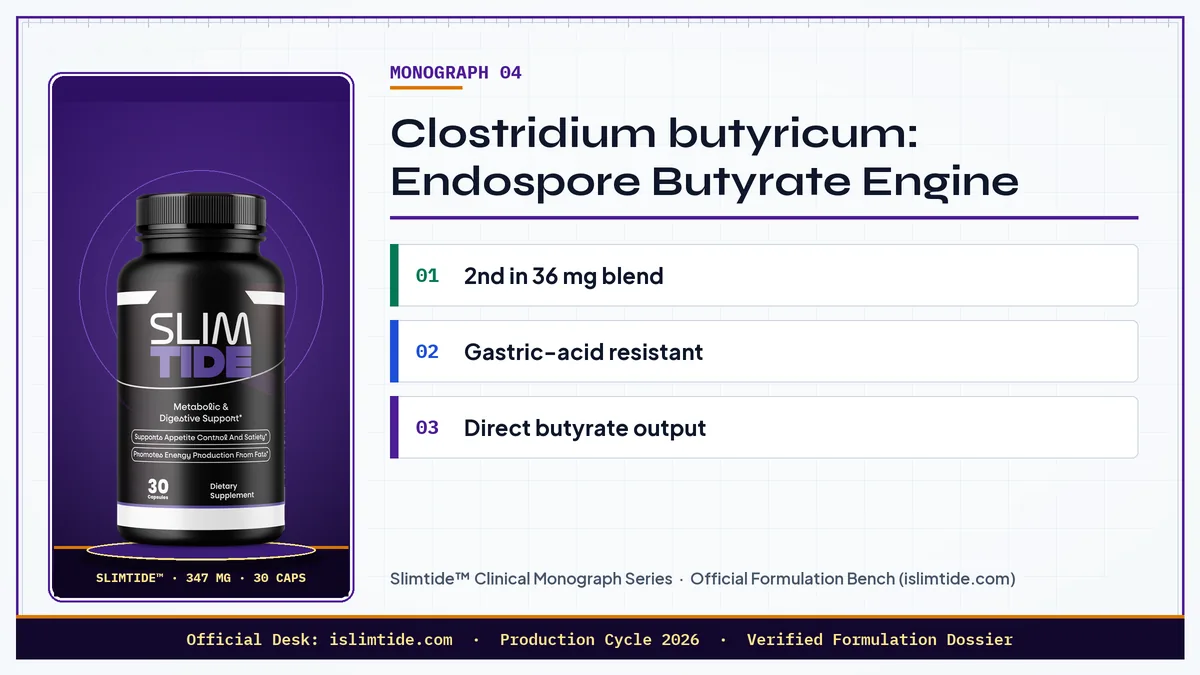
Clinical Monograph 04 · Endospore Butyrate Producer · 2nd in 36 mg Probiotic Blend
Clostridium butyricum Monograph: Gastric-Acid-Resistant Endospores & Direct Colonic Butyrate Synthesis
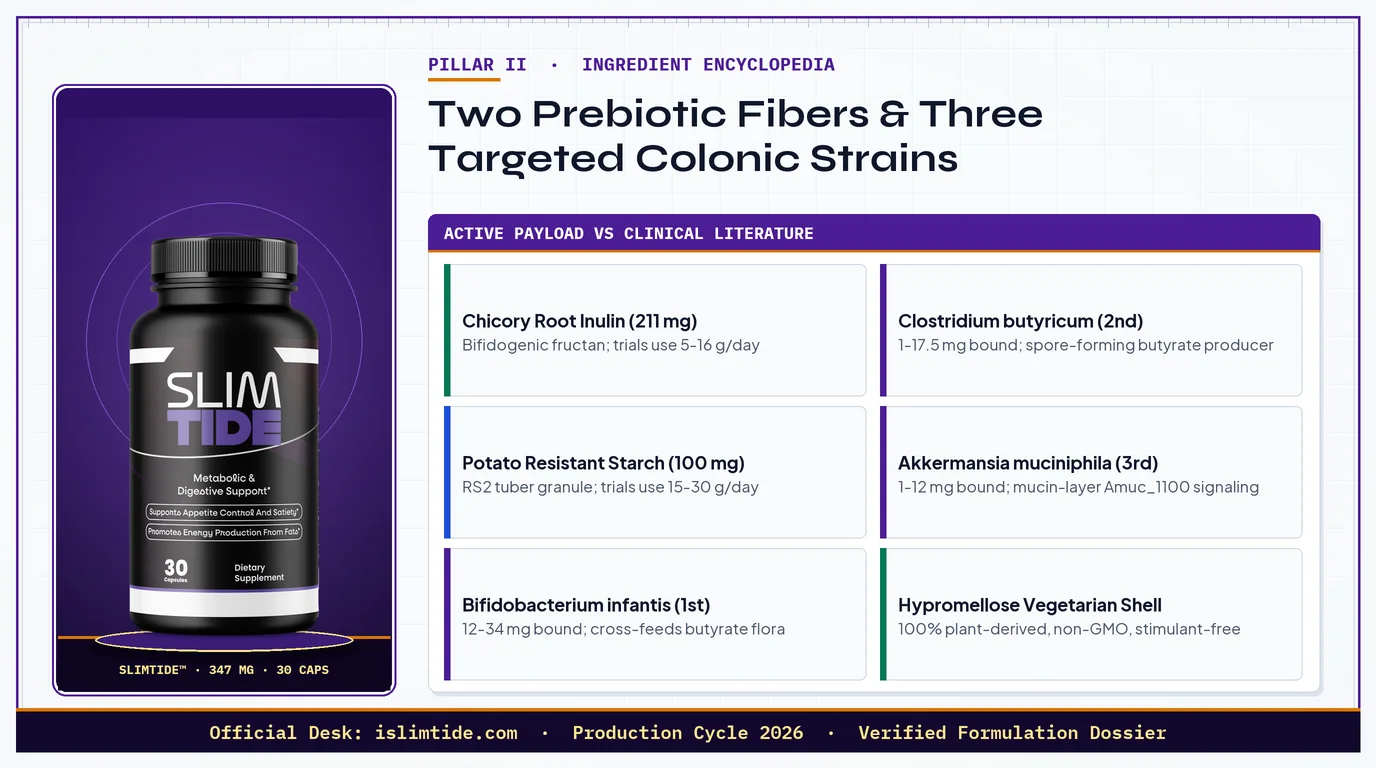
Clostridium butyricum is positioned second by weight inside the Slimtide 36 mg Probiotic Blend, between Bifidobacterium infantis and Akkermansia muciniphila [1,2]. Unlike fragile vegetative bacteria that suffer logarithmic losses in low gastric pH, Clostridium butyricum forms dormant, multi-layered endospores that survive stomach acid (pH 1.5 to 3.0) and bile salts intact, germinating in the anaerobic colon to synthesize n-butyrate directly from resistant starch and cross-fed acetate [3,4,5].
Taxonomic Distinction & Long-Standing Asian Clinical Safety Record
The genus name Clostridium frequently prompts an immediate safety question from clinicians and consumers familiar with pathogenic species such as Clostridioides difficile (formerly Clostridium difficile), Clostridium perfringens, or Clostridium botulinum. It is essential to establish that non-toxigenic probiotic strains of Clostridium butyricum (assigned to Clostridial cluster I, Clostridium sensu stricto) are genetically, metabolically, and ecologically distinct from pathogenic Clostridia [3,5].
Non-toxigenic Clostridium butyricum is a Gram-positive, rod-shaped, obligate anaerobic, spore-forming commensal bacterium naturally found in the human gastrointestinal tract from early infancy through adulthood [3]. Far from being an experimental microbe, specific strains of Clostridium butyricum (most notably C. butyricum MIYAIRI 588, isolated by Dr. Chikaji Miyairi in 1933) have been approved and prescribed by the Japanese Ministry of Health, Labour and Welfare and across South Korea and China for more than 60 years to prevent antibiotic-associated diarrhea, suppress Clostridioides difficile overgrowth, and restore intestinal barrier homeostasis [3,5,6].
Clostridium butyricum Position in the Slimtide 36 mg Blend
- Descending Weight Order in the 36 mg Probiotic Blend
- 2nd of 3
- Mathematical Weight Bound per Capsule (21 CFR 101.36)
- 0.5-17.8 mg
- Calcium-Dipicolinate Core Resistant to Gastric Acid & Bile
- Endospore
- Primary 4-Carbon Short-Chain Fatty Acid Metabolite
- n-Butyrate
Whole-genome sequencing and toxicological evaluations of probiotic Clostridium butyricum strains confirm the complete absence of genes encoding botulinum neurotoxins, alpha-toxin, enterotoxins, or transferable vancomycin resistance cassettes [3,4]. Instead, Clostridium butyricum acts as a competitive antagonist against enteric pathogens by consuming luminal disaccharides, secreting bacteriocins, and elevating luminal butyrate [6,7].
Endospore Structural Armor: Surviving Gastric Acid (pH 1.5) and Bile Salts
A central engineering challenge for oral probiotic capsules is surviving transit through the human stomach, where hydrochloric acid and pepsin maintain a fasting pH between 1.5 and 2.5, followed by detergent-like conjugated bile acids in the duodenum [3,8]. While vegetative cells of Bifidobacterium and Akkermansia rely on the physical protection of Slimtide's hypromellose capsule shell and meal buffering, Clostridium butyricum possesses an intrinsic biological shield: bacterial endospore formation [3].
When exposed to nutrient limitation or lyophilization during manufacturing, Clostridium butyricum packages its chromosome into a metabolically dormant endospore protected by five concentric structural layers [3]:
- Dehydrated Spore Core With Calcium-Dipicolinic Acid (Ca-DPA): The inner core contains minimal free water and up to 10% to 15% dry weight of dipicolinic acid chelated with divalent calcium ions (
Ca2+-DPA), alongside small acid-soluble spore proteins (SASPs) that bind DNA and prevent acid depurination or thermal denaturation [3]. - Inner Forespore Membrane: Exhibits extremely low permeability to protons (
H+), hydrochloric acid, and organic solvents. - Peptidoglycan Spore Cortex: Maintains core dehydration through mechanical osmotic pressure.
- Multi-Layered Proteinaceous Spore Coat: Cross-linked structural proteins that resist host lysozyme, pepsin, trypsin, and pancreatin enzymatic digestion [3].
- Exosporium: Outer surface layer that mediates adhesion to colonic mucin and crystalline starch granules upon arrival in the large bowel.
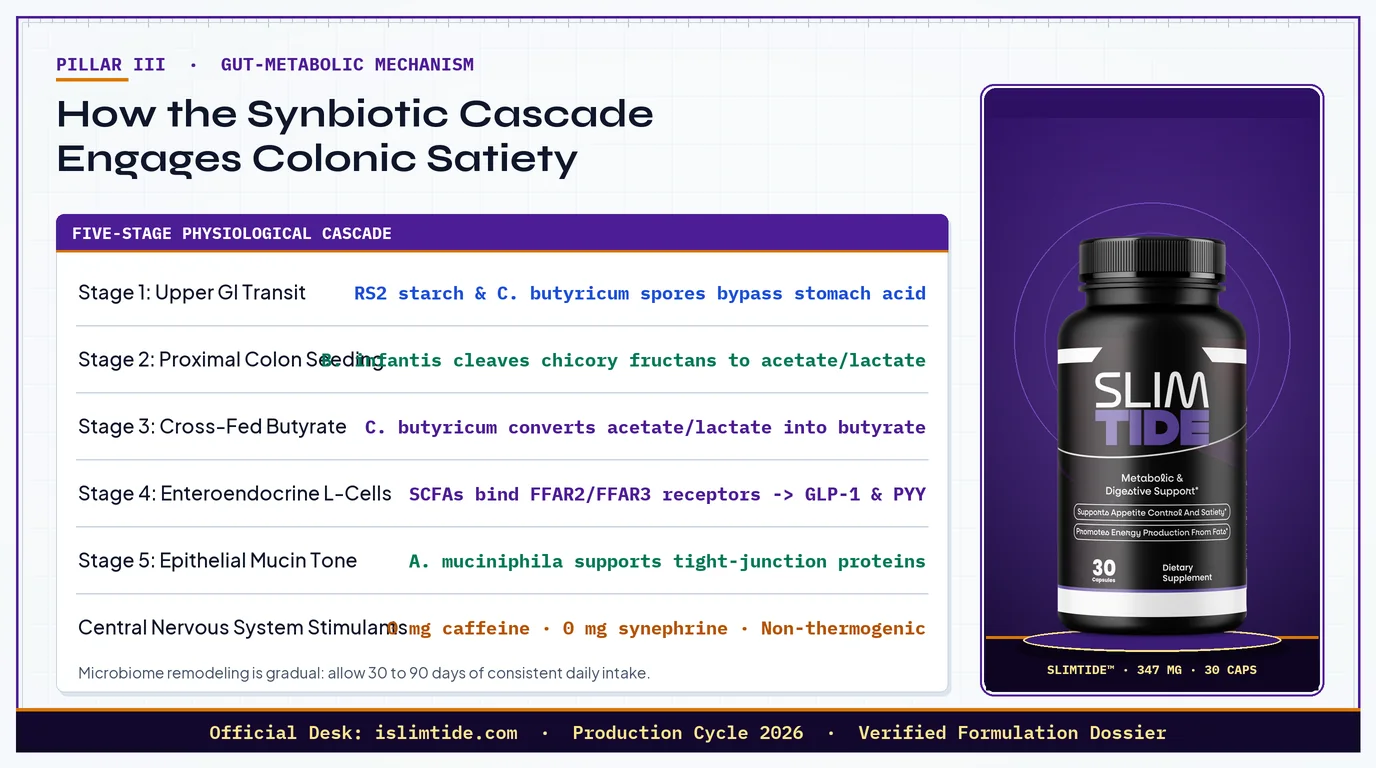
Because of this endospore architecture, Clostridium butyricum transits through gastric acid (pH 1.5 to 3.0) and physiological bile salt concentrations (0.3% to 0.5% oxgall) with near-100% survival [3,5]. Once the spores enter the neutral-to-slightly-acidic, oxygen-depleted lumen of the ileum and cecum, nutrient germinant receptors detect amino acids, bile salt derivatives, and fermentable carbohydrates (specifically the 100 mg of Solanum tuberosum RS2 and 211 mg of chicory root inulin in Slimtide), triggering core rehydration, cortex hydrolysis, and outgrowth into metabolically active vegetative rods within 2 to 4 hours [3,9].
The Butyryl-CoA Enzymatic Pathway & Cross-Feeding With Bifidobacterium infantis
Once germinated into its vegetative state in the colon, Clostridium butyricum functions as a dedicated biological factory for n-butyrate [3,10]. It ferments intracellular hexoses and pentoses derived from resistant starch (via extracellular alpha-amylases and pullulanases) and inulin-derived oligosaccharides into pyruvate, which is decarboxylated by pyruvate:ferredoxin oxidoreductase into acetyl-CoA (accompanied by CO2 and H2 generation) [3,11].
Two molecules of acetyl-CoA are then condensed and reduced through a four-step enzymatic pathway culminating in butyrate synthesis [10,3]:
- Thiolase (Acetyl-CoA Acetyltransferase): Condenses two acetyl-CoA molecules into acetoacetyl-CoA.
- Beta-Hydroxybutyryl-CoA Dehydrogenase: Reduces acetoacetyl-CoA into beta-hydroxybutyryl-CoA.
- Crotonase (3-Hydroxybutyryl-CoA Dehydratase): Dehydrates beta-hydroxybutyryl-CoA into crotonyl-CoA.
- Butyryl-CoA Dehydrogenase (EtfAB Complex): Reduces crotonyl-CoA into butyryl-CoA while driving proton/sodium motive force conservation.
From butyryl-CoA, Clostridium butyricum generates free butyrate via two terminal enzymatic routes: the phosphotransbutyrylase / butyrate kinase (ptb-buk) pathway, which directly phosphorylates ADP into ATP, and the butyryl-CoA:acetate CoA-transferase (but) pathway, which transfers the CoA moiety onto exogenous acetate imported from the colonic lumen [11,3].
Human Clinical Evidence & 21 CFR 101.36 Mathematical Bounds
In human clinical trials, oral supplementation with Clostridium butyricum (either alone or in multi-strain synbiotic formulations with Bifidobacterium infantis and Akkermansia muciniphila) has demonstrated compelling metabolic, glycemic, and gastrointestinal benefits [12,4,13].
In the randomized, double-blind, placebo-controlled trial by Perraudeau et al. (2020) published in BMJ Open Diabetes Research & Care, 76 adults with type 2 diabetes received a multi-strain formulation containing Clostridium butyricum, Akkermansia muciniphila, Bifidobacterium infantis, and inulin for 12 weeks [12]. Compared with placebo, the active synbiotic group achieved a statistically significant reduction in total postprandial glucose excursion (AUC 0-180 min decreased by -36.1 mg/dL·min, p = 0.0500), a -0.6% decrease in HbA1c, and improved postprandial insulin sensitivity with high gastrointestinal tolerability [12]. Recent human trials and reviews by Chen et al. (2020), Ma et al. (2022), Paz et al. (2024), and Song et al. (2026) further document that Clostridium butyricum downregulates intestinal TNF-alpha and IL-6, upregulates GLP-1 secretion via L-cell GPR43/GPR109A activation, and restores microbial diversity [6,7,4,13].
Under 21 CFR 101.36, because Clostridium butyricum is listed second in the 36 mg Slimtide Probiotic Blend (w1 >= w2 >= w3), its mathematical weight per capsule is strictly bounded [2,1]:
| Attribute | Bifidobacterium infantis (1st) | Clostridium butyricum (2nd) | Akkermansia muciniphila (3rd) |
|---|---|---|---|
| 21 CFR 101.36 Weight Bound | 12.0 mg to 35.0 mg (12.0-34.0 mg practical) | 0.5 mg to 17.75 mg | 0.5 mg to 11.9 mg |
| Cellular Morphology | Non-spore-forming Gram+ rod | Endospore-forming Gram+ rod | Non-spore-forming Gram- oval |
| Gastric Acid Resilience | Moderate (relies on capsule + meal) | High (Ca-DPA endospore armor) | Moderate (Amuc_1100 protein heat/acid stable) |
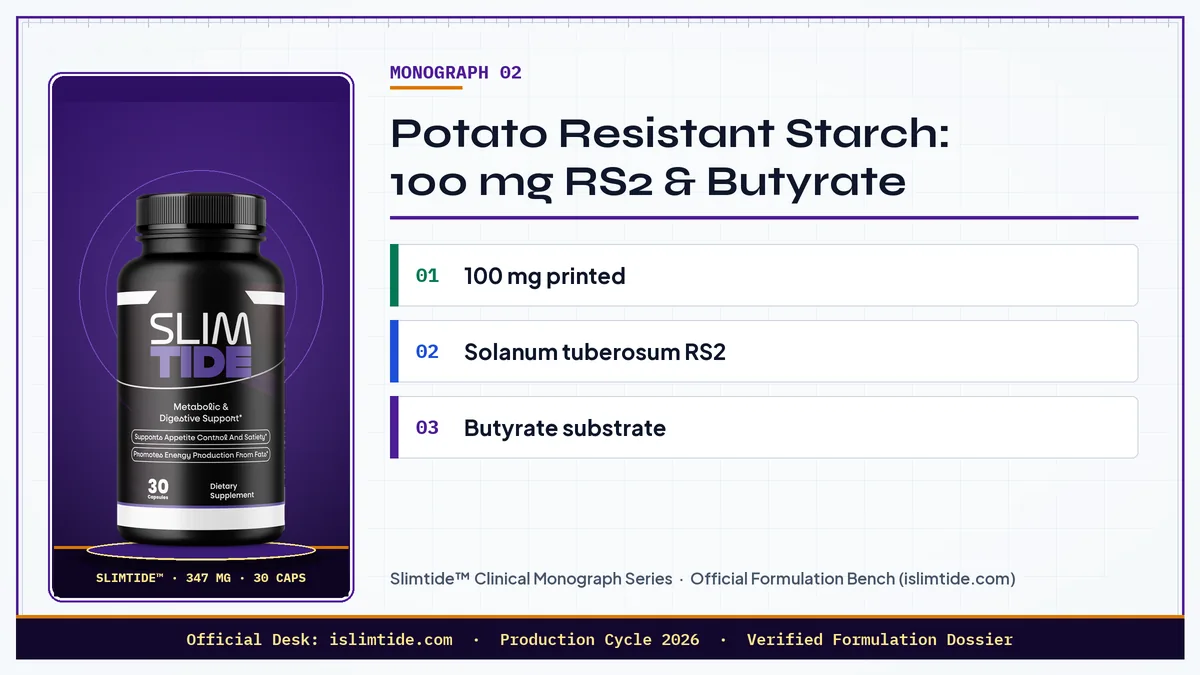
| Primary Capsule Substrate | 211 mg Chicory Root Inulin | 100 mg Potato RS2 + cross-fed acetate | Host MUC2 mucin + inulin indirect support |
| Primary Metabolic Output | Acetate + L-Lactate (1.5 : 1 ratio) | n-Butyrate (ptb-buk & but pathways) | Acetate + Propionate + Amuc_1100 TLR2 |
Review our complete Label Facts Audit or order authentic Slimtide direct from our U.S. supply store [16].
Frequently Asked Questions
Is Clostridium butyricum related to C. diff (Clostridioides difficile)?
No. In modern bacterial taxonomy, Clostridioides difficile was reclassified into a completely separate genus (Clostridioides) in family Peptostreptococcaceae, whereas Clostridium butyricum belongs to Clostridium sensu stricto (Cluster I) [3]. Non-toxigenic probiotic Clostridium butyricum lacks all pathogenic toxin genes and has been used clinically in Japan for over 60 years to help protect the gut against C. difficile overgrowth [5,3].
Why is endospore formation important for a once-daily capsule?
Endospores encase the bacterium's DNA in a dehydrated calcium-dipicolinate core surrounded by dense protein coats [3]. This allows Clostridium butyricum to pass through stomach acid (pH 1.5 to 3.0) and duodenal bile salts without losing viability, ensuring live germination inside the anaerobic colon [3,4].
If Clostridium butyricum forms shelf-stable spores, why does the Slimtide bottle say 'Refrigerate for Optimal Quality'?
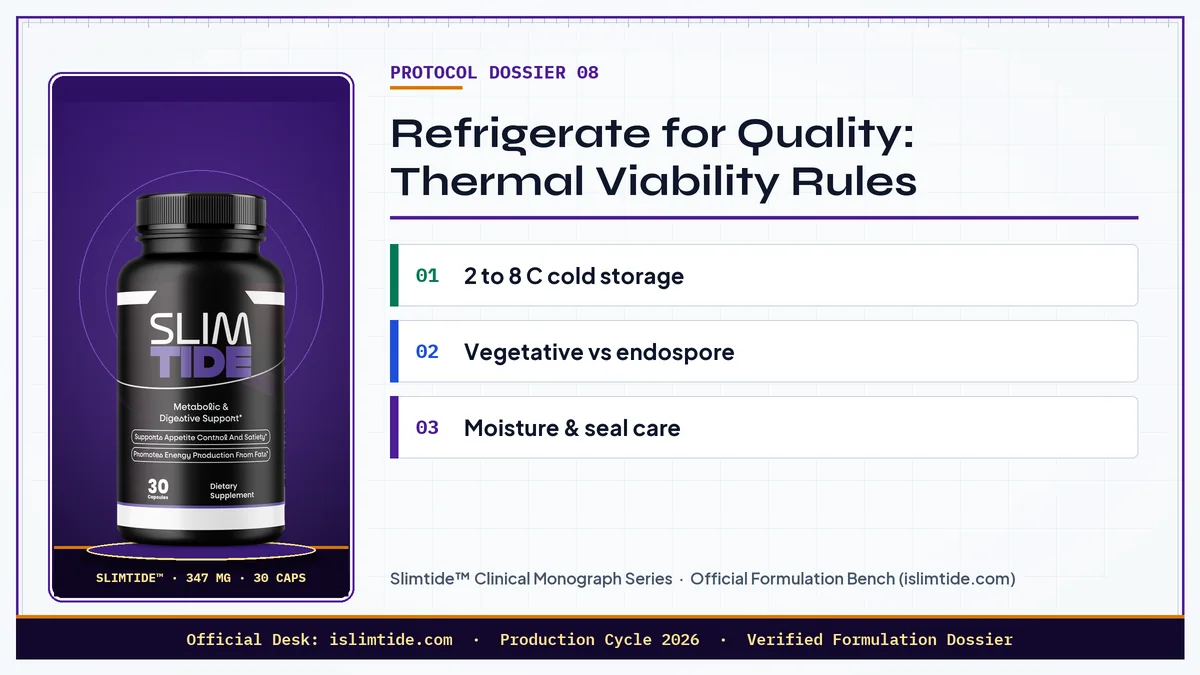
While Clostridium butyricum endospores are naturally heat-tolerant, the other two strains in Slimtide's 36 mg blend (Bifidobacterium infantis and Akkermansia muciniphila) are non-spore-forming vegetative bacteria [1,17]. Refrigerating the bottle at 2°C to 8°C after opening protects the full three-strain consortium [17].
What is the exact milligram range of Clostridium butyricum in Slimtide?
Scientific & Regulatory References
Numbered in order of first appearance on this page. Primary peer-reviewed citations link directly to PubMed (NCBI/NLM) and eCFR records verified on November 15, 2026.
- Slimtide Official Supplement Facts Panel (30 Capsules; 211 mg Chicory Root Inulin, 100 mg Potato Resistant Starch, 36 mg Probiotic Blend; Distributed by Instituto Experience, Lakeland FL 33804). Verified November 15, 2026. Official Record
- 21 CFR 101.36. Nutrition labeling of dietary supplements (proprietary blends listed in descending order of predominance by weight). Official Record
- Stoeva MK, Garcia-So J, Justice N, et al. Butyrate-producing human gut symbiont, Clostridium butyricum, and its role in health and disease. Gut Microbes. 2021;13(1):1-28. PMID 33874858. PubMed
- Paz Del Socorro T, Oka K, Boulard O, et al. The biotherapeutic Clostridium butyricum MIYAIRI 588 strain potentiates enterotropism of Rorγt(+)Treg and PD-1 blockade efficacy. Gut Microbes. 2024;16(1):2315631. PMID 38385162. PubMed
- Kato M, Hamazaki Y, Sun S, et al. Clostridium butyricum MIYAIRI 588 Increases the Lifespan and Multiple-Stress Resistance of Caenorhabditis elegans. Nutrients. 2018;10(12). PMID 30563064. PubMed
- Chen D, Jin D, Huang S, et al. Clostridium butyricum, a butyrate-producing probiotic, inhibits intestinal tumor development through modulating Wnt signaling and gut microbiota. Cancer Lett. 2020;469:456-467. PMID 31734354. PubMed
- Ma L, Shen Q, Lyu W, et al. Clostridium butyricum and Its Derived Extracellular Vesicles Modulate Gut Homeostasis and Ameliorate Acute Experimental Colitis. Microbiol Spectr. 2022;10(4):e0136822. PMID 35762770. PubMed
- NIH Office of Dietary Supplements. Probiotics: Fact Sheet for Health Professionals. Official Record
- Dobranowski PA, Stintzi A. Resistant starch, microbiome, and precision modulation. Gut Microbes. 2021;13(1):1926842. PMID 34275431. PubMed
- Koh A, De Vadder F, Kovatcheva-Datchary P, et al. From Dietary Fiber to Host Physiology: Short-Chain Fatty Acids as Key Bacterial Metabolites. Cell. 2016;165(6):1332-1345. PMID 27259147. PubMed
- Rivière A, Selak M, Lantin D, et al. Bifidobacteria and Butyrate-Producing Colon Bacteria: Importance and Strategies for Their Stimulation in the Human Gut. Front Microbiol. 2016;7:979. PMID 27446020. PubMed
- Perraudeau F, McMurdie P, Bullard J, et al. Improvements to postprandial glucose control in subjects with type 2 diabetes: a multicenter, double blind, randomized placebo-controlled trial of a novel probiotic formulation. BMJ Open Diabetes Res Care. 2020;8(1). PMID 32675291. PubMed
- Song S, Shi K, Fan M, et al. Clostridium butyricum and its metabolites regulate macrophage polarization through miR-146a to antagonize gouty arthritis. J Adv Res. 2026;80:943-960. PMID 40398744. PubMed
- U.S. Food and Drug Administration. Mixing Medications and Dietary Supplements Can Endanger Your Health. Official Record
- Doron S, Snydman DR. Risk and safety of probiotics. Clin Infect Dis. 2015;60 Suppl 2(Suppl 2):S129-34. PMID 25922398. PubMed
- Slimtide Official U.S. Store Package Schedule (2 Bottles $158 + $9.99 S&H; 3 Bottles $207 Free S&H + 6 Bonuses; 6 Bottles $294 Free S&H + 6 Bonuses). Verified November 15, 2026. Official Record
- Slimtide U.S. Fulfillment, Transit & Cold-Storage Guidelines. Verified November 15, 2026. Official Record