Clinical Monograph 02 · Crystalline RS2 Substrate · 28.82% of Active Capsule Mass
Potato Resistant Starch at 100 mg: Solanum tuberosum RS2 Granules, Colonic Butyrate & Glycemic Tone
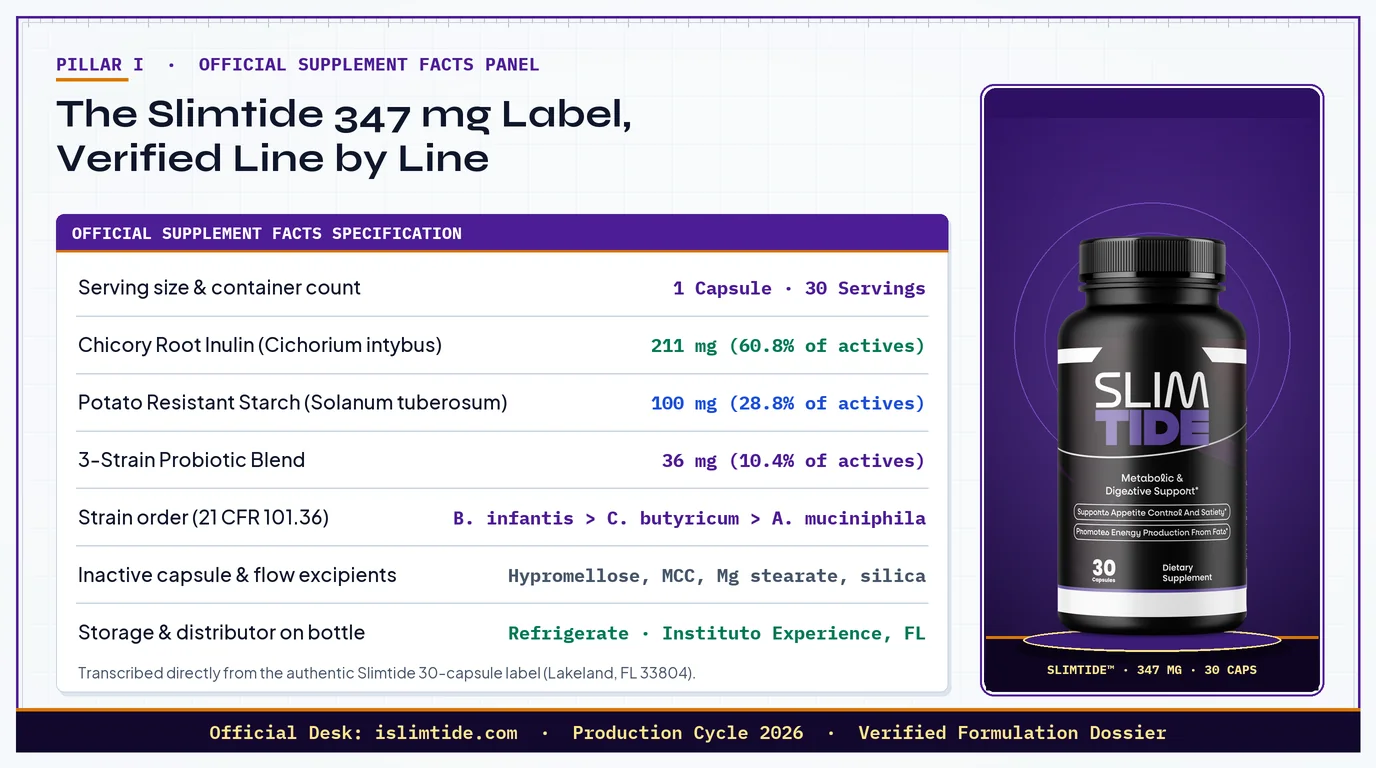
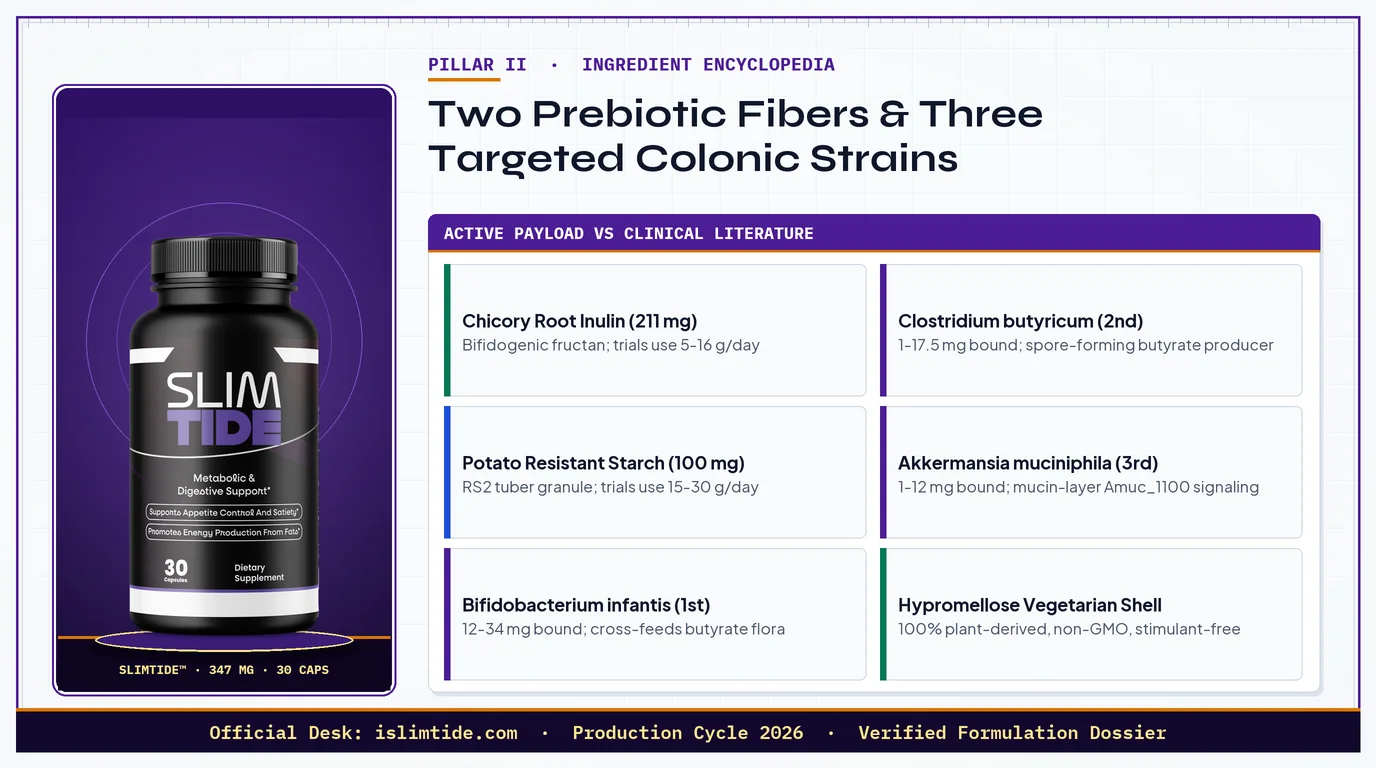
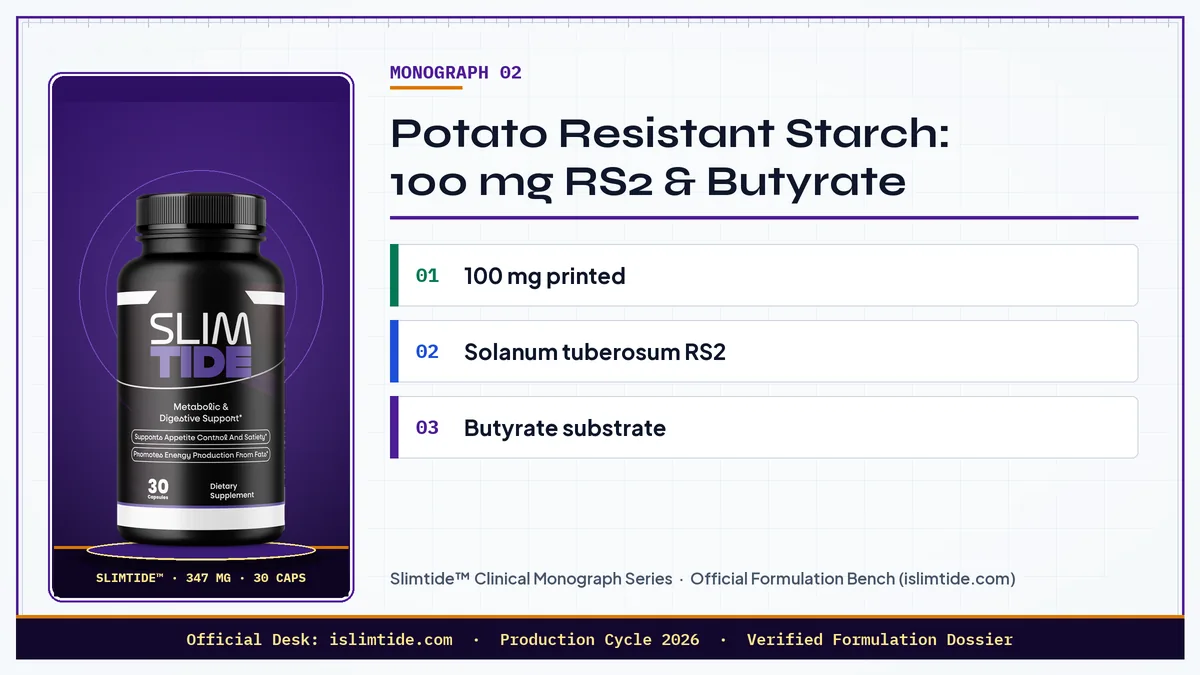
Potato resistant starch (Solanum tuberosum tuber) is the second quantitatively declared active ingredient on the Slimtide Supplement Facts panel, delivering 100 mg per capsule (28.82% of the 347 mg active payload and 32.15% of the prebiotic fiber matrix) [1,2]. This monograph details the B-type crystalline structure of native Type 2 resistant starch (RS2), its resistance to pancreatic alpha-amylase, its high molar conversion into colonic butyrate, and how the 100 mg capsule dose compares with multi-gram clinical starch trials.
Classification of Resistant Starches & B-Type Crystalline RS2 Structure
Starch polymers in the human diet are composed of two alpha-glucan macromolecules: linear amylose (glucose units joined primarily by alpha-(1,4) glycosidic bonds) and highly branched amylopectin (alpha-(1,4) chains linked at alpha-(1,6) branch points) [2,3]. While gelatinized starches from cooked bread, white rice, or hot potatoes are rapidly hydrolyzed in the duodenum by pancreatic alpha-amylase into maltose and absorbed as glucose, resistant starch (RS) is defined physiologically as the sum of starch and starch degradation products that resist enzymatic hydrolysis in the small intestine of healthy individuals and pass intact into the large bowel [4,2].
Food scientists classify resistant starch into five distinct structural subtypes (RS1 through RS5):
- RS1 (Physically Inaccessible Starch): Starch granules trapped within intact plant cell walls, such as coarsely milled whole grains and legumes [2,3].
- RS2 (Native Granular Resistant Starch): Raw, ungelatinized starch granules whose tightly packed crystalline conformation physically sterically blocks alpha-amylase binding, found characteristically in raw Solanum tuberosum (potato) tubers, green bananas, and high-amylose maize [2,5].
- RS3 (Retrograded Starch): Starch that has been cooked (gelatinized) and subsequently cooled, allowing linear amylose chains to recrystallize into enzyme-resistant double helices [3,6].
- RS4 (Chemically Modified Starch): Starches cross-linked, esterified, or etherified by chemical reagents to impede enzymatic cleavage [2].
- RS5 (Amylose-Lipid Complexes): Helical amylose chains complexed with free fatty acids or phospholipids that resist alpha-amylase [2].
Potato Resistant Starch Specification on the Official Slimtide Label
- Printed Single-Capsule Dose (Solanum tuberosum tuber)
- 100 mg
- Share of Total 347 mg Active Capsule Payload
- 28.82%
- Share of the 311 mg Prebiotic Fiber Matrix
- 32.15%
- Native B-Type Crystalline Granule Conformation
- Type RS2
Slimtide utilizes native ungelatinized Solanum tuberosum tuber resistant starch (RS2) [1]. X-ray diffraction crystallography shows that raw potato starch granules exhibit a B-type crystalline polymorph, wherein amylopectin side chains form left-handed parallel double helices packed in a hexagonal array around a central channel containing 36 structured water molecules per unit cell [2,3]. Furthermore, native potato starch contains a dense, smooth outer granule shell and naturally esterified phosphate monoester groups (primarily at the C6 and C3 positions of glucose residues) [3]. Because Slimtide capsules are manufactured under controlled ambient conditions without thermal gelatinization, these B-type crystalline granules remain intact inside the hypromellose shell and resist upper-gut alpha-amylase cleavage until they reach specialized amylolytic bacteria in the colon [5,1].
Longitudinal Fermentation Complementarity: Pairing RS2 With Chicory Inulin
A critical design problem in single-fiber prebiotic supplements is regional fermentation clustering. Short-chain fructooligosaccharides and native inulins ferment rapidly in the cecum and proximal ascending colon, often exhausting their carbon supply before the digesta reaches the transverse or descending colon [4,7]. Conversely, slowly fermenting fibers alone may fail to acidify the proximal cecum rapidly enough to support newly released vegetative bifidobacteria [8].
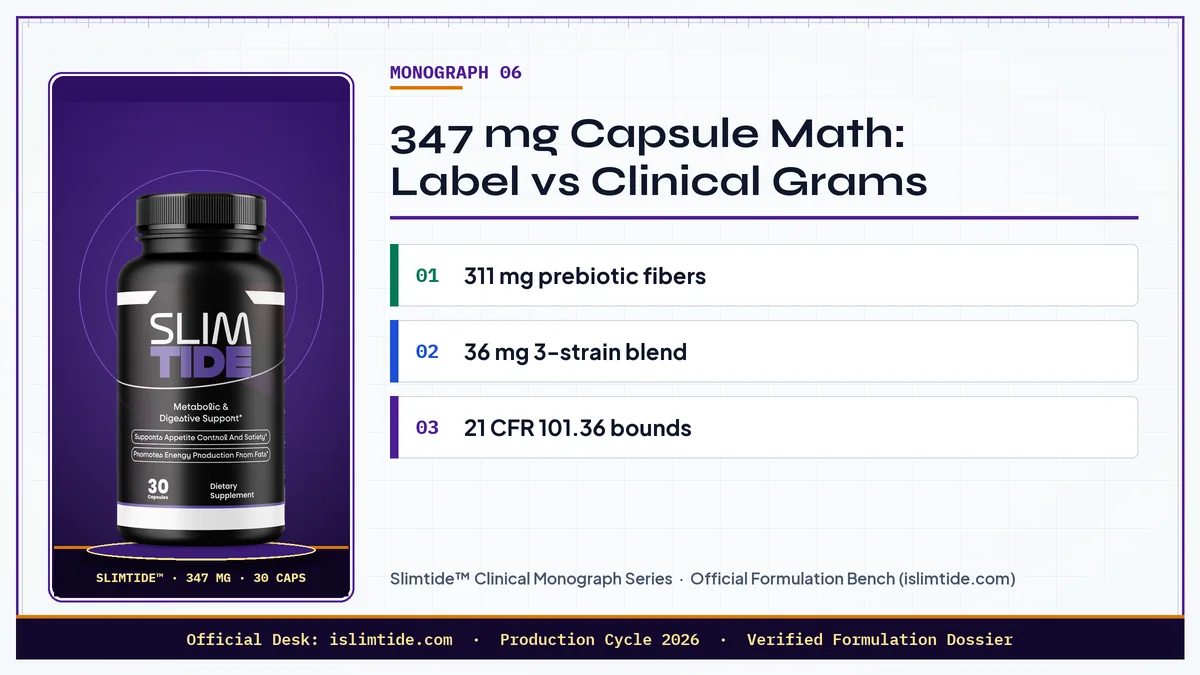
Slimtide addresses this regional gradient by combining 211 mg of chicory root inulin with 100 mg of potato resistant starch (a 2.11:1 ratio totaling 311 mg of prebiotic substrate per capsule) [1]:
- Proximal Zone (Cecum & Ascending Colon): Chicory root inulin hydrates immediately and undergoes rapid GH32 fructofuranosidase cleavage by Bifidobacterium infantis, releasing acetate and L-lactate that lower local pH and establish an anaerobic colonization niche [7,9].
- Mid-to-Distal Zone (Transverse & Descending Colon): Native B-type Solanum tuberosum RS2 granules require specialized extracellular amylosomes and starch-binding domains (carbohydrate-binding modules CBM26 and CBM74) expressed by primary starch degraders such as Ruminococcus bromii and Bifidobacterium adolescentis, as well as cross-feeding butyrate producers like Clostridium butyricum, Eubacterium rectale, and Faecalibacterium prausnitzii [5,10,11]. Because crystalline granule erosion occurs gradually from the surface inward, RS2 sustains short-chain fatty acid generation further along the colonic transit path [4,2].
Butyrogenic Yield, Colonocyte Beta-Oxidation & Postprandial Glycemic Tone
Among all dietary prebiotic substrates studied in human and in vitro colonic fermentation models, resistant starch consistently demonstrates the highest molar yield of n-butyrate (a 4-carbon short-chain fatty acid, CH3-CH2-CH2-COO-) [4,2]. While pectin and arabinoxylans favor acetate or propionate, fermentation of Solanum tuberosum RS2 elevates the molar proportion of butyrate from a baseline of roughly 15% toward 22% to 28% of total short-chain fatty acids [4,5,12].
Once synthesized in the colonic lumen, butyrate executes four coordinated physiological functions [15,16,17]:
- Primary ATP Fuel for Colonocytes (70% of Energy Demand): Colonic epithelial cells absorb butyrate via monocarboxylate transporter 1 (MCT1 / SLC16A1) and sodium-coupled monocarboxylate transporter 1 (SMCT1 / SLC5A8) and oxidize it in the mitochondria via beta-oxidation into acetyl-CoA, generating roughly 70% of their cellular ATP [15,16].
- Epithelial Hypoxia Maintenance: Rapid mitochondrial oxygen consumption by butyrate-oxidizing colonocytes keeps the luminal mucosal surface physiologically hypoxic (less than 1% oxygen), which prevents facultative anaerobes (such as Escherichia coli and Salmonella) from outcompeting obligate anaerobic symbionts like Akkermansia muciniphila and Clostridium butyricum [10,18].
- Tight-Junction Protein Upregulation & HDAC Inhibition: Butyrate acts as an endogenous inhibitor of class I and IIa histone deacetylases (HDACs) and activates GPR109A (HCAR2), upregulating the transcription of claudin-1, occludin, and zonula occludens-1 (ZO-1) to seal paracellular tight junctions against lipopolysaccharide (LPS) translocation [15,19].
- Second-Meal Glycemic & Hepatic Steatosis Modulation: In randomized trials by Ni et al. (2023) and Long et al. (2025), resistant starch supplementation significantly reduced intrahepatic triglyceride content in patients with non-alcoholic fatty liver disease (NAFLD / MASLD) and smoothed postprandial glycemic curves [17,20].
Quantitative Dose Audit: 100 mg Capsule RS2 vs. Multi-Gram Starch Trials
Just as with chicory root inulin, our official formulation bench publishes an explicit mathematical audit comparing the 100 mg Solanum tuberosum RS2 dose inside each Slimtide capsule against standalone multi-gram resistant starch trials [1,2].
| Study / Reference | Cohort & Design | Daily RS2 Dose | Primary Clinical & Microbiome Outcomes | Comparison to Slimtide (100 mg / Capsule) |
|---|---|---|---|---|
| Robertson et al., 2005 [14] | 10 healthy adults; 4-week crossover RCT | 30,000 mg/day (30 g RS2) | +13% to +19% insulin sensitivity; higher adipose glucose clearance | 300x higher bulk mass; requires drinking a thick starch slurry |
| Sonia et al., 2025 / 2015 [6] | Healthy adults; acute meal crossover | 4,000 to 8,000 mg RS | Reduced postprandial glycemic and insulinemic AUC | 40x to 80x higher mass via cooked/cooled starch foods |
| Dobranowski et al., 2021 [5] | Adults consuming Solanum tuberosum RS2 | 3,500 to 14,000 mg/day | Expansion of Bifidobacterium and Ruminococcus; elevated fecal butyrate | Demonstrates potato RS2 activity at 3.5 g/day minimum bulk dose |
| Jung et al., 2023 [11] | Healthy Korean adults; RCT | 5,000 to 15,000 mg/day | Selective enrichment of butyrate-producing taxa and SCFA output | Standalone starch intervention without co-administered C. butyricum |
| Ni et al., 2023 [17] | 200 patients with NAFLD; 4-month RCT | 40,000 mg/day (40 g RS2) | -9.08% absolute reduction in intrahepatic triglyceride content; weight loss | 400x higher bulk mass; medical nutrition therapy scale |
| Li et al., 2024 [13] | 37 overweight/obese adults; 8-week crossover | 40,000 mg/day (40 g RS2) | -2.8 kg body weight; improved clamp insulin sensitivity and gut barrier | Landmark bulk RS2 trial; Slimtide supplies a 100 mg micro-substrate |
| Kim et al., 2024 [12] | Adults with metabolic risk; RCT | 10,000 to 20,000 mg/day | Improved fasting glucose, HOMA-IR, and fecal butyrate-to-acetate ratio | 100x to 200x higher bulk mass than a single capsule |
| Slimtide Official Formula [1] | Once-daily adult synbiotic capsule | 100 mg Solanum tuberosum RS2 (+ 211 mg inulin + 36 mg 3-strain blend) | Micro-substrate paired directly with Clostridium butyricum spores | 0.25% to 2.86% of bulk RS2 trials; designed for synbiotic seeding |
Understanding this arithmetic is vital for setting realistic expectations: 100 mg of potato resistant starch in a capsule is not a replacement for 15 to 30 grams of dietary resistant starch. Instead, inside the Slimtide capsule, the 100 mg of Solanum tuberosum RS2 serves as an immediate, high-purity crystalline attachment matrix and germination carbon source for the co-encapsulated Clostridium butyricum endospores and Bifidobacterium infantis cells [10,5]. Once those butyrate-producing bacteria germinate and establish metabolic activity along the colonic mucosa, they readily ferment the broader resistant starches you consume from everyday meals (such as cooled boiled potatoes, oats, lentils, beans, and slightly green bananas) [3,6].
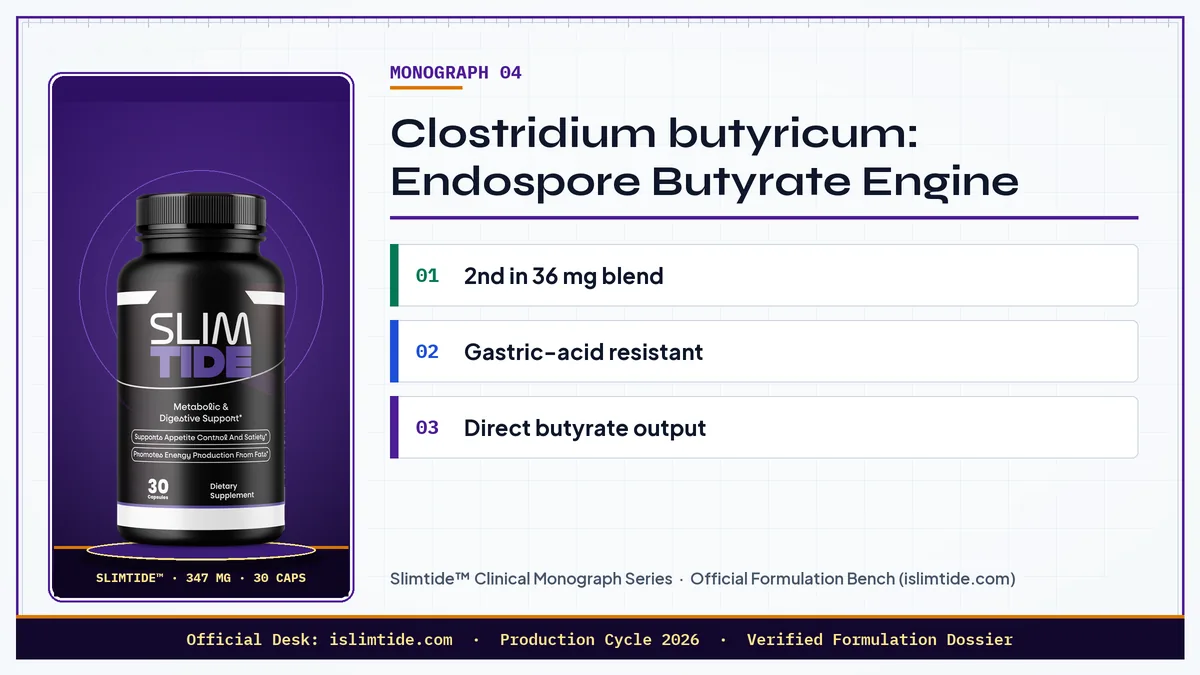
For complete label verification, consult our Official Supplement Facts Audit or explore Monograph 04 on Clostridium butyricum spore synthesis. You can also compare direct 2, 3, and 6-bottle supply packages here [22].
Frequently Asked Questions
Is the potato resistant starch in Slimtide safe for people on a low-carb or ketogenic diet?
Yes. Each Slimtide capsule contains 100 mg (0.1 grams) of raw Solanum tuberosum Type 2 resistant starch. Even if 100% of that starch were digested (and roughly 80% to 90% resists small-intestinal digestion), 0.1 grams equals less than 0.4 kilocalories of carbohydrate, having zero measurable impact on blood ketone levels or postprandial blood glucose [2,1].
Why must I avoid taking Slimtide with hot beverages?
Two reasons: first, native potato RS2 granules undergo thermal gelatinization between 58°C and 65°C (136°F to 149°F), unraveling their B-type crystalline helices into ordinary digestible starch [3]. Second, elevated temperatures rapidly inactivate vegetative Bifidobacterium infantis and Akkermansia muciniphila cells [21]. Always take Slimtide with a cool or room-temperature 8 oz. glass of water [1].
Does potato resistant starch trigger nightshade sensitivities?
Purified Solanum tuberosum starch is isolated from the inner tuber parenchyma and washed free of peel glycoalkaloids (such as alpha-solanine and alpha-chaconine) and patatin storage proteins. However, anyone with a documented IgE-mediated potato allergy or severe nightshade reactivity should consult their allergist or physician before taking Slimtide [23].
How does 100 mg of potato RS2 support butyrate if clinical trials use 15 to 40 grams?
In Slimtide, the 100 mg RS2 dose is co-encapsulated directly alongside Clostridium butyricum (an obligate butyrate-synthesizing spore former) and Bifidobacterium infantis [1,10]. The 100 mg granule load acts as a localized attachment and germination substrate for these strains, which then amplify butyrate synthesis from both the capsule substrate and the dietary fibers in your daily meals [5].
Scientific & Regulatory References
Numbered in order of first appearance on this page. Primary peer-reviewed citations link directly to PubMed (NCBI/NLM) and eCFR records verified on November 15, 2026.
- Slimtide Official Supplement Facts Panel (30 Capsules; 211 mg Chicory Root Inulin, 100 mg Potato Resistant Starch, 36 mg Probiotic Blend; Distributed by Instituto Experience, Lakeland FL 33804). Verified November 15, 2026. Official Record
- Birt DF, Boylston T, Hendrich S, et al. Resistant starch: promise for improving human health. Adv Nutr. 2013;4(6):587-601. PMID 24228189. PubMed
- Raigond P, Ezekiel R, Raigond B. Resistant starch in food: a review. J Sci Food Agric. 2015;95(10):1968-78. PMID 25331334. PubMed
- Topping DL, Clifton PM. Short-chain fatty acids and human colonic function: roles of resistant starch and nonstarch polysaccharides. Physiol Rev. 2001;81(3):1031-64. PMID 11427691. PubMed
- Dobranowski PA, Stintzi A. Resistant starch, microbiome, and precision modulation. Gut Microbes. 2021;13(1):1926842. PMID 34275431. PubMed
- Sonia S, Witjaksono F, Ridwan R. Effect of cooling of cooked white rice on resistant starch content and glycemic response. Asia Pac J Clin Nutr. 2015;24(4):620-5. PMID 26693746. PubMed
- Rivière A, Selak M, Lantin D, et al. Bifidobacteria and Butyrate-Producing Colon Bacteria: Importance and Strategies for Their Stimulation in the Human Gut. Front Microbiol. 2016;7:979. PMID 27446020. PubMed
- Gibson GR, Hutkins R, Sanders ME, et al. Expert consensus document: The International Scientific Association for Probiotics and Prebiotics (ISAPP) consensus statement on the definition and scope of prebiotics. Nat Rev Gastroenterol Hepatol. 2017;14(8):491-502. PMID 28611480. PubMed
- Henrick BM, Rodriguez L, Lakshmikanth T, et al. Bifidobacteria-mediated immune system imprinting early in life. Cell. 2021;184(15):3884-3898.e11. PMID 34143954. PubMed
- Stoeva MK, Garcia-So J, Justice N, et al. Butyrate-producing human gut symbiont, Clostridium butyricum, and its role in health and disease. Gut Microbes. 2021;13(1):1-28. PMID 33874858. PubMed
- Jung DH, Park CS. Resistant starch utilization by Bifidobacterium, the beneficial human gut bacteria. Food Sci Biotechnol. 2023;32(4):441-452. PMID 36911330. PubMed
- Kim MK, Park J, Kim DM. Resistant starch and type 2 diabetes mellitus: Clinical perspective. J Diabetes Investig. 2024;15(4):395-401. PMID 38189639. PubMed
- Li H, Zhang L, Li J, et al. Resistant starch intake facilitates weight loss in humans by reshaping the gut microbiota. Nat Metab. 2024;6(3):578-597. PMID 38409604. PubMed
- Robertson MD, Bickerton AS, Dennis AL, et al. Insulin-sensitizing effects of dietary resistant starch and effects on skeletal muscle and adipose tissue metabolism. Am J Clin Nutr. 2005;82(3):559-67. PMID 16155268. PubMed
- Koh A, De Vadder F, Kovatcheva-Datchary P, et al. From Dietary Fiber to Host Physiology: Short-Chain Fatty Acids as Key Bacterial Metabolites. Cell. 2016;165(6):1332-1345. PMID 27259147. PubMed
- Portincasa P, Bonfrate L, Vacca M, et al. Gut Microbiota and Short Chain Fatty Acids: Implications in Glucose Homeostasis. Int J Mol Sci. 2022;23(3). PMID 35163038. PubMed
- Ni Y, Qian L, Siliceo SL, et al. Resistant starch decreases intrahepatic triglycerides in patients with NAFLD via gut microbiome alterations. Cell Metab. 2023;35(9):1530-1547.e8. PMID 37673036. PubMed
- Cani PD, Depommier C, Derrien M, et al. Akkermansia muciniphila: paradigm for next-generation beneficial microorganisms. Nat Rev Gastroenterol Hepatol. 2022;19(10):625-637. PMID 35641786. PubMed
- Tan J, McKenzie C, Potamitis M, et al. The role of short-chain fatty acids in health and disease. Adv Immunol. 2014;121:91-119. PMID 24388214. PubMed
- Long X, Wang H, Lu Y, et al. Interindividual variability in gut microbiome mediates the efficacy of resistant starch on MASLD. Cell Metab. 2025;37(12):2342-2361.e9. PMID 41270737. PubMed
- Slimtide U.S. Fulfillment, Transit & Cold-Storage Guidelines. Verified November 15, 2026. Official Record
- Slimtide Official U.S. Store Package Schedule (2 Bottles $158 + $9.99 S&H; 3 Bottles $207 Free S&H + 6 Bonuses; 6 Bottles $294 Free S&H + 6 Bonuses). Verified November 15, 2026. Official Record
- Slimtide Official DSHEA & Medical Disclaimer. Verified November 15, 2026. Official Record