Official Formulation Encyclopedia · Botanical Prebiotics & Commensal Strains
Slimtide™ Ingredients Encyclopedia: Taxonomic Profile & Clinical Dose Comparison of All 5 Actives
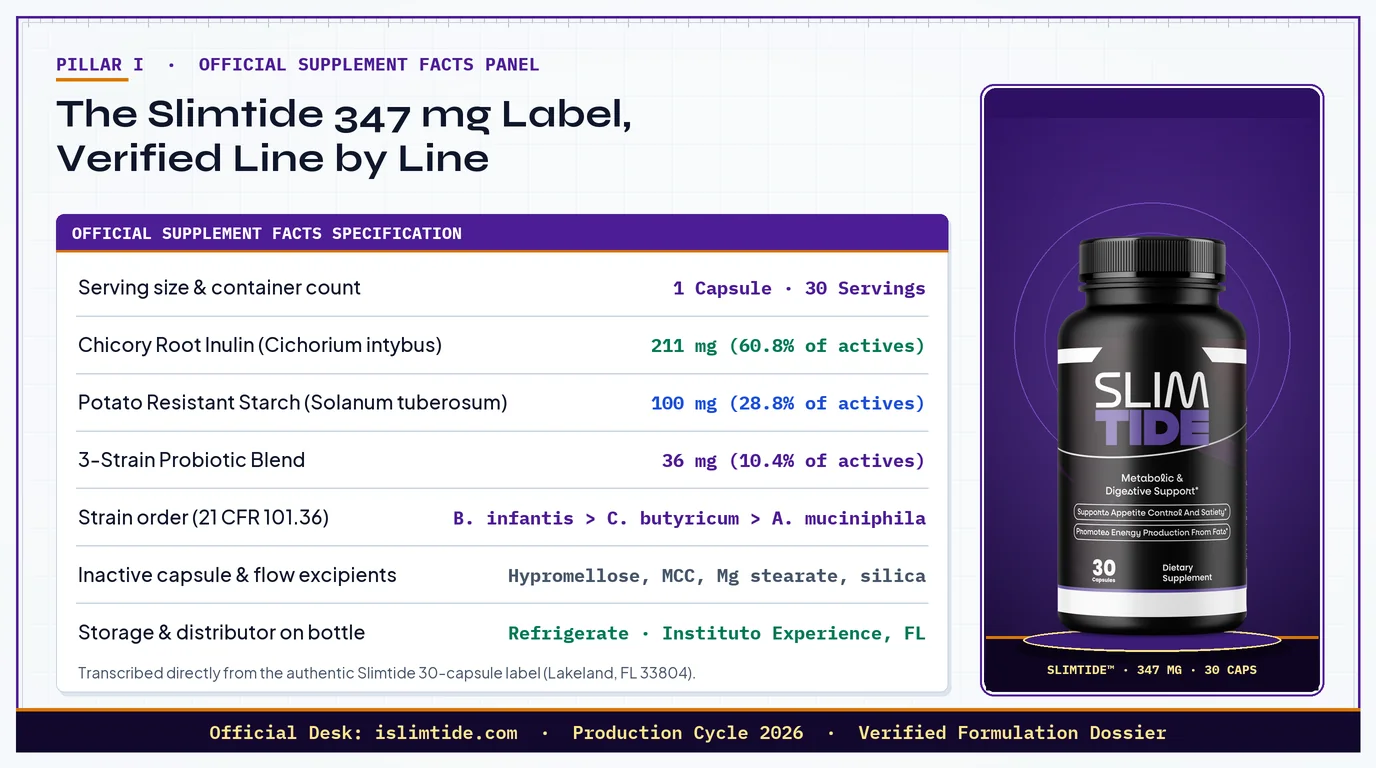
The Slimtide™ formulation is built around a targeted, non-stimulant synbiotic architecture: two structurally distinct botanical prebiotic fibers totaling 311 mg paired with three functionally complementary human gut microbial species totaling 36 mg inside a single 347 mg once-daily vegetarian capsule [1,2]. Rather than relying on central nervous system stimulants or laxative botanicals, each ingredient in Slimtide was selected for its documented role in colonic short-chain fatty acid (SCFA) cross-feeding, enteroendocrine FFAR2/FFAR3 receptor activation, or intestinal mucin-barrier fortification [3,4,5]. This official encyclopedia provides the complete biochemical taxonomy, mechanism of action, and transparent clinical dose comparison for every active and inactive ingredient on the Slimtide label.
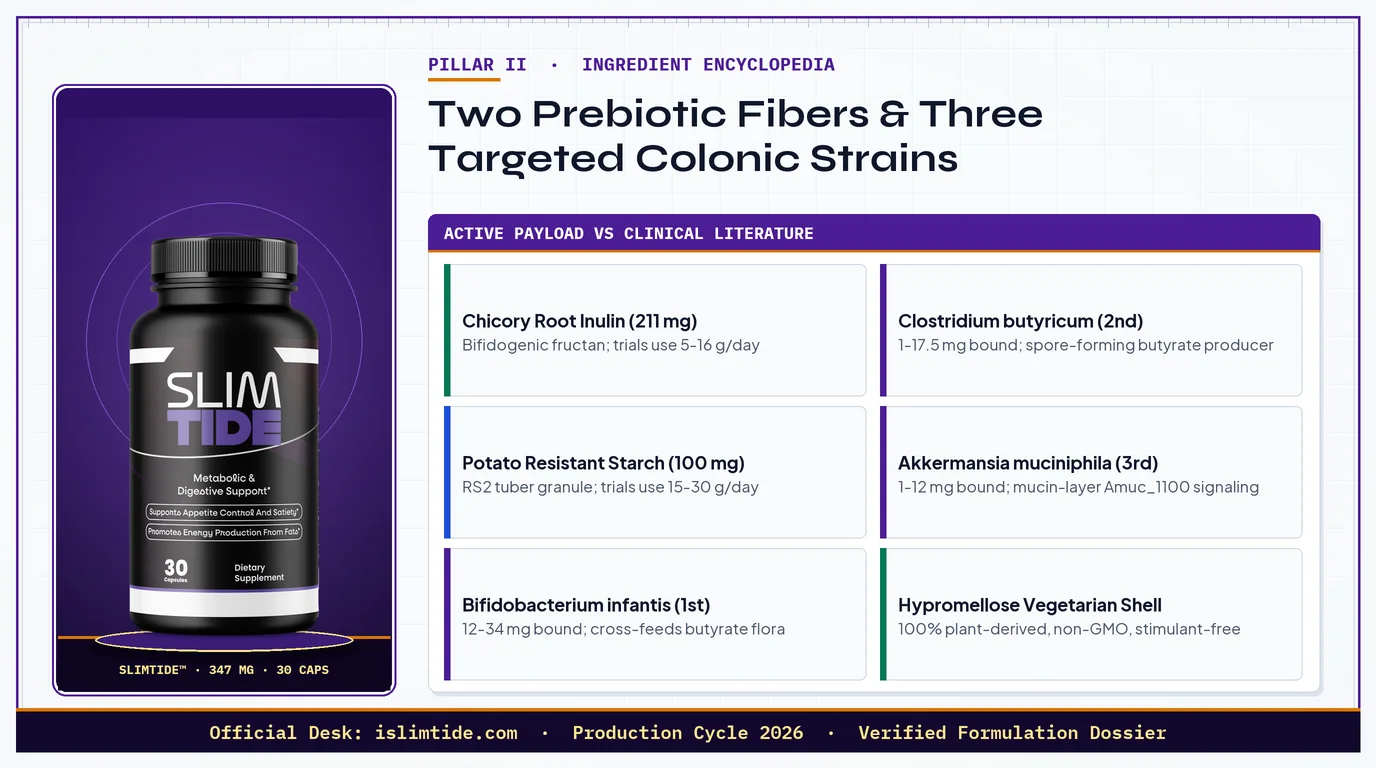
Five Active Ingredients · Quantitative Capsule Breakdown
- Chicory Root Inulin (Cichorium intybus root · 60.81% of actives)
- 211 mg
- Potato Resistant Starch (Solanum tuberosum tuber RS2 · 28.82% of actives)
- 100 mg
- Bifidobacterium infantis (1st in 36 mg Probiotic Blend)
- 12 - 34 mg
- Clostridium butyricum (2nd in 36 mg Probiotic Blend · Endospore)
- 1 - 18 mg
- Akkermansia muciniphila (3rd in 36 mg Probiotic Blend · Mucin specialist)
- 1 - 12 mg
- Caffeine, Synthetic Stimulants, Senna, or Artificial Dyes
- 0 mg
Synbiotic Formulation Logic: Why Two Fibers + Three Microbial Species?
According to the International Scientific Association for Probiotics and Prebiotics (ISAPP) consensus panel led by Salminen et al. (2021), a synbiotic is defined as "a mixture comprising live microorganisms and substrate(s) selectively utilized by host microorganisms that confers a health benefit on the host" [2]. ISAPP distinguishes between complementary synbiotics (where the prebiotic and probiotic work independently toward host endpoints) and synergistic synbiotics (where the co-administered prebiotic substrate is selectively fermented by the co-administered microbial strains to amplify their survival, implantation, or metabolic output) [2,6].
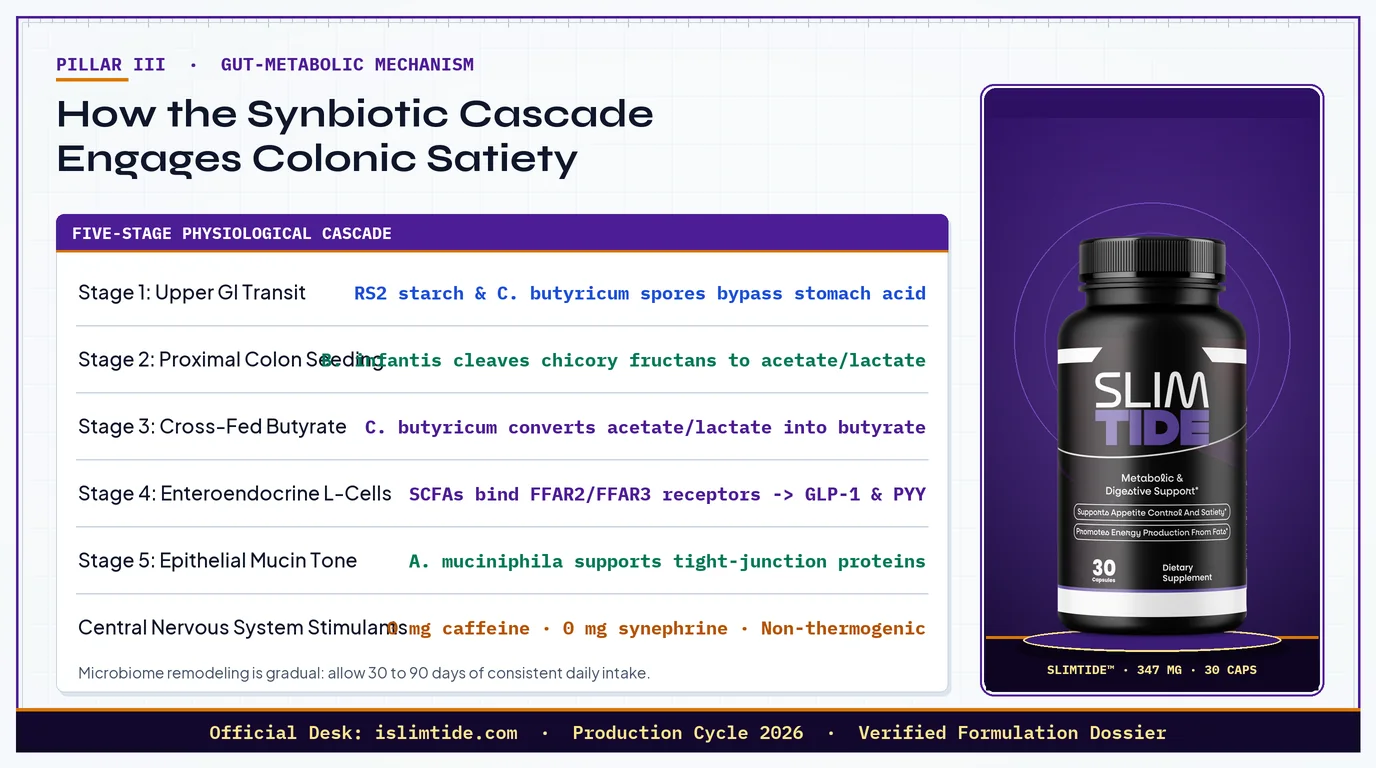
Slimtide was engineered around a three-tier metabolic relay [5,1]:
- Tier 1 - Selective Carbohydrate Substrates (
311 mg): Chicory Root Inulin (211 mg) supplies linear beta-(2,1)-linked fructosyl chains (DP 2 to 60), while raw Potato Resistant Starch (100 mg) supplies compact, native B-type semicrystalline amylose/amylopectin granules (RS2) that resist upper-gastrointestinal human alpha-amylase digestion [7,8]. - Tier 2 - Primary Degraders & Butyrate Cross-Feeders (Bifidobacterium infantis + Clostridium butyricum): Bifidobacterium infantis expresses intracellular beta-fructofuranosidases that rapidly cleave chicory fructans via the fructose-6-phosphate phosphoketolase ("bifid shunt") pathway, generating acetate and lactate in a theoretical
3:2molar ratio [5,9]. Clostridium butyricum simultaneously ferments resistant starch granules and imports the acetate and lactate produced by B. infantis, condensing two acetyl-CoA molecules via thebutyryl-CoA:acetate CoA-transferaseandbutyrate kinasepathways into n-butyrate [10,5]. - Tier 3 - Epithelial & Mucin-Barrier Specialist (Akkermansia muciniphila): Residing within the loose outer colonic mucus layer, Akkermansia muciniphila utilizes host-secreted O-linked mucin glycoproteins to generate propionate and acetate while engaging enterocyte Toll-like receptor 2 (
TLR2) via its outer-membrane pili proteinAmuc_1100to upregulate tight-junction proteins (occludin,claudin-1,ZO-1) and stimulate goblet-cell mucin turnover [3,11,12].
| Ingredient Name & Taxonomy | Slimtide Capsule Dose | Share of 347 mg Capsule | Primary Colonic Metabolites / Signals | Standalone Human Clinical Trial Dose Range | Role Inside the Slimtide 1-Capsule Architecture |
|---|---|---|---|---|---|
| Chicory Root Inulin (Cichorium intybus root) | 211 mg | 60.81% | Acetate, propionate, lactate; bifidogenesis [13] | 5,000 - 16,000 mg/day (5 - 16 g/day) for standalone satiety/GLP-1 trials [7,14] | Local micro-matrix co-substrate (5.86:1 mass ratio to probiotic blend) without multi-gram FODMAP bloating |
| Potato Resistant Starch (Solanum tuberosum tuber, RS2) | 100 mg | 28.82% | Direct n-butyrate substrate; granular probiotic carrier [8] | 15,000 - 30,000 mg/day (15 - 30 g/day) for standalone glycemic/SCFA trials [15,16] | Gastric-resistant physical granule carrier and localized slow-release amylose substrate in distal colon |
| Bifidobacterium infantis (Actinobacteria) | 12.0 - 34.0 mg (1st in 36 mg blend) | 3.46% - 9.80% | Acetate + lactate via bifid shunt; indole-3-lactic acid (ILA) [9] | 10^8 - 10^10 CFU/day (~10 - 100 mg lyophilized bulk powder) [17,18] | Matches clinical probiotic capsule mass; initiates fructan cleavage and cross-feeds butyrate producers |
| Clostridium butyricum (Firmicutes endospore) | 1.0 - 18.0 mg (2nd in 36 mg blend) | 0.29% - 5.19% | Direct n-butyrate synthesis; FFAR2/FFAR3 & AMPK signaling [10] | 40 - 120 mg/day of CBM588 spore preparation (~10^7 - 10^8 CFU) [10,19] | Gastric-acid-proof endospore that germinates in the ileum/cecum to convert RS2 and acetate into butyrate |
| Akkermansia muciniphila (Verrucomicrobia) | 1.0 - 12.0 mg (3rd in 36 mg blend) | 0.29% - 3.46% | Amuc_1100 -> TLR2 tight junctions; propionate & acetate [3,11] | 10^10 cells/day live or pasteurized (~10 - 50 mg dry cell biomass) [3] | Mucin-layer homeostasis, intestinal barrier integrity, and metabolic endotoxemia (LPS) attenuation |
Ingredient 01: Chicory Root Inulin (Cichorium intybus Root) - 211 mg
Botanical Origin and Polymer Chemistry
Chicory Root Inulin is a natural polydisperse storage fructan extracted by hot-water diffusion from the taproots of Cichorium intybus L. (family Asteraceae) [6,13]. Chemically, chicory inulin consists of linear chains of D-fructose units joined by beta-(2->1) glycosidic linkages, typically terminated at the reducing end by a single alpha-(1->2)-linked D-glucopyranosyl moiety (GF_n, where G is glucose, F is fructose, and the degree of polymerization n ranges from 2 to 60, with native chicory inulin averaging DP 10 to 12 and long-chain fractionated inulin averaging DP >= 23) [6,20].
Because human salivary, gastric, pancreatic, and small-intestinal brush-border enzymes (sucrase-isomaltase, maltase-glucoamylase, and alpha-amylase) are stereospecifically restricted to hydrolyzing alpha-(1->4) and alpha-(1->6) glucosidic bonds, the beta-(2->1) fructosyl bonds of chicory root inulin pass through the stomach, duodenum, jejunum, and ileum virtually 100% intact (88% to 92% recovery at the terminal ileostomy in human balance studies) [6,4]. As a result, chicory root inulin contributes zero postprandial blood glucose spikes and zero insulin secretion during upper-gastrointestinal transit, arriving in the cecum and ascending colon as an intact selective carbon source for saccharolytic Bifidobacterium species [13,21].
Human Clinical Evidence and the 211 mg vs. 5-16 g/day Dosage Comparison
In peer-reviewed human nutrition trials, chicory-derived inulin-type fructans (ITFs) and oligofructose have been extensively studied for their bifidogenic, satiety-hormone (GLP-1 and PYY), and metabolic effects [7,14,22]:
- Cani et al. (
2009, American Journal of Clinical Nutrition): In a randomized, double-blind, placebo-controlled crossover study of 10 healthy adults, supplementation with16 g/day(8 gtwice daily) of chicory oligofructose/inulin for 2 weeks significantly increased breath hydrogen excretion (a marker of colonic fermentation), elevated postprandial plasma GLP-1 and peptide YY (PYY) concentrations, lowered subjective hunger ratings, and reduced energy intake at breakfast [7]. - Dewulf et al. (
2013, Gut): In obese women randomized to16 g/day(8 ginulin +8 goligofructose) vs. maltodextrin placebo for 3 months, inulin-type fructans selectively increased Bifidobacterium and Faecalibacterium prausnitzii abundance while reducing circulating lipopolysaccharide (LPS) endotoxemia [22]. - Guess et al. (
2015, Nutrition & Metabolism): In a randomized controlled trial of 44 subjects with prediabetes given up to30 g/dayof inulin for 18 weeks, inulin supplementation enhanced weight loss during the maintenance phase and significantly reduced hepatic and soleus intramyocellular lipid accumulation [14]. - Vandeputte et al. (
2017, Gut): In a fecal metagenomic crossover trial (12 g/daychicory inulin for 4 weeks), chicory inulin produced a highly specific taxonomic shift defined by selective expansion of Bifidobacterium and Anaerostipes alongside improved stool frequency [13].
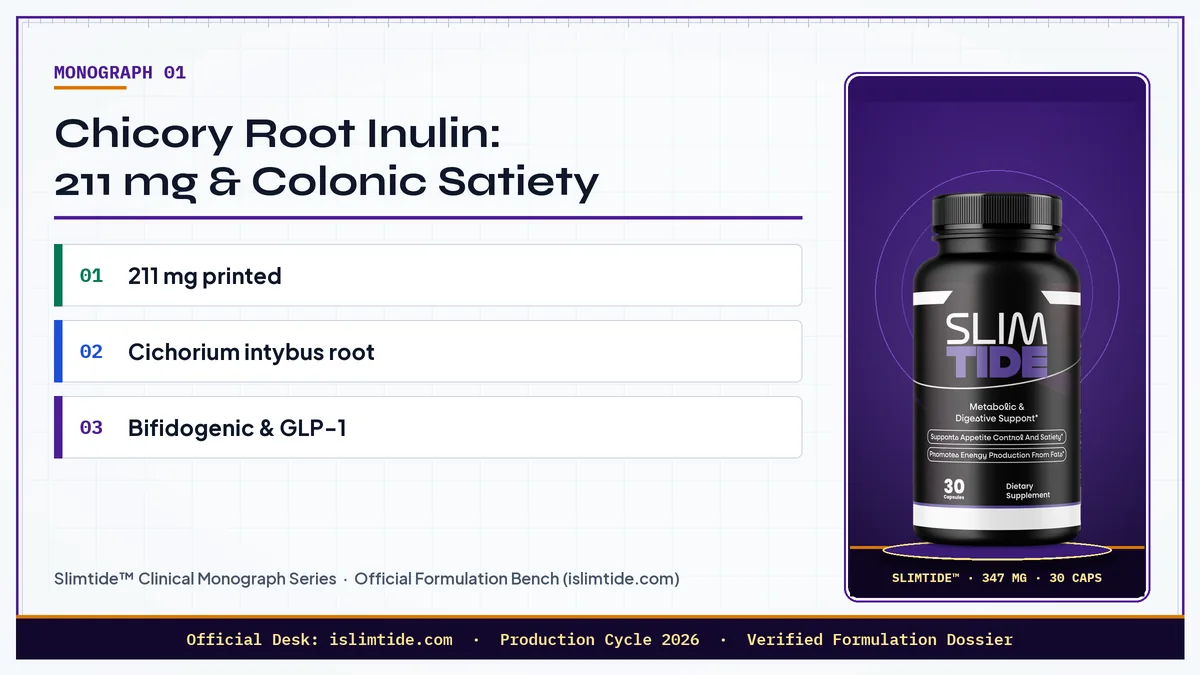
For our dedicated ingredient monograph, read Monograph 01: Chicory Root Inulin at 211 mg & Colonic Satiety.
Ingredient 02: Potato Resistant Starch (Solanum tuberosum Tuber) - 100 mg
Biophysical Structure of Type-2 Granular Resistant Starch (RS2)
Potato Resistant Starch on the Slimtide Supplement Facts panel (100 mg per capsule, 28.82% of the active payload) is derived from the tuber of Solanum tuberosum L. [1,8]. In carbohydrate biochemistry, resistant starches are classified into five structural subtypes (RS1 through RS5). Uncooked, native potato starch granules belong to Type-2 Resistant Starch (RS2) [8,24].
Inside the raw potato tuber, amylose (linear alpha-(1->4) glucan chains) and amylopectin (branched alpha-(1->4) / alpha-(1->6) glucan chains) are packed into dense, radially oriented B-type double-helical crystalline lamellae with phosphorylated glucose residues [24]. These compact, smooth-surfaced granules exclude the catalytic cleft of human pancreatic alpha-amylase in the small intestine, allowing 65% to 80% of native unheated potato starch to bypass small-intestinal glucose absorption and enter the cecum as intact fermentable starch granules [8,25].
Butyrogenic Selectivity and Granular Adhesion Micro-Habitats
Among all dietary fibers investigated in human fecal fermentation and clinical balance studies, resistant starch is universally recognized as the most potent butyrogenic carbohydrate substrate - yielding a significantly higher molar proportion of n-butyrate (20% to 28% of total SCFAs) compared to soluble pectins or arabinoxylans (8% to 12% butyrate) [25,8,26].
In human trials, native potato resistant starch (15 to 30 g/day) and resistant starch interventions (such as Robertson et al. 2005, Baxter et al., and Li et al. 2024 in Nature Metabolism) have demonstrated significant increases in fecal and systemic butyrate, improved peripheral insulin sensitivity, reduced postprandial glycemic excursions, and remodeling of the gut microbiome [15,16,27]. Even at lower escalation doses (3.5 g/day in Bush et al. 2023), potato RS2 measurably shifts Bifidobacterium and Akkermansia dynamics while attenuating circulating histamine and barrier permeability markers [28,29].
Inside Slimtide's 347 mg capsule, the 100 mg of Potato Resistant Starch performs two specialized functions that complement the 211 mg of chicory root inulin [1]:
- Spatial Partitioning Along the Colon: Because chicory inulin is water-soluble and has a shorter chain length (
DP 2-60), it is rapidly fermented in the cecum and proximal ascending colon within2 to 4 hoursof ileocecal transit [6]. By contrast, insoluble crystalline Potato RS2 granules (DP > 1,000) hydrate slowly and require physical bacterial attachment via starch-binding domains (CBM26andSusD-like surface proteins), extending carbohydrate fermentation further downstream into the transverse and distal colon [8,5]. - Physical Biofilm Micro-Carriers during Gastric Transit: Microbiological studies demonstrate that Bifidobacterium and Clostridium cells physically adhere to the surface pits of raw RS2 starch granules during transit through gastric acid and bile salts, using the starch granule as both a protective physical raft and an immediate carbon source upon reaching neutral colonic pH (
pH 6.0 to 6.8) [8,10].
For full granule crystallography and fermentation kinetics, read Monograph 02: Potato Resistant Starch at 100 mg & Butyrate.
Ingredient 03: Bifidobacterium infantis - Lead Strain in the 36 mg Probiotic Blend
Taxonomic Identity and the Fructose-6-Phosphate Phosphoketolase ("Bifid Shunt")
Listed first inside the 36 mg Probiotic Blend (12.0 mg to 34.0 mg permitted by 21 CFR 101.36 descending-order rules), Bifidobacterium longum subsp. infantis (commonly designated Bifidobacterium infantis) is a Gram-positive, non-motile, non-spore-forming, anaerobic, Y-shaped rod belonging to the phylum Actinobacteria [5,9].
Unlike most adult colonic bacteria that must cleave long-chain oligosaccharides extracellularly (allowing opportunistic gas-producing pathobionts to steal liberated monosaccharides), B. infantis possesses a remarkably large genomic island dedicated to ATP-binding cassette (ABC) oligosaccharide transporters and intracellular glycosyl hydrolases (including beta-fructofuranosidases) [5,9]. B. infantis imports oligosaccharide chains directly into its cytoplasm before cleaving them, starving competing gas-producing Enterobacteriaceae and Desulfovibrio species [5].
Once inside the B. infantis cell, hexose sugars are metabolized exclusively through the fructose-6-phosphate phosphoketolase pathway (the bifid shunt), which yields 2.5 moles of ATP per mole of glucose alongside 1.5 moles of acetate and 1.0 mole of L-lactate - critically, with zero carbon dioxide (CO2) or hydrogen (H2) gas evolution (2 Hexose -> 3 Acetate (C2) + 2 L-Lactate (C3) + 5 ATP + 0 CO2) [5,17].
This gas-free stoichiometry explains why clinical trials of Bifidobacterium infantis (such as Whorwell et al. 2006 in 362 women taking 1 x 10^8 CFU/day and O'Mahony et al. 2005 in Gastroenterology) demonstrated statistically significant reductions in abdominal bloating, bowel distension, and composite gastrointestinal discomfort scores, as well as normalization of the peripheral IL-10 / IL-12 anti-inflammatory cytokine ratio [17,18]. Moreover, Henrick et al. (2021, Cell) demonstrated that B. infantis produces indole-3-lactic acid (ILA), an aromatic tryptophan metabolite that activates the aryl hydrocarbon receptor (AhR) on mucosal immune cells to silence enteric Th2/Th17 inflammation [9].
In addition to single-strain GI trials, Perraudeau et al. (2020, BMJ Open Diabetes Research & Care) evaluated a multi-strain synbiotic containing Bifidobacterium infantis, Clostridium butyricum, Akkermansia muciniphila, and chicory inulin in human subjects with type 2 diabetes for 12 weeks, reporting a statistically significant reduction in postprandial glucose total area-under-the-curve (-36.1 mg/dL x 180 min, p = 0.05) and HbA1c (-0.6%) compared to placebo [30].
Read more in Monograph 05: Bifidobacterium infantis & Acetate Cross-Feeding.
Ingredient 04: Clostridium butyricum - Second Strain in the 36 mg Probiotic Blend
Endospore Armor and Direct Colonic Butyrate Biosynthesis
Listed second inside the 36 mg Probiotic Blend (1.0 mg to 18.0 mg permitted by descending-order weight rules), Clostridium butyricum is a strictly anaerobic, Gram-positive, rod-shaped endospore-forming bacterium belonging to Clostridium cluster I (sensu stricto) [10,31].
Non-pathogenic commensal strains of C. butyricum (most notably C. butyricum MIYAIRI 588 / CBM588, used safely in human clinical practice in Japan since 1963 and authorized as a novel food ingredient in the European Union) solve the single greatest vulnerability of conventional oral probiotics: stomach acid and bile salt destruction [10,32]. When C. butyricum is encapsulated in its dormant endospore state, its core genetic material is encased within a dehydrated cortex of peptidoglycan and calcium-dipicolinate chelate surrounded by a multi-layered proteinaceous spore coat [10]. This natural biological armor allows C. butyricum endospores to survive:
- Gastric hydrochloric acid down to
pH 1.2 - 2.0for over120 minutes[10] - Duodenal conjugated bile salts (
0.3% to 1.0%oxgall/taurocholate) [10] - Room-temperature storage fluctuations that would kill fragile non-spore vegetative rods [10,33]
Upon reaching the low-redox potential, neutral-pH environment of the terminal ileum and cecum (pH 6.0 to 7.0), bile acid derivatives and amino acids trigger spore germination into metabolically active vegetative cells [10]. Once active, C. butyricum executes syntrophic cross-feeding with Bifidobacterium infantis: it imports the acetate and lactate excreted by B. infantis alongside oligosaccharides cleaved from Potato Resistant Starch (100 mg), condensing two molecules of acetyl-CoA through acetoacetyl-CoA, beta-hydroxybutyryl-CoA, crotonyl-CoA, and butyryl-CoA to excrete high concentrations of n-butyrate (C4) [10,5].
Explore the full spore-germination pathway in Monograph 04: Clostridium butyricum Endospore Butyrate Engine.
Ingredient 05: Akkermansia muciniphila - Third Strain in the 36 mg Probiotic Blend
Discovery, Mucin Niche, and Inverse Correlation With Metabolic Dysfunction
Listed third inside the 36 mg Probiotic Blend (1.0 mg to 12.0 mg permitted by 21 CFR 101.36), Akkermansia muciniphila is a Gram-negative, strictly anaerobic, non-motile, oval-shaped commensal bacterium first isolated in 2004 by Muriel Derrien, Willem de Vos, and colleagues at Wageningen University from a human fecal sample using purified gastric mucin as the sole carbon and nitrogen source (type strain Muc^T = ATCC BAA-835) [36,12]. It represents the sole known human intestinal species of the phylum Verrucomicrobiota and accounts for 1% to 4% of the total fecal microbiota in lean, metabolically healthy adults [36,37].
Across dozens of human metagenomic cohorts worldwide, colonic abundance of A. muciniphila is consistently and inversely correlated with body mass index (BMI), visceral adiposity, fasting hyperinsulinemia, hepatic steatosis, and circulating metabolic endotoxemia (lipopolysaccharide / LPS) [37,12,38].
The Amuc_1100 Outer-Membrane Protein and Human Proof-of-Concept Trials
How does Akkermansia muciniphila strengthen the gut barrier while residing in and foraging on the mucus layer? Rather than depleting the mucus barrier, A. muciniphila degrades aged outer-layer mucin glycoproteins into acetate and propionate right next to intestinal goblet cells, stimulating rapid compensatory synthesis of fresh MUC2 mucin and thickening the inner sterile mucus layer [37,12].
Even more remarkably, Plovier et al. (2017, Nature Medicine) discovered that a specific 32 kDa outer-membrane pili protein named Amuc_1100 - which remains structurally stable and even more accessible after thermal pasteurization at 70 C for 30 minutes - binds directly to Toll-like receptor 2 (TLR2) on the apical membrane of intestinal epithelial cells [11]. Activation of TLR2 by Amuc_1100 upregulates the expression and assembly of intercellular tight-junction proteins (occludin, claudin-1, claudin-3, and zonula occludens-1 / ZO-1), sealing paracellular leaks and blocking the translocation of bacterial lipopolysaccharide (LPS) from the gut lumen into the portal bloodstream [11,3].
In the landmark randomized, double-blind, placebo-controlled human proof-of-concept trial by Depommier, Everard, Cani et al. (2019, Nature Medicine, PMID 31263284), 32 overweight or obese insulin-resistant human volunteers received daily oral supplementation of either 10^10 live A. muciniphila cells, 10^10 pasteurized A. muciniphila cells, or placebo for 3 months without changing their diet or physical activity [3]. Compared to placebo, human supplementation with A. muciniphila proved completely safe and well-tolerated, and the pasteurized 10^10 cell group achieved [3]:
+28.62%improvement in insulin sensitivity index (p = 0.002) compared to placebo-34.08%reduction in fasting plasma insulinemia (p = 0.006)-8.68%reduction in total plasma cholesterol (p = 0.02)-11.7%reduction in circulating plasma LPS (metabolic endotoxemia) (p = 0.019)- Modest reductions in body weight (
-2.27 kg,p = 0.091), fat mass (-1.37 kg,p = 0.092), and hip circumference (-2.63 cm,p = 0.01) over 12 weeks [3].
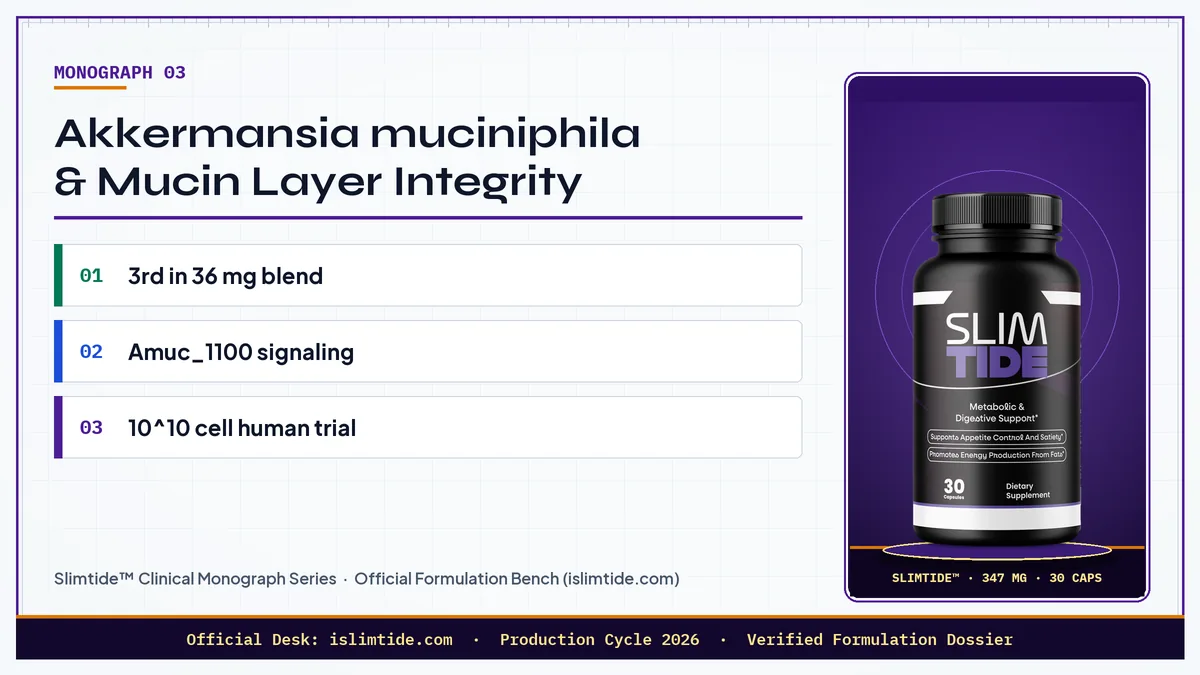
Read our full clinical breakdown in Monograph 03: Akkermansia muciniphila & Mucin Layer Integrity.
Complete Excipient & Allergen Screening Matrix
To assist customers with food sensitivities, religious dietary standards, or clinical nutrition protocols, the table below summarizes the allergen, excipient, and chemical purity profile of the finished 347 mg Slimtide capsule [1,39].
| Screening Category | Slimtide™ Status | Technical Verification & Label Basis |
|---|---|---|
| Caffeine & Central Stimulants | 0.0 mg (100% Free) | Contains zero anhydrous caffeine, guarana, yerba mate, synephrine, yohimbine, or ephedra alkaloids [1] |
| Laxative Anthraquinones | 0.0 mg (100% Free) | Contains zero senna leaf, cascara sagrada, aloe latex, castor oil, or bisacodyl irritants [1] |
| Capsule Shell Origin | 100% Vegetarian (HPMC) | Hypromellose plant cellulose shell; zero bovine, porcine, or piscine gelatin [1] |
| Major FDA Food Allergens | Free of Major 9 Allergens | Formulated without milk/lactose, egg, fish, crustacean shellfish, tree nuts, peanuts, wheat/gluten, soy, or sesame [1] |
| Titanium Dioxide & Dyes | 0.0 mg (100% Free) | Free of titanium dioxide (TiO2) whitening pigment and synthetic FD&C dyes |
| Flow & Moisture Excipients | MCC, Mg Stearate, Silica | Compendial microcrystalline cellulose, vegetable magnesium stearate (<1.5%), and colloidal silica (<1.0%) [1] |
Frequently Asked Questions
What are the 5 active ingredients in Slimtide and their exact capsule amounts?
Each 1-capsule serving of Slimtide (347 mg total active payload) contains: (1) Chicory Root Inulin (Cichorium intybus root) at 211 mg, (2) Potato Resistant Starch (Solanum tuberosum tuber RS2) at 100 mg, and a 36 mg Probiotic Blend comprising (3) Bifidobacterium infantis (12.0 to 34.0 mg), (4) Clostridium butyricum (1.0 to 18.0 mg), and (5) Akkermansia muciniphila (1.0 to 12.0 mg) [1,40].
How can 311 mg of prebiotic fiber in a capsule work when fiber studies use 5 to 30 grams?
Standalone prebiotic clinical trials (5 to 16 g/day of chicory inulin or 15 to 30 g/day of potato RS2) rely on massive gram doses to feed the entire resident colonic microbiome [7,8]. A single Size-0 capsule cannot hold 15 grams of fiber. Instead, Slimtide's 311 mg of Chicory Root Inulin (211 mg) and Potato Resistant Starch (100 mg) acts as a targeted local co-substrate (8.64 mg of fiber per 1 mg of probiotic blend) that surrounds B. infantis and C. butyricum immediately upon capsule dissolution, supporting localized germination and cross-feeding without causing high-FODMAP gas distension [2,5]. For maximal colonic SCFA production, pair your daily capsule with a vegetable-rich diet.
Is the Akkermansia muciniphila in Slimtide live or pasteurized?
The Slimtide Supplement Facts panel declares Akkermansia muciniphila as the third organism inside the 36 mg Probiotic Blend alongside the general directive to 'Refrigerate for optimal quality' [1]. In human clinical trials (Depommier et al. 2019), both live (10^10 bacteria) and pasteurized (10^10 cells) A. muciniphila proved safe and active via the heat-stable outer-membrane protein Amuc_1100 [3,11].
Why does Slimtide include both Chicory Root Inulin and Potato Resistant Starch?
Chicory Root Inulin (211 mg) is a soluble beta-(2,1) fructan that hydrates quickly and feeds Bifidobacterium infantis in the proximal colon to generate acetate and lactate [13,5]. Native Potato Resistant Starch (100 mg RS2) consists of insoluble, semicrystalline B-type starch granules that ferment more slowly along the transverse and distal colon and serve as the premier substrate for direct n-butyrate synthesis by Clostridium butyricum [8,10].
Are the inactive ingredients in Slimtide safe for daily long-term use?
Can I open the Slimtide capsule and mix the powder into food or drinks?
We recommend swallowing the intact Size-0 hypromellose capsule with an 8 oz. glass of cool or room-temperature water [1]. If swallowing capsules is difficult, you may open the capsule and stir the powder into cool water or unsweetened yogurt immediately before consuming, though doing so exposes vegetative Bifidobacterium infantis cells directly to stomach acid without the 10-to-15-minute delay provided by the HPMC shell. Never mix the powder into hot beverages above 115 F (46 C) [33].
Scientific & Regulatory References
Numbered in order of first appearance on this page. Primary peer-reviewed citations link directly to PubMed (NCBI/NLM) and eCFR records verified on November 15, 2026.
- Slimtide Official Supplement Facts Panel (30 Capsules; 211 mg Chicory Root Inulin, 100 mg Potato Resistant Starch, 36 mg Probiotic Blend; Distributed by Instituto Experience, Lakeland FL 33804). Verified November 15, 2026. Official Record
- Salminen S, Collado MC, Endo A, et al. The International Scientific Association of Probiotics and Prebiotics (ISAPP) consensus statement on the definition and scope of postbiotics. Nat Rev Gastroenterol Hepatol. 2021;18(9):649-667. PMID 33948025. PubMed
- Depommier C, Everard A, Druart C, et al. Supplementation with Akkermansia muciniphila in overweight and obese human volunteers: a proof-of-concept exploratory study. Nat Med. 2019;25(7):1096-1103. PMID 31263284. PubMed
- Koh A, De Vadder F, Kovatcheva-Datchary P, et al. From Dietary Fiber to Host Physiology: Short-Chain Fatty Acids as Key Bacterial Metabolites. Cell. 2016;165(6):1332-1345. PMID 27259147. PubMed
- Rivière A, Selak M, Lantin D, et al. Bifidobacteria and Butyrate-Producing Colon Bacteria: Importance and Strategies for Their Stimulation in the Human Gut. Front Microbiol. 2016;7:979. PMID 27446020. PubMed
- Gibson GR, Hutkins R, Sanders ME, et al. Expert consensus document: The International Scientific Association for Probiotics and Prebiotics (ISAPP) consensus statement on the definition and scope of prebiotics. Nat Rev Gastroenterol Hepatol. 2017;14(8):491-502. PMID 28611480. PubMed
- Cani PD, Lecourt E, Dewulf EM, et al. Gut microbiota fermentation of prebiotics increases satietogenic and incretin gut peptide production with consequences for appetite sensation and glucose response after a meal. Am J Clin Nutr. 2009;90(5):1236-43. PMID 19776140. PubMed
- Birt DF, Boylston T, Hendrich S, et al. Resistant starch: promise for improving human health. Adv Nutr. 2013;4(6):587-601. PMID 24228189. PubMed
- Henrick BM, Rodriguez L, Lakshmikanth T, et al. Bifidobacteria-mediated immune system imprinting early in life. Cell. 2021;184(15):3884-3898.e11. PMID 34143954. PubMed
- Stoeva MK, Garcia-So J, Justice N, et al. Butyrate-producing human gut symbiont, Clostridium butyricum, and its role in health and disease. Gut Microbes. 2021;13(1):1-28. PMID 33874858. PubMed
- Plovier H, Everard A, Druart C, et al. A purified membrane protein from Akkermansia muciniphila or the pasteurized bacterium improves metabolism in obese and diabetic mice. Nat Med. 2017;23(1):107-113. PMID 27892954. PubMed
- Cani PD, Depommier C, Derrien M, et al. Akkermansia muciniphila: paradigm for next-generation beneficial microorganisms. Nat Rev Gastroenterol Hepatol. 2022;19(10):625-637. PMID 35641786. PubMed
- Vandeputte D, Falony G, Vieira-Silva S, et al. Prebiotic inulin-type fructans induce specific changes in the human gut microbiota. Gut. 2017;66(11):1968-1974. PMID 28213610. PubMed
- Guess ND, Dornhorst A, Oliver N, et al. A randomized controlled trial: the effect of inulin on weight management and ectopic fat in subjects with prediabetes. Nutr Metab (Lond). 2015;12:36. PMID 26500686. PubMed
- Robertson MD, Bickerton AS, Dennis AL, et al. Insulin-sensitizing effects of dietary resistant starch and effects on skeletal muscle and adipose tissue metabolism. Am J Clin Nutr. 2005;82(3):559-67. PMID 16155268. PubMed
- Li H, Zhang L, Li J, et al. Resistant starch intake facilitates weight loss in humans by reshaping the gut microbiota. Nat Metab. 2024;6(3):578-597. PMID 38409604. PubMed
- Whorwell PJ, Altringer L, Morel J, et al. Efficacy of an encapsulated probiotic Bifidobacterium infantis 35624 in women with irritable bowel syndrome. Am J Gastroenterol. 2006;101(7):1581-90. PMID 16863564. PubMed
- O'Mahony L, McCarthy J, Kelly P, et al. Lactobacillus and bifidobacterium in irritable bowel syndrome: symptom responses and relationship to cytokine profiles. Gastroenterology. 2005;128(3):541-51. PMID 15765388. PubMed
- Ma L, Shen Q, Lyu W, et al. Clostridium butyricum and Its Derived Extracellular Vesicles Modulate Gut Homeostasis and Ameliorate Acute Experimental Colitis. Microbiol Spectr. 2022;10(4):e0136822. PMID 35762770. PubMed
- Buddington RK, Kapadia C, Neumer F, et al. Oligofructose Provides Laxation for Irregularity Associated with Low Fiber Intake. Nutrients. 2017;9(12). PMID 29258261. PubMed
- Birkeland E, Gharagozlian S, Birkeland KI, et al. Prebiotic effect of inulin-type fructans on faecal microbiota and short-chain fatty acids in type 2 diabetes: a randomised controlled trial. Eur J Nutr. 2020;59(7):3325-3338. PMID 32440730. PubMed
- Dewulf EM, Cani PD, Claus SP, et al. Insight into the prebiotic concept: lessons from an exploratory, double blind intervention study with inulin-type fructans in obese women. Gut. 2013;62(8):1112-21. PMID 23135760. PubMed
- Halmos EP. When the low FODMAP diet does not work. J Gastroenterol Hepatol. 2017;32 Suppl 1:69-72. PMID 28244666. PubMed
- Raigond P, Ezekiel R, Raigond B. Resistant starch in food: a review. J Sci Food Agric. 2015;95(10):1968-78. PMID 25331334. PubMed
- Topping DL, Clifton PM. Short-chain fatty acids and human colonic function: roles of resistant starch and nonstarch polysaccharides. Physiol Rev. 2001;81(3):1031-64. PMID 11427691. PubMed
- Blaak EE, Canfora EE, Theis S, et al. Short chain fatty acids in human gut and metabolic health. Benef Microbes. 2020;11(5):411-455. PMID 32865024. PubMed
- Ni Y, Qian L, Siliceo SL, et al. Resistant starch decreases intrahepatic triglycerides in patients with NAFLD via gut microbiome alterations. Cell Metab. 2023;35(9):1530-1547.e8. PMID 37673036. PubMed
- Jung DH, Park CS. Resistant starch utilization by Bifidobacterium, the beneficial human gut bacteria. Food Sci Biotechnol. 2023;32(4):441-452. PMID 36911330. PubMed
- Kim MK, Park J, Kim DM. Resistant starch and type 2 diabetes mellitus: Clinical perspective. J Diabetes Investig. 2024;15(4):395-401. PMID 38189639. PubMed
- Perraudeau F, McMurdie P, Bullard J, et al. Improvements to postprandial glucose control in subjects with type 2 diabetes: a multicenter, double blind, randomized placebo-controlled trial of a novel probiotic formulation. BMJ Open Diabetes Res Care. 2020;8(1). PMID 32675291. PubMed
- Kato M, Hamazaki Y, Sun S, et al. Clostridium butyricum MIYAIRI 588 Increases the Lifespan and Multiple-Stress Resistance of Caenorhabditis elegans. Nutrients. 2018;10(12). PMID 30563064. PubMed
- Paz Del Socorro T, Oka K, Boulard O, et al. The biotherapeutic Clostridium butyricum MIYAIRI 588 strain potentiates enterotropism of Rorγt(+)Treg and PD-1 blockade efficacy. Gut Microbes. 2024;16(1):2315631. PMID 38385162. PubMed
- NIH Office of Dietary Supplements. Probiotics: Fact Sheet for Health Professionals. Official Record
- Tolhurst G, Heffron H, Lam YS, et al. Short-chain fatty acids stimulate glucagon-like peptide-1 secretion via the G-protein-coupled receptor FFAR2. Diabetes. 2012;61(2):364-71. PMID 22190648. PubMed
- Chen D, Jin D, Huang S, et al. Clostridium butyricum, a butyrate-producing probiotic, inhibits intestinal tumor development through modulating Wnt signaling and gut microbiota. Cancer Lett. 2020;469:456-467. PMID 31734354. PubMed
- Derrien M, Vaughan EE, Plugge CM, et al. Akkermansia muciniphila gen. nov., sp. nov., a human intestinal mucin-degrading bacterium. Int J Syst Evol Microbiol. 2004;54(Pt 5):1469-1476. PMID 15388697. PubMed
- Everard A, Belzer C, Geurts L, et al. Cross-talk between Akkermansia muciniphila and intestinal epithelium controls diet-induced obesity. Proc Natl Acad Sci U S A. 2013;110(22):9066-71. PMID 23671105. PubMed
- Zhang T, Li Q, Cheng L, et al. Akkermansia muciniphila is a promising probiotic. Microb Biotechnol. 2019;12(6):1109-1125. PMID 31006995. PubMed
- 21 CFR Part 111. Current Good Manufacturing Practice in Manufacturing, Packaging, Labeling, or Holding Operations for Dietary Supplements. Official Record
- 21 CFR 101.36. Nutrition labeling of dietary supplements (proprietary blends listed in descending order of predominance by weight). Official Record