Clinical Monograph 05 · Lead Probiotic Strain · 1st in 36 mg Probiotic Blend
Bifidobacterium infantis Monograph: Oligosaccharide Cleavage, Acetate-Lactate Cross-Feeding & Gut Comfort
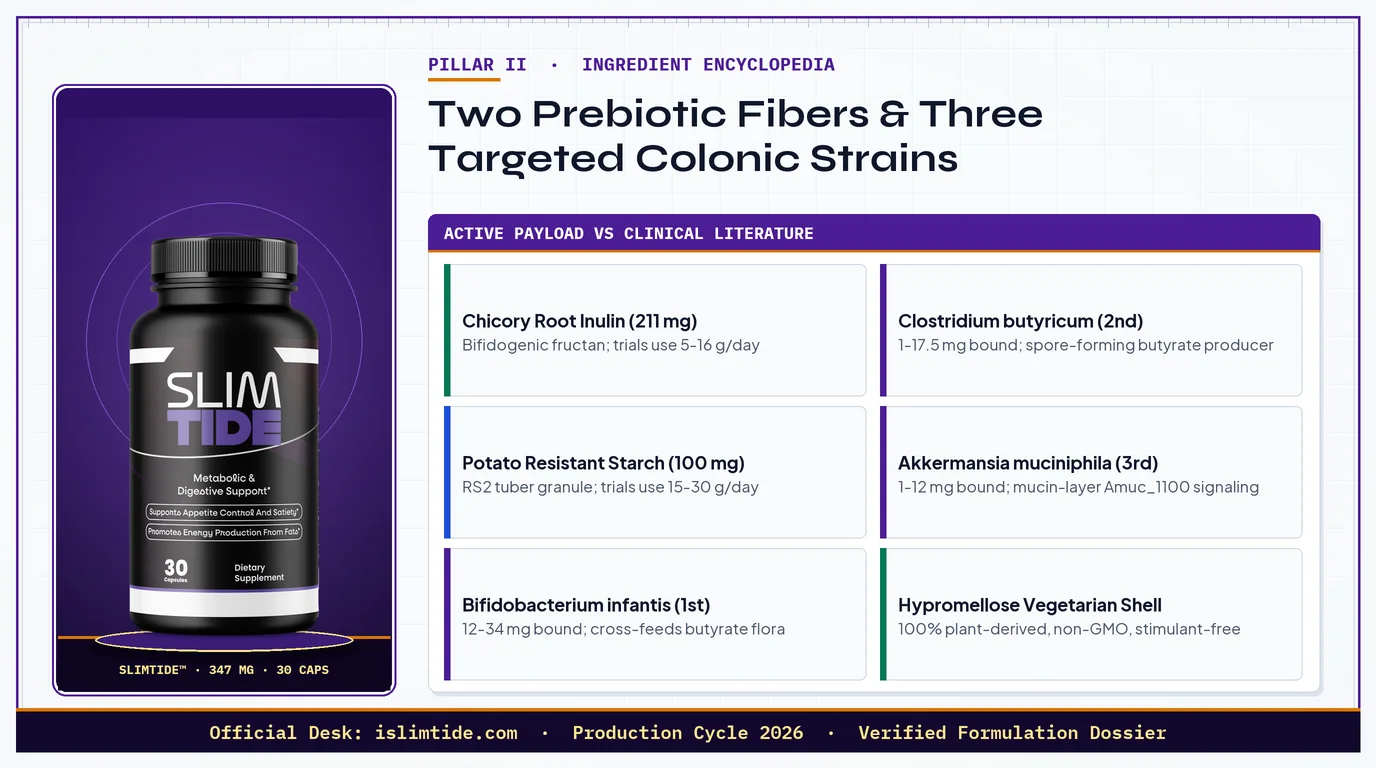
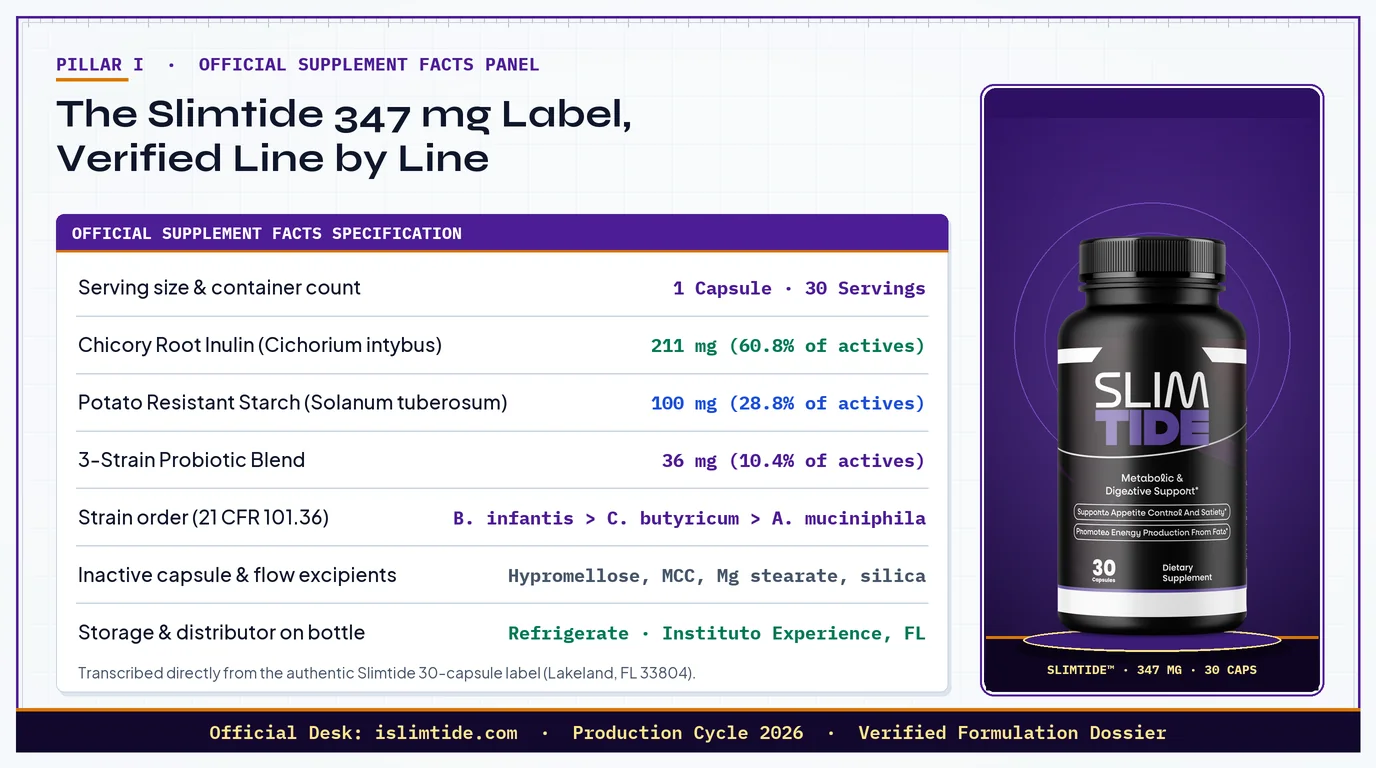
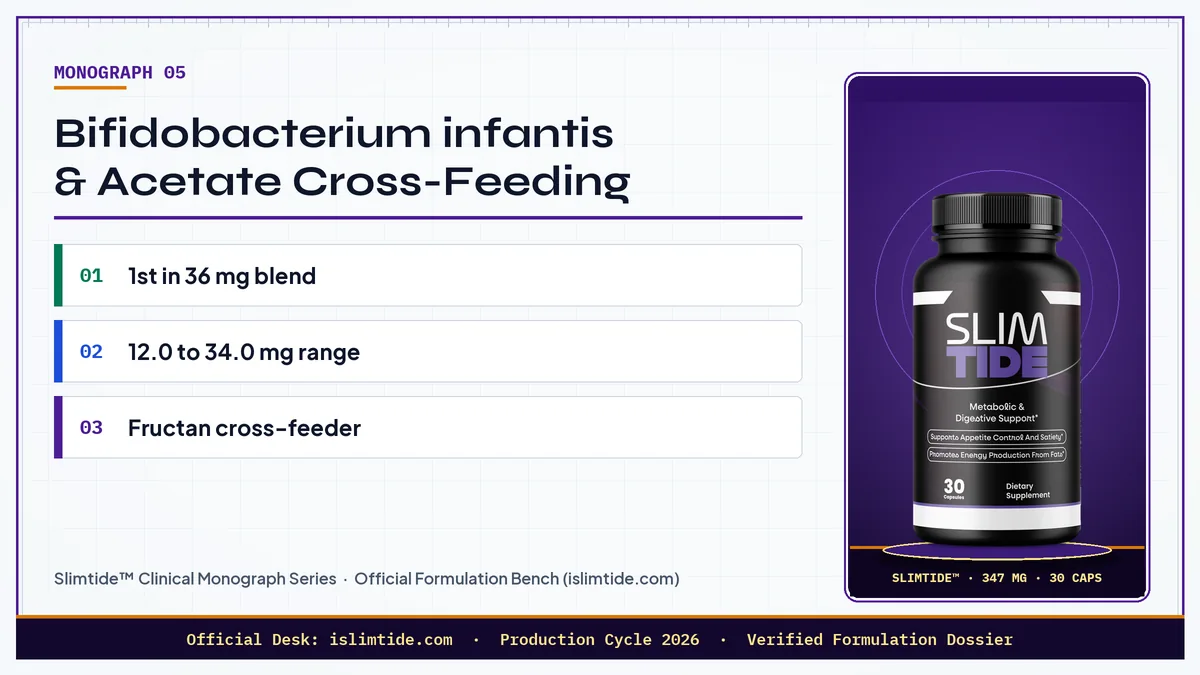
Bifidobacterium longum subsp. infantis (declared on the Slimtide Supplement Facts panel as Bifidobacterium infantis) is the first and predominant strain by weight in the 36 mg Probiotic Blend [1,2]. By federal descending-weight statute (21 CFR 101.36), Bifidobacterium infantis accounts for at least one-third of the probiotic blend (12.0 mg to 34.0 mg practical range) [2]. This monograph examines its specialized oligosaccharide transport machinery, the fructose-6-phosphate phosphoketolase 'bifid shunt,' its acetate-lactate cross-feeding partnership with Clostridium butyricum, and clinical trials on abdominal bloating and bowel regularity.
Genomic Specialization for Internalized Oligosaccharide Cleavage
Bifidobacterium longum subsp. infantis (B. infantis) is a Gram-positive, non-motile, non-spore-forming, strictly anaerobic actinobacterium renowned for possessing one of the largest carbohydrate-utilization gene repertoires in the human gut microbiome [3,4]. While originally studied for its unmatched capacity to internalize and catabolize human milk oligosaccharides (HMOs) via a 43-kilobase genomic cluster, comparative genomics and transcriptomics demonstrate that Bifidobacterium infantis also expresses high-affinity Solute-Binding Proteins (SBPs), ATP-Binding Cassette (ABC) permeases, and intracellular beta-fructofuranosidases (GH32 family) tailored to plant-derived beta-(2,1) fructans such as chicory root inulin [5,4,6].
Most colonic bacteria degrade dietary fibers extracellularly: they secrete glycoside hydrolases outside the cell wall, cleaving long polysaccharides into free monosaccharides (fructose and glucose) in the open lumen. That "external digestion" strategy carries a major drawback for host digestive comfort: opportunistic gas-producing bacteria (such as Escherichia, Klebsiella, and Veillonella) scavenge those free sugars and rapidly ferment them into hydrogen (H2) and carbon dioxide (CO2) gas, triggering postprandial bloating [5,7].
Bifidobacterium infantis Specification in the Slimtide 36 mg Blend
- Lead Probiotic Strain by Weight in the 36 mg Blend
- 1st of 3
- Practical Mathematical Weight Range per Capsule (21 CFR 101.36)
- 12.0-34.0 mg
- Theoretical Molar Ratio of Acetate to Lactate via Bifid Shunt
- 1.5 : 1.0
- Zero Hydrogen or Methane Gas Produced by the Bifid Shunt
- 0 Liters H2
Bifidobacterium infantis avoids this luminal sugar spill by employing a "selfish" internalization mechanism: its surface ABC transporters capture oligofructose chains (DP 2 to 8) and import them across the cytoplasmic membrane intact, where intracellular beta-fructofuranosidases hydrolyze the beta-(2,1) bonds inside the cytoplasm [5,3]. Because cleavage occurs intracellularly, no free fructose leaks into the lumen to fuel gas-forming competitors.
The Fructose-6-Phosphate Phosphoketolase "Bifid Shunt" & Zero-Gas Stoichiometry
Once Bifidobacterium infantis cleaves internalized chicory root inulin into fructose and phosphorylates it into fructose-6-phosphate, it does not use the classical Embden-Meyerhof-Parnas (glycolytic) pathway. Instead, all Bifidobacterium species utilize a unique metabolic pathway known as the fructose-6-phosphate phosphoketolase pathway (the bifid shunt) [5,8].
Let us trace the exact stoichiometry of the bifid shunt for every 2 moles of hexose sugar fermented [5]:
2 Hexose (Fructose/Glucose) + 5 ADP + 5 Pi -> 3 Acetate + 2 L-Lactate + 5 ATP
This reaction sequence provides three major physiological advantages inside the Slimtide synbiotic protocol [5,8,3]:
- Superior ATP Energetic Yield (2.5 ATP per Hexose): Whereas standard homolactic fermentation yields only 2.0 moles of ATP per mole of glucose, the bifid shunt generates 2.5 moles of ATP per mole of hexose, giving Bifidobacterium infantis a decisive growth rate advantage when competing for the 211 mg chicory root inulin payload [5].
- Non-Gaseous Acidification: The bifid shunt produces zero
CO2and zeroH2gas [5]. By converting chicory root inulin purely into organic acids (acetate and L-lactate) rather than gas, Bifidobacterium infantis lowers cecal pH while dampening the intraluminal gas pressure that causes abdominal distension [9,7]. - Syntrophic Cross-Feeding of Clostridium butyricum: For every 2 moles of hexose fermented from the 211 mg chicory inulin dose, Bifidobacterium infantis secretes 3 moles of acetate and 2 moles of L-lactate [5]. Co-administered Clostridium butyricum (alongside endogenous Eubacterium hallii, Anaerostipes caccae, and Faecalibacterium prausnitzii) imports both acetate and lactate and converts them into n-butyrate via the butyryl-CoA:acetate CoA-transferase pathway [5,10].
Human Clinical Trials on Abdominal Bloating, Visceral Comfort & Cytokine Balance
Beyond its metabolic cross-feeding role, Bifidobacterium infantis is one of the most thoroughly studied probiotic species in randomized controlled trials for functional gastrointestinal comfort, visceral hypersensitivity, and mucosal immune regulation [9,11,3].
More recent randomized trials and mechanistic investigations by Perraudeau et al. (2020), Henrick et al. (2021), Hilliard et al. (2024), Zhang et al. (2024), and Yang et al. (2025) demonstrate that Bifidobacterium infantis produces aromatic lactic acids (specifically indole-3-lactic acid, or ILA) from dietary tryptophan, which binds the aryl hydrocarbon receptor (AhR) on intestinal immune cells to silence pro-inflammatory Th2/Th17 signaling and strengthen mucosal barrier integrity [12,3,13,4,6].
21 CFR 101.36 Mathematical Dominance in the 36 mg Probiotic Blend
On the Official Slimtide Supplement Facts panel, Bifidobacterium infantis is printed first in the 36 mg Probiotic Blend [1]. Under U.S. FDA dietary supplement labeling regulations (21 CFR 101.36(c)), ingredients inside a proprietary blend must be declared in descending order of predominance by weight (w1 >= w2 >= w3 where w1 + w2 + w3 = 36.0 mg) [2].
| Specification Metric | Verified Value / Mechanism | Regulatory or Clinical Source |
|---|---|---|
| Label Blend Order | 1st of 3 strains in the 36 mg Probiotic Blend | Slimtide Official Supplement Facts [1] |
| Mathematical Mass Range | 12.0 mg to 34.0 mg practical (12.0 to 35.0 mg theoretical) | 21 CFR 101.36(c) descending weight rule [2] |
| Share of Total 347 mg Actives | 3.46% to 9.80% of total active capsule payload | Calculated from 347 mg active total [1] |
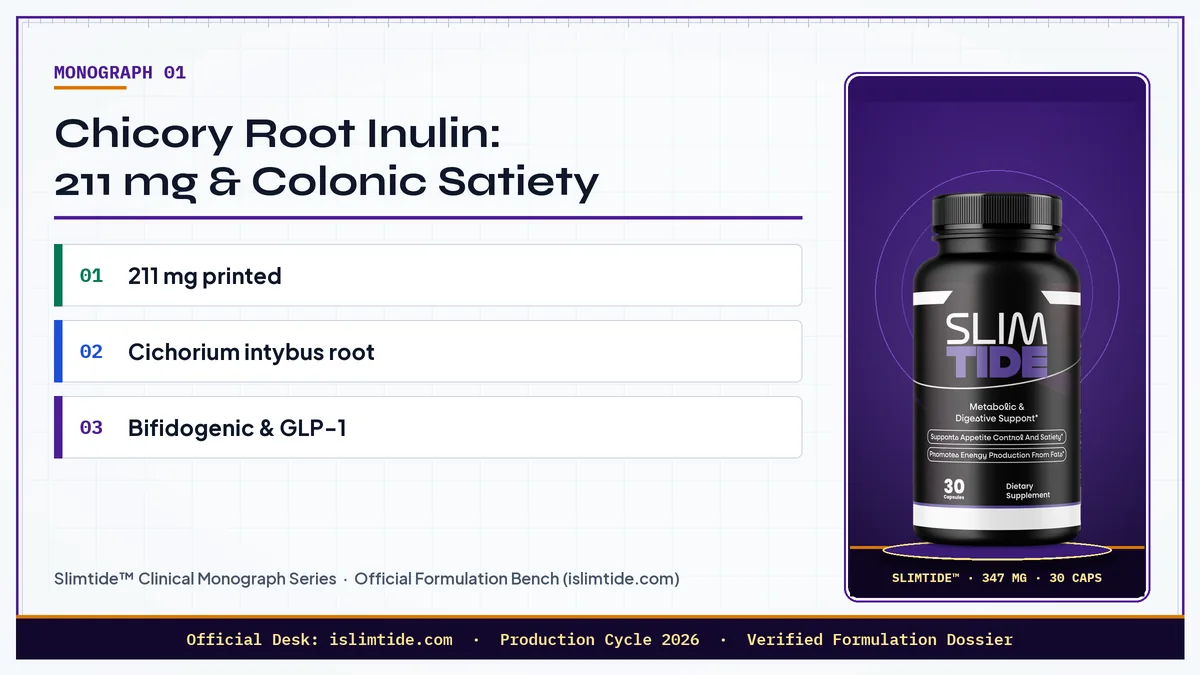
| Primary Co-Delivered Substrate | 211 mg Chicory Root Inulin (Cichorium intybus) | Selective ABC transport + GH32 cleavage [5] |
| Metabolic Pathway | Fructose-6-phosphate phosphoketolase (Bifid Shunt) | 1.5 Acetate : 1.0 Lactate; zero H2/CO2 gas [5] |
| Clinical Bloating Trial Benchmark | 1 x 10^8 CFU/day reduced bloating & pain (p < 0.02) | Whorwell et al., 2006 (N = 362 RCT) [9] |
| Tryptophan / Immune Metabolite | Indole-3-lactic acid (ILA) via AhR receptor | Henrick et al., 2021 [3] |
Notice the key clinical dose takeaway from Whorwell et al. (2006): unlike bulk fiber trials that require 10 to 30 grams, Bifidobacterium infantis achieved its peak clinical efficacy in human IBS trials at 1 x 10^8 CFU/day (100 million CFU/day) [9]. A 1 x 10^8 CFU dose of freeze-dried Bifidobacterium infantis requires less than 1 mg to 5 mg of commercial probiotic powder, meaning the 12.0 mg to 34.0 mg mass allocated to Bifidobacterium infantis inside every Slimtide capsule easily accommodates and exceeds the biomass volume of that landmark clinical dose [9,14]!
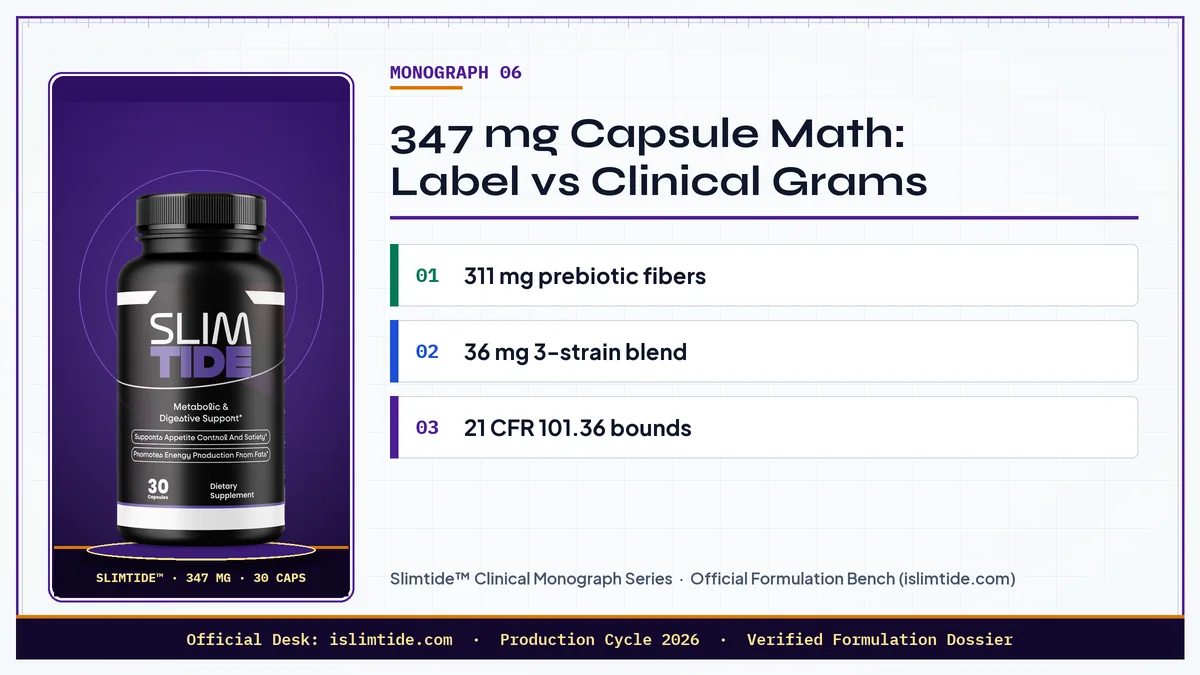
Continue to Monograph 06 on the 347 mg Synbiotic Capsule Math for the complete cross-ingredient mathematical model, or order your direct Slimtide supply here [17].
Frequently Asked Questions
Why is Bifidobacterium infantis listed first in the Slimtide Probiotic Blend?
Under U.S. FDA regulation 21 CFR 101.36(c), ingredients in a proprietary blend must be listed in descending order of weight [2]. Listing Bifidobacterium infantis first guarantees that it represents the largest single microbial mass in the 36 mg blend, mathematically bounded between 12.0 mg and 34.0 mg (or up to 35.0 mg theoretical maximum) per capsule [1,2].
Does Bifidobacterium infantis help reduce gas from Chicory Root Inulin?
Yes. Bifidobacterium infantis imports short-chain fructans intact and ferments them via the fructose-6-phosphate phosphoketolase 'bifid shunt,' which produces acetate and lactate with zero hydrogen or carbon dioxide gas [5]. This helps prevent free fructans from being fermented by gas-producing bacteria [9].
Is Bifidobacterium infantis only for infants, or does it work in adults?
Despite the subspecies name infantis, two of the most famous adult gastroenterology trials ever conducted (O'Mahony et al., 2005 and Whorwell et al., 2006, totaling 439 adult patients) demonstrated that oral Bifidobacterium infantis significantly relieves adult abdominal bloating, distension, and irregular bowel habits [11,9].
How does Bifidobacterium infantis support Clostridium butyricum in Slimtide?
Bifidobacterium infantis ferments the 211 mg chicory root inulin payload into acetate and L-lactate [5]. Clostridium butyricum absorbs that secreted acetate and converts it into n-butyrate via the butyryl-CoA:acetate CoA-transferase pathway, creating a two-stage synbiotic relay inside the colon [10,12].
Scientific & Regulatory References
Numbered in order of first appearance on this page. Primary peer-reviewed citations link directly to PubMed (NCBI/NLM) and eCFR records verified on November 15, 2026.
- Slimtide Official Supplement Facts Panel (30 Capsules; 211 mg Chicory Root Inulin, 100 mg Potato Resistant Starch, 36 mg Probiotic Blend; Distributed by Instituto Experience, Lakeland FL 33804). Verified November 15, 2026. Official Record
- 21 CFR 101.36. Nutrition labeling of dietary supplements (proprietary blends listed in descending order of predominance by weight). Official Record
- Henrick BM, Rodriguez L, Lakshmikanth T, et al. Bifidobacteria-mediated immune system imprinting early in life. Cell. 2021;184(15):3884-3898.e11. PMID 34143954. PubMed
- Zhang H, Wang J, Shen J, et al. Prophylactic supplementation with Bifidobacterium infantis or its metabolite inosine attenuates cardiac ischemia/reperfusion injury. Imeta. 2024;3(4):e220. PMID 39135700. PubMed
- Rivière A, Selak M, Lantin D, et al. Bifidobacteria and Butyrate-Producing Colon Bacteria: Importance and Strategies for Their Stimulation in the Human Gut. Front Microbiol. 2016;7:979. PMID 27446020. PubMed
- Yang M, Jiang Z, Zhou L, et al. 3'-Sialyllactose and B. infantis synergistically alleviate gut inflammation and barrier dysfunction by enriching cross-feeding bacteria for short-chain fatty acid biosynthesis. Gut Microbes. 2025;17(1):2486512. PMID 40195063. PubMed
- Halmos EP. When the low FODMAP diet does not work. J Gastroenterol Hepatol. 2017;32 Suppl 1:69-72. PMID 28244666. PubMed
- Koh A, De Vadder F, Kovatcheva-Datchary P, et al. From Dietary Fiber to Host Physiology: Short-Chain Fatty Acids as Key Bacterial Metabolites. Cell. 2016;165(6):1332-1345. PMID 27259147. PubMed
- Whorwell PJ, Altringer L, Morel J, et al. Efficacy of an encapsulated probiotic Bifidobacterium infantis 35624 in women with irritable bowel syndrome. Am J Gastroenterol. 2006;101(7):1581-90. PMID 16863564. PubMed
- Stoeva MK, Garcia-So J, Justice N, et al. Butyrate-producing human gut symbiont, Clostridium butyricum, and its role in health and disease. Gut Microbes. 2021;13(1):1-28. PMID 33874858. PubMed
- O'Mahony L, McCarthy J, Kelly P, et al. Lactobacillus and bifidobacterium in irritable bowel syndrome: symptom responses and relationship to cytokine profiles. Gastroenterology. 2005;128(3):541-51. PMID 15765388. PubMed
- Perraudeau F, McMurdie P, Bullard J, et al. Improvements to postprandial glucose control in subjects with type 2 diabetes: a multicenter, double blind, randomized placebo-controlled trial of a novel probiotic formulation. BMJ Open Diabetes Res Care. 2020;8(1). PMID 32675291. PubMed
- Hilliard MA, Sela DA. Transmission and Persistence of Infant Gut-Associated Bifidobacteria. Microorganisms. 2024;12(5). PMID 38792709. PubMed
- U.S. Food and Drug Administration. Guidance for Industry: Policy Regarding Quantitative Labeling of Dietary Supplements Containing Live Microbials. Official Record
- Slimtide U.S. Fulfillment, Transit & Cold-Storage Guidelines. Verified November 15, 2026. Official Record
- NIH Office of Dietary Supplements. Probiotics: Fact Sheet for Health Professionals. Official Record
- Slimtide Official U.S. Store Package Schedule (2 Bottles $158 + $9.99 S&H; 3 Bottles $207 Free S&H + 6 Bonuses; 6 Bottles $294 Free S&H + 6 Bonuses). Verified November 15, 2026. Official Record